
Architecture
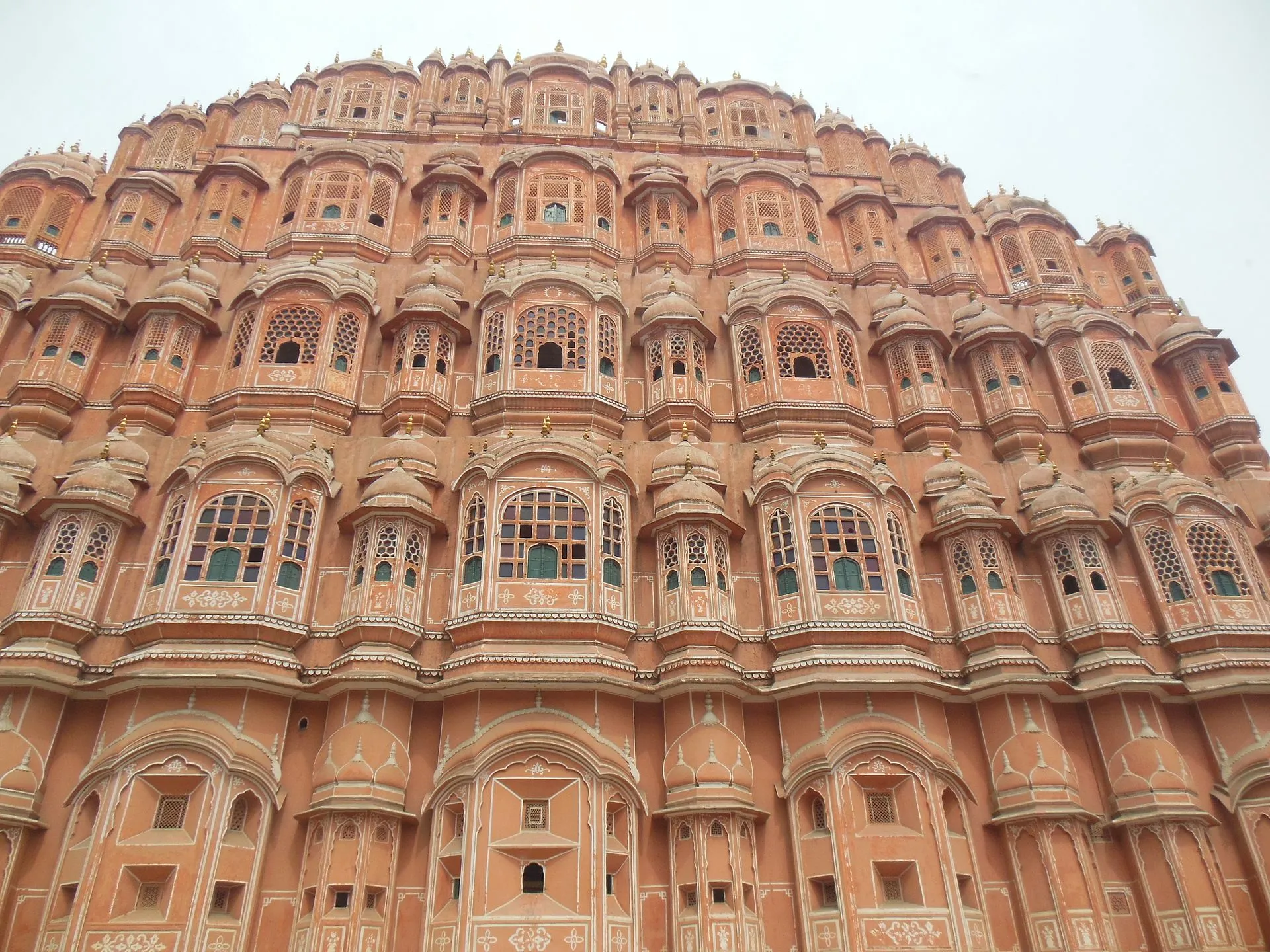
The facade features five tiers of convex jharokha windows creating the iconic honeycomb appearance, each carved in unique floral and geometric patterns. Stand inside and feel how air is funneled through the lattice openings, cooling the interior without any mechanical system -- the Venturi effect in action. Look through the same screens the queens used to watch elephant parades, Holi celebrations, and military processions 200 years ago. Interior courtyards at each level feature fountains and colored glass windows that cast tinted light. The rooftop level offers views over the Pink City old town, the City Palace walls, and the Aravalli Hills.
Historical Significance
Hawa Mahal -- the "Palace of Winds" -- was built in 1799 by Maharaja Sawai Pratap Singh as an extension of the Jaipur royal zenana (women's quarters). Its five-storey pink sandstone facade, shaped like the crown of the Hindu god Krishna, contains 953 small latticed windows (jharokhas). Each window served a dual purpose: it allowed the royal women to observe festivals, processions, and daily street life on the main avenue below without being seen by the public (in keeping with the purdah system), and it channeled the Venturi effect, pulling breeze through the narrow openings to cool the interior -- hence "Palace of Winds."
From the street, Hawa Mahal appears to be an ornate five-storey building, but a guide reveals the surprise: it has no substantial depth. The facade is essentially a single room thick at the top levels, more of an elaborate screen wall than a palace. The rear side shows a jumble of columns and passages connecting small chambers. A guide explains the social context -- why the Rajput queens needed such an elaborate viewing gallery, how the lattice screens are carved to different patterns on each level, and how the building's survival through earthquakes and monsoons testifies to its wind-channeling structural design. Walk from here to the adjacent City Palace and Jantar Mantar, all within minutes of each other.
When to Visit
Open: daily, 9:00 AM - 5:00 PM. Best time: early morning when the eastern-facing facade catches warm light. Best photo spot: the rooftop cafe across the street offers the famous frontal view at sunrise.
Admission and Costs
Foreigners: ₹200 ($2.40) individually, or included in the ₹1,000 composite ticket. Indian nationals: ₹50. Guide: ₹300-500 for a 45-minute tour (the building is compact).
Tips for Visitors
Enter from the rear: the entrance is on the side street behind the building, not from the famous front facade. Morning facade photos: the front faces east, making morning light ideal for the classic photograph; afternoon light leaves the facade in shadow. The building can be explored in 30-45 minutes, making it easy to combine with nearby attractions. The composite ticket saves significant money if also visiting Amber Fort and Jantar Mantar. If short on time, the exterior view from the cafe across the street captures the essence. Walk from here to City Palace and Jantar Mantar, all within minutes.
Frequently Asked Questions
When is the best season to see Hawa Mahal?
November through February is optimal -- the east-facing honeycomb facade catches warm morning light against reliably clear blue skies, and the comfortable temperatures let you linger at the rooftop cafe across the street for the perfect photograph. The Rajasthani summer from May through July pushes temperatures past 45 degrees C, while monsoon season can obscure the pink sandstone facade in overcast gray.
When can visitors tour Hawa Mahal?
Open: Daily, 9:00 AM – 5:00 PM. Best time: Early morning when the eastern-facing facade catches warm light. Best photo spot: The rooftop cafe across the street offers the famous frontal view at sunrise
How much is the entrance fee for Hawa Mahal?
Foreigners: ₹200 ($2.40) individually, or included in the ₹1,000 composite ticket. Indian nationals: ₹50. Guide: ₹300–500 for a 45-minute tour (the building is compact)
What practical tips should visitors know before entering Hawa Mahal?
Enter from the rear as the entrance is on the side street behind the building. The building can be explored in 30-45 minutes, making it easy to combine with nearby attractions. The composite ticket saves significant money.