

Overview
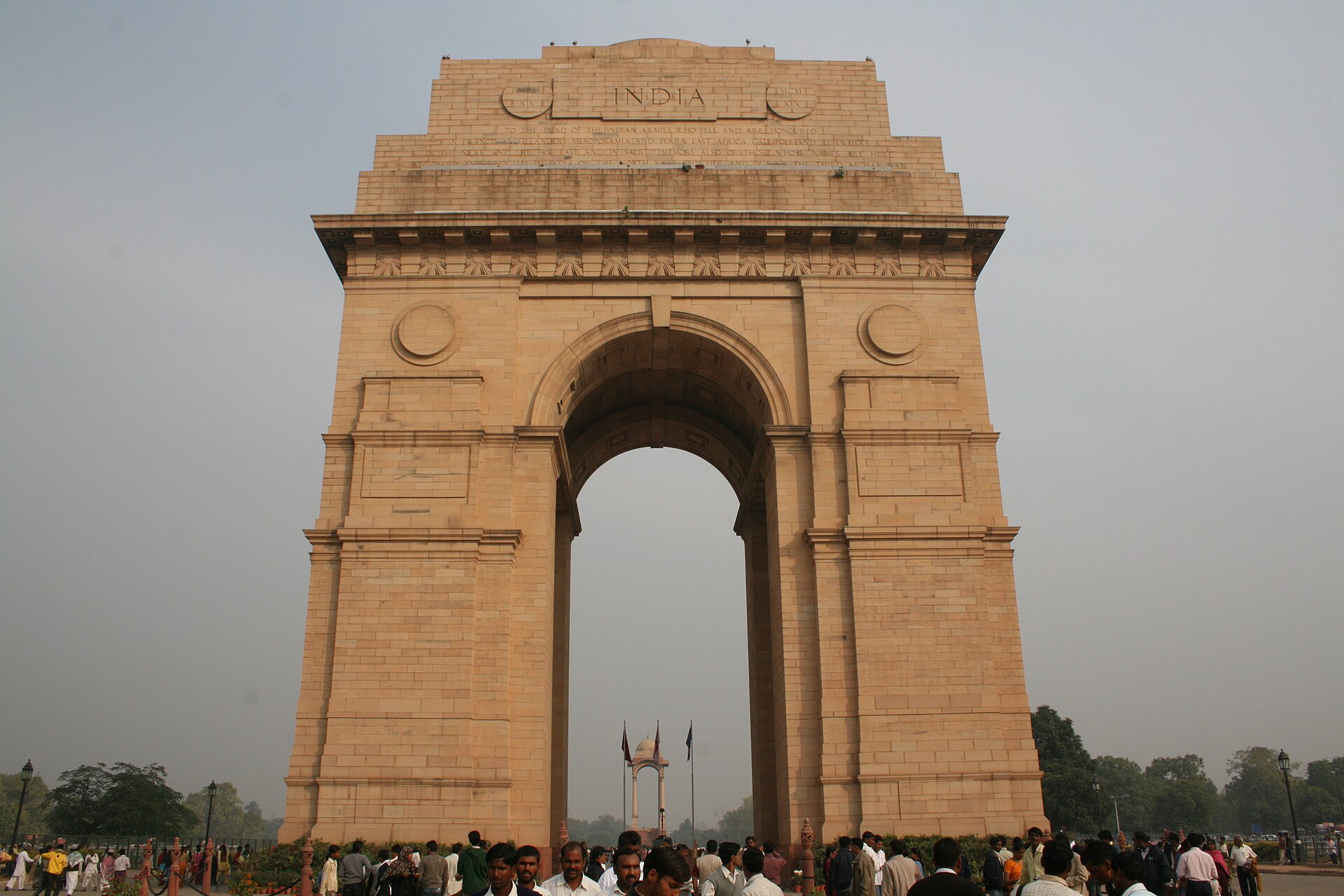
India Gate is the 42-meter sandstone war memorial arch standing at the eastern end of Kartavya Path, the ceremonial boulevard that forms the spine of Lutyens' Delhi. Designed by Sir Edwin Lutyens and completed in 1931, it commemorates the roughly 82,000 Indian soldiers who died fighting in World War I and the Third Anglo-Afghan War, their names inscribed across the arch's surface. The nearby National War Memorial, opened in 2019, extends this remembrance to soldiers who fell in post-independence conflicts. Together with the surrounding lawns, the empty canopy that once held a statue of King George V, and the grand 3-kilometer vista toward Rashtrapati Bhavan, India Gate anchors New Delhi's most significant public space. A guide provides context on colonial-era Delhi's geometric design, explains the evolution from imperial monument to national symbol, and traces India's military history regiment by regiment through the names carved into the stone.
Architecture
The arch carries 90,000 names carved into sandstone, organized by regiment and theater of war. The National War Memorial, opened in 2019, centers around a relocated eternal flame and honors 26,466 soldiers who died in post-independence conflicts. Kartavya Path stretches 3 kilometers from India Gate to Rashtrapati Bhavan (the presidential palace), forming one of the world's great ceremonial axes. A stone canopy east of India Gate once held a statue of King George V, removed after independence -- the empty canopy itself tells a story of decolonization. The surrounding lawns are Delhi's most popular gathering spot, where families picnic, children play cricket, and vendors sell chaat and kulfi.
Historical Significance
India Gate stands at the eastern end of Kartavya Path (formerly Rajpath), the ceremonial boulevard that forms the spine of Lutyens' Delhi. Designed by Sir Edwin Lutyens and completed in 1931, the 42-meter sandstone arch commemorates the 90,000 Indian soldiers who died fighting for the British Empire in World War I and the Third Anglo-Afghan War. Their names are inscribed on the arch's surface -- a reading that takes hours and underscores the scale of sacrifice from a colonial war. A guide transforms India Gate from a photo backdrop into a meditation on colonialism, nationhood, and memory. They explain how the "All India War Memorial" evolved from a British imperial project into a symbol of Indian identity, how the eternal flame of the Amar Jawan Jyoti burned beneath the arch from 1972 until it was merged with the nearby National War Memorial in 2022, and how the Kartavya Path renovation replaced the colonial-era name "Kingsway" with a Hindi word meaning "path of duty." At night, India Gate is dramatically illuminated and surrounded by families, ice cream sellers, and balloon vendors -- Delhi at its most relaxed and communal.
When to Visit
Open: 24 hours, 7 days a week (outdoor monument). Best for photos: early morning (6-8 AM) for clear views and soft light. Best for atmosphere: after sunset when the monument is illuminated and families gather. National War Memorial: 9 AM - 6:30 PM (adjacent, free entry).
Admission and Costs
India Gate: free. National War Memorial: free. Kartavya Path area: free to walk along. Guided walking tour of Lutyens' Delhi: ₹1,500-3,000 ($18-36) covering India Gate, Rashtrapati Bhavan, and Parliament.
Tips for Visitors
Republic Day on January 26 sees India's grand parade along Kartavya Path -- the most spectacular event on Delhi's calendar, though public access is restricted. Combine with Lutyens' Delhi: walk west along Kartavya Path toward Rashtrapati Bhavan for the full colonial-era architectural experience. Evening ice cream from the vendors surrounding India Gate at night is a quintessential Delhi experience. Security: bag checks at entry points to the pedestrian zone; no large bags or backpacks. Metro access: Central Secretariat (Yellow/Violet Line) is the nearest station, about a 15-minute walk.