

Overview
Agra Fort is a UNESCO World Heritage red sandstone fortress built by Emperor Akbar in 1565 that served as the seat of Mughal government until the capital shifted to Delhi in 1648. Enclosed by 2.5 kilometers of walls rising 21 meters above a moat, the 94-acre citadel contains both rugged military architecture and the refined white marble palaces added later by Shah Jahan. The fort's most poignant chapter unfolded in the Musamman Burj, the octagonal marble tower where Shah Jahan spent his final eight years imprisoned by his son Aurangzeb, gazing across the Yamuna at the Taj Mahal he had built for his wife. A guide reveals the progression from Akbar's robust sandstone military structures to Shah Jahan's delicate marble filigree, leads visitors to hidden corners such as the royal hammam and the Nagina Masjid, and recounts the dynastic drama that transformed a fortress into a gilded prison. Pair with Fatehpur Sikri to compare Akbar's two seats of power.
Fortification History
Emperor Akbar began rebuilding the fort in red sandstone in 1565, establishing it as the seat of Mughal government. His grandson Shah Jahan transformed the interiors with white marble and gold, creating the throne rooms from which he watched the Taj Mahal being built across the river. The Amar Singh Gate is the imposing entrance through three layers of defensive walls with sharp turns designed to slow invading elephants. The Diwan-i-Am served as the public audience hall where Akbar dispensed justice from a marble throne adorned with Florentine pietra dura. The Diwan-i-Khas features a white marble terrace overlooking the Yamuna and the Taj Mahal 1.6 km away. After Shah Jahan's son Aurangzeb seized power in 1658, the old emperor spent his last eight years confined to the Musamman Burj.
Notable Rooms
Agra Fort is a 94-acre citadel enclosed by 2.5 kilometers of walls that rise 21 meters above a moat. Emperor Akbar began rebuilding it in red sandstone in 1565, establishing it as the seat of Mughal government. His grandson Shah Jahan transformed the interiors with white marble and gold, creating the very throne rooms from which he later watched the Taj Mahal being built across the river. The fort's final chapter is its most poignant: after Shah Jahan's son Aurangzeb seized power in 1658, the old emperor spent his last eight years confined to the Musamman Burj, an octagonal marble tower with a direct sightline to his wife's mausoleum.
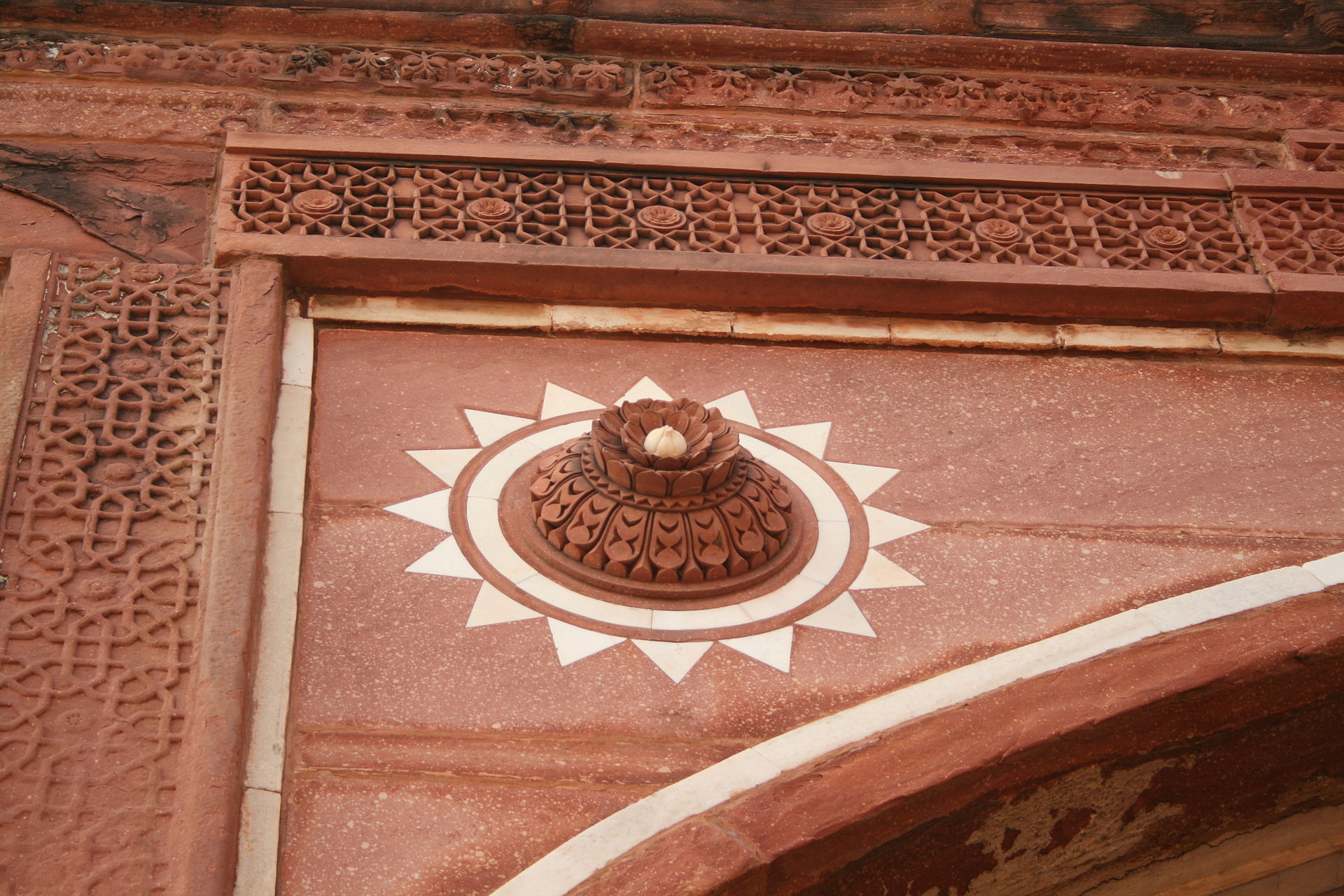
A guide weaves together the fort's layers of construction and royal drama. They show how Akbar's robust sandstone military architecture gives way to Shah Jahan's delicate marble filigree, marking the transition from warrior empire to aesthetic refinement. They lead you to hidden corners visitors miss -- the royal hammam with its system of underground heating, the Sheesh Mahal (Mirror Palace) where a single candle lit thousands of reflected flames, and the Nagina Masjid, a private mosque built entirely in white marble for the women of the court. The Moti Masjid (Pearl Mosque) is currently closed but visible from outside.
When to Visit
Open: daily, 6:00 AM - 6:00 PM. No closures: open every day including holidays. Best time: late afternoon (4-6 PM) for golden light on the marble and a view of the Taj Mahal at sunset.
Admission and Costs
Foreigners: ₹600 ($7.20). Indian nationals: ₹40. ASI guide: ₹800-1,200 for 1.5 hours. Composite ticket: available with the Taj Mahal for savings.
Tips for Visitors
Visit after the Taj Mahal: seeing the Taj first gives emotional context to Shah Jahan's imprisonment and his view from the Musamman Burj. Only 30% of the fort is accessible, as much remains under military control. Comfortable shoes are essential for lots of walking on stone and marble; shoes must be removed in certain areas. Allow 2-3 hours, as the fort rewards slow exploration and rushing through misses the best details. Most tourists visit in the morning after the Taj, so afternoons offer a quieter experience. Consider a half-day trip to Fatehpur Sikri to compare Akbar's two imperial capitals.