
Getting Around Jaipur: A Practical Transport Guide
How to move around Jaipur — auto and cycle rickshaws in the walled Pink City, Uber and Ola, the Metro's Pink Line, and reaching the hilltop forts.
Read the full guideUpdated · 12 min read
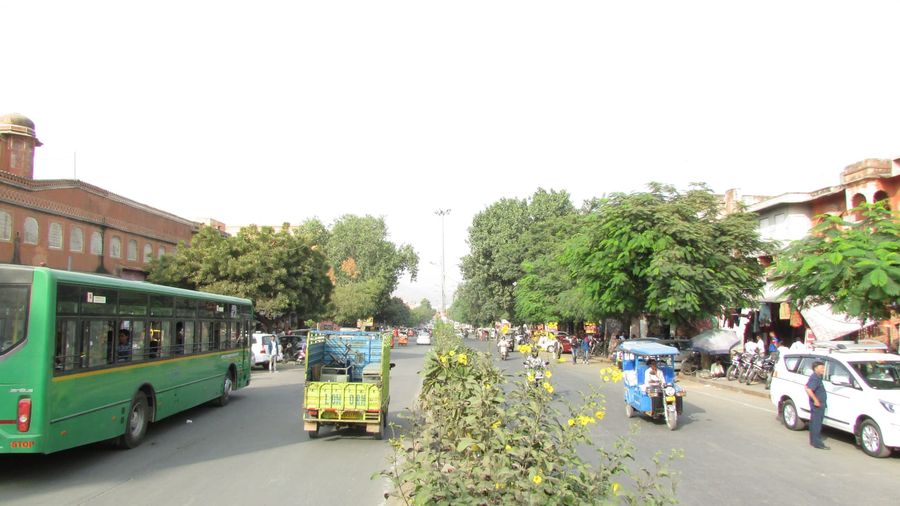
Getting around Jaipur is easier once you picture the city in two parts: a tight, grid-planned walled old town you explore on foot and by rickshaw, and outlying forts that need a separate transport plan. Auto-rickshaws and cycle rickshaws thread the pink bazaars, Uber and Ola take the haggling out of longer runs, the Metro's Pink Line slips under the centre, and a hired driver ties the outlying forts into a single loop. Match the mode to the errand and the Pink City stops feeling chaotic.
Jaipur is the capital of Rajasthan and the western anchor of India's Golden Triangle, laid out in 1727 by Maharaja Sawai Jai Singh II as one of the country's first planned cities. That grid still shapes how you move: the walled old town is a legible chessboard of wide bazaar streets and gated squares, while the forts and palaces that draw most visitors sit just beyond it in the Aravalli Hills. This guide sorts the transport options by the job they do best — arriving, crossing the old city, reaching the forts — then covers choosing a tour, timing your days around the heat, and what it all costs.
How Jaipur is laid out
Fix the city's shape in your head first: a compact walled old town at the centre, ringed by newer districts, with the headline forts strung along the hills to the north. Almost every transport decision follows from that geography.
The walled Pink City holds the sights most people picture — the honeycomb facade of Hawa Mahal, the royal apartments of the City Palace, the giant stone instruments of Jantar Mantar, and the jewellery stalls of Johari Bazaar. Its uniform grid and colonnaded shopfronts make it genuinely walkable, and inside it distances are short. The forts are the exception: Amber Fort lies about 11 km north, with Jaigarh and Nahargarh in the hills beyond the walled centre. Buses serve Amber; a hired vehicle makes a multi-fort outing easier. Between these two zones spreads the modern city — the railway station, the airport to the south, and the hotels and restaurants of C-Scheme and Bani Park. Treat the walled centre and the forts as separate trips and your days plan themselves.
Arriving in Jaipur
Most visitors reach Jaipur by air from Delhi or Mumbai, by train down from the capital, or by road as part of a Golden Triangle circuit — and each drops you within easy reach of the centre. Sorting the arrival leg in advance spares you improvising while tired.
Jaipur International Airport is at Sanganer, south of central Jaipur. Its official transport page lists metered taxis, app-based cabs and rental cars at both terminals, plus buses from outside Terminal 2 toward Jaipur ISBT. Check your terminal and pickup instructions before leaving arrivals. Travel time depends on your destination and traffic, so allow a buffer rather than assuming every hotel is half an hour away. Jaipur Junction is the main railway station for services from Delhi and Agra; choose a train using its actual timetable. Road journeys on a Golden Triangle circuit also need traffic allowances. A hotel-arranged transfer can simplify arrival, but confirm the complete price, meeting point and waiting policy beforehand.
Rickshaws: auto, cycle, and electric
Rickshaws are Jaipur's default short-distance transport, and the three kinds each suit a different lane and errand. Knowing which to flag down saves both money and time.
Auto-rickshaws — the three-wheeled workhorses — are everywhere and ideal for cross-town hops, but drivers rarely use the meter with visitors, so you negotiate every fare. Cycle rickshaws come into their own inside the walled city, where they thread the narrow, congested lanes around Johari Bazaar and Hawa Mahal that cars cannot easily manage, moving at a slow, street-level pace that suits sightseeing. Battery e-rickshaws, like the blue one in the photo above, increasingly cover fixed short routes near the bazaars for a fistful of rupees. The table below sorts them by best use.
| Mode | Best for | Fare basis | Notes |
|---|---|---|---|
| Auto-rickshaw | Cross-town hops, fort round trips | Negotiated | Agree the price before boarding; carry small notes |
| Cycle rickshaw | Narrow old-city lanes, slow sightseeing | Negotiated, per trip | Cannot manage long or uphill distances |
| E-rickshaw | Short fixed routes near the bazaars | Low, often shared | Convenient but limited range |
Whatever you take, settle the fare clearly before you climb in, and sense-check it against the in-app price a ride-hailing car would charge for the same route.
Ride-hailing with Uber and Ola
Uber and Ola are useful for longer journeys, but a one-way ride and a car retained for sightseeing are different bookings. Choose the service around the time you need the driver, not just the first destination.
Compare the pickup point and fare shown in the app before ordering. Old-city access can be awkward, so choose a reachable street rather than expecting a car to collect you from a narrow lane. An ordinary ride does not reserve the same driver while you visit a fort or guarantee a return pickup. For several stops, check whether an hourly Rentals option is available, or arrange a driver hire with the return included. Uber's Rentals terms specify additional time/distance charges, tolls and taxes, with parking paid separately. Check the displayed package and what it excludes before confirming.
The Metro and city buses
The Metro is useful for the old-city corridor, while buses offer routes beyond it, including toward Amber. Plan each journey around the stop nearest your actual destination.
The Jaipur Metro Pink Line runs from Mansarovar in the west and dips underground to terminate at Badi Chaupar, in the heart of the old town within walking distance of the City Palace, Jantar Mantar and Hawa Mahal. Its air-conditioned carriages and traffic-free tunnel make it a fast, cheap shortcut into the centre — but the network is small, and it reaches neither the forts nor the airport, so it is a single-corridor convenience rather than a backbone. JCTSL city buses, including the low-floor green buses seen on the main roads, cover a wider area. Confirm the route and boarding point locally rather than relying on colour alone. Rajasthan Tourism lists buses to Amber from Ajmeri Gate and MI Road; ask about the current departure and return arrangements before setting out.
Reaching the forts
The forts are where Jaipur's transport turns from a walk into a plan, because they sit several kilometres out and uphill. Getting this leg right is what keeps a fort morning from unravelling.
Amber Fort is the main starting point. Rajasthan Tourism's access guidance includes buses as well as hired cars and auto-rickshaws. Jaigarh and Nahargarh need additional travel and visiting time: sharing a hill landscape does not make all three a quick stop. Give the full circuit a day, or select fewer places for a half-day outing. For a hired vehicle, agree the stops, waiting allowance and return destination in advance, especially for a sunset visit to Nahargarh. At Amber, choose walking or a vehicle transfer if you want to avoid elephant rides; vehicle transfers do not carry the animal-welfare issue associated with elephant rides.
Choosing the right tour
The format of tour you pick shapes your day more than the price does, so match it to what you actually want to see. Jaipur's sights split cleanly between the walkable old city and the drive-out forts, and different tours serve each.
A licensed local guide is worth most where context is dense — decoding the astronomical instruments at Jantar Mantar, or the layered courtyards of Amber — while a simple bazaar wander needs no guide at all. The table below sorts the common formats.
| Tour type | Best for | Typical length | Guide needed? |
|---|---|---|---|
| Old City walking tour | Bazaars, Hawa Mahal, City Palace | Half day | Recommended |
| Amber & hill-forts drive | Amber, Jaigarh, Nahargarh | Allow a full day for all three | Optional; arrange transport |
| Full-day private tour | Old city plus forts in one day | Full day | Yes |
| Golden Triangle multi-day | Jaipur with Delhi and Agra | 3–5 days | Yes |
A half-day walking tour of the walled city pairs with a separate outing to Amber. Allow more time if adding Jaigarh and Nahargarh. A full-day private tour can combine selected old-city sights with a fort when time is short, while a Golden Triangle itinerary treats Jaipur as one leg alongside Delhi and Agra.
When to go and what it costs
Jaipur's transport rhythm is set by heat and by cash, so the golden rules are to start early and to carry small notes. Both habits matter more here than the fares themselves.
December to February generally brings the coolest sightseeing weather. October and March afternoons can still be hot: the India Meteorological Department's 1981–2010 Jaipur normals give average daily highs of 33.8 °C and 31.6 °C respectively, compared with 22.6 °C in January. These are historical averages, not a forecast; check conditions for your dates and plan shade and water stops. Front-load outdoor time — reach Amber near opening, keep the fierce afternoon for shaded palaces or a long lunch, and save Nahargarh for the sunset view. On money, most street transport runs on cash in rupees and drivers rarely break large notes, so change into small denominations early; ride-hailing apps accept cards. Use the checks below to compare complete quotes rather than a headline fare.
| Journey or service | What to confirm before paying |
|---|---|
| Private auto-rickshaw | Total trip price, passenger count, waiting and return |
| Shared e-rickshaw | Route, per-person fare and where to get off |
| App-based ride | Pickup point, current estimate and additional charges |
| Car retained for sightseeing | Hours, distance, extra-time rate, parking and return |
| Private guide | Duration, itinerary, language and which admissions are included |
Two things worth knowing: check whether monument tickets are included in any tour quote — Amber, the City Palace and Jantar Mantar each have admission arrangements — and a small tip for a driver or guide is customary and appreciated.
Why a local guide still helps
None of this is hard after a day, but a good local guide erases the learning curve and unlocks the parts visitors find intimidating — the fair rickshaw fare, the fort logistics, the pacing around the heat. In a city where the useful knowledge is unwritten, that experience quickly pays for itself.
A guide who works Jaipur knows which fort approach is quickest on a given morning, what a round trip to Amber should really cost, and when to duck into the shade before the afternoon turns hostile. Pairing a half-day guided orientation with a pocket of small notes is the fastest route to feeling the Pink City is yours to move through. For a sense of what guided experiences cost alongside your transport, the Jaipur city guide lists typical tour prices, and the wider India country guide sets out fees and the practical essentials in more detail.
Related Guides
- Delhi for First-Time Visitors: A Practical Guide — the capital at the other end of the Golden Triangle, with its own Metro and rickshaw mix
- Best Time to Visit Chennai — how season shapes a trip elsewhere in India
Picture Jaipur as a walkable grid ringed by hill-forts, and its transport falls into place. Rickshaws and your own feet cover the pink bazaars, Uber and Ola take the friction out of longer runs, the Pink Line slips you under the centre, and a hired driver stitches the forts into one clean loop — with an early start and a fold of small notes doing most of the work.
Hero photograph of traffic on the main road by Hawa Mahal in Jaipur by Swapnil.Karambelkar, licensed CC BY-SA 4.0 via Wikimedia Commons.
Frequently Asked Questions
Do Uber and Ola work in Jaipur?
Yes, both apps operate in Jaipur. Compare the fare and pickup point in the app before requesting a car. An ordinary ride covers the booked journey, not hours of sightseeing or a guaranteed return from a fort. For several stops, look for an hourly Rentals option if available or agree a separate driver hire with waiting time and the return included.
How do you get from Jaipur airport to the city centre?
Jaipur International Airport is at Sanganer, south of the city. The airport lists metered taxis, app-based cabs and car rentals, with pickup points at both terminals. It also lists buses from outside Terminal 2 toward Jaipur ISBT. Check the current pickup instructions and route for your arrival terminal; transfer time depends on traffic and your exact hotel.
What is the best way to reach Amber Fort?
Amber is about 11 km from Jaipur. Rajasthan Tourism lists buses from Ajmeri Gate and MI Road, as well as hired cars and auto-rickshaws. For a car or rickshaw, agree whether the quote includes waiting and the return. A one-way app ride does not reserve a driver for later. Allow a longer outing if you also want to visit Jaigarh and Nahargarh.
Is the Jaipur Metro useful for tourists?
It can be for one specific journey. The Metro's Pink Line runs underground into the walled city and terminates at Badi Chaupar, close to the City Palace, Jantar Mantar and Hawa Mahal, so it is a fast, air-conditioned way to reach the heart of the old town while skipping surface traffic. Beyond that single corridor its usefulness is limited, because the network is small and does not reach the forts or the airport. Treat it as a handy shortcut into the centre rather than your main way of getting around.
How much should an auto-rickshaw ride cost in Jaipur?
There is no single visitor fare to rely on. Ask for the price before boarding and clarify whether it covers one passenger or the whole vehicle, a one-way trip or a return, and any waiting. Compare a couple of quotes and the current app estimate for your route. Shared e-rickshaws and private auto-rickshaws are different services, so check which you are being offered.