

Overview
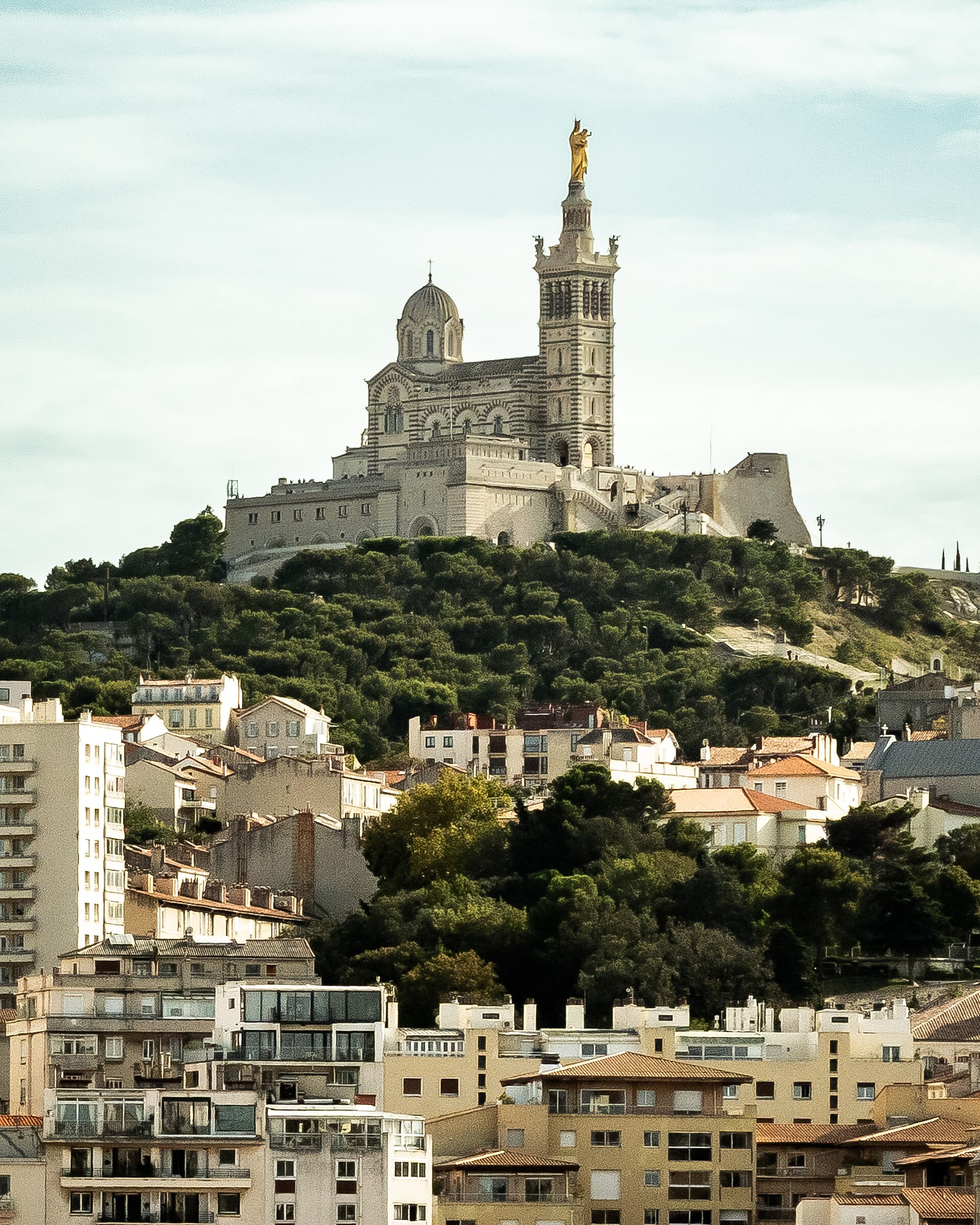
Perched 154 meters above sea level on Marseille's highest natural point, Notre-Dame de la Garde is the city's most visited monument and spiritual heart. Built between 1853 and 1864 in Romano-Byzantine style, the basilica is crowned by a 11-meter gilded statue of the Virgin Mary, visible from miles around. Known affectionately as "La Bonne Mère" (The Good Mother), she watches over sailors, fishermen, and all Marseillais. After visiting, explore the Old Port below or discover the wider Marseille experience.
Visitor Etiquette
Dress code: Shoulders and knees must be covered inside the basilica. Silence and respectful behavior expected during prayers. Photography: Allowed without flash inside. Leave offerings of gratitude (ex-voto) following the centuries-old tradition if so moved. Do not touch the model ships and plaques. Steep climb: 15-20 minutes walking up, or take bus 60 or tourist train from the Old Port.
Spiritual Significance
Known as "La Bonne Mère" (The Good Mother), Notre-Dame de la Garde has watched over sailors and fishermen since the 13th century. The ex-voto collection inside - model ships, paintings, and plaques left by grateful survivors of storms and wars - is one of the most moving in France. Panoramic terrace
- 360-degree views of Marseille, islands, and mountains. Romano-Byzantine mosaics - Stunning gold and colored tilework inside. Bell tower houses "Marie-Joséphine", an 8-ton bronze bell. WWII bullet holes in the facade bear witness to the 1944 liberation of Marseille.
When to Visit
Hours: 7:00 AM - 7:00 PM (summer until 8:00 PM). Best time: Sunset for spectacular views and golden light. Least crowded: Early morning or winter months. Mass times: Daily at 7:30 AM, Sunday at 10:30 AM
Admission and Costs
Entry: Free. Guided tours: €12-20 per person (group). Private guide: €100-180 for 1.5-2 hours. Tourist train from Old Port: €8 round trip. Bus 60: €2 (standard metro ticket)
Tips for Visitors
Steep climb: 15-20 minutes walking up, or take bus 60 or tourist train. Comfortable shoes: Essential for the climb and uneven terraces. Dress code: Shoulders and knees covered inside the basilica. Wind: Often very windy at the top - secure hats and loose items. Water: Bring water for the climb, limited facilities at top