
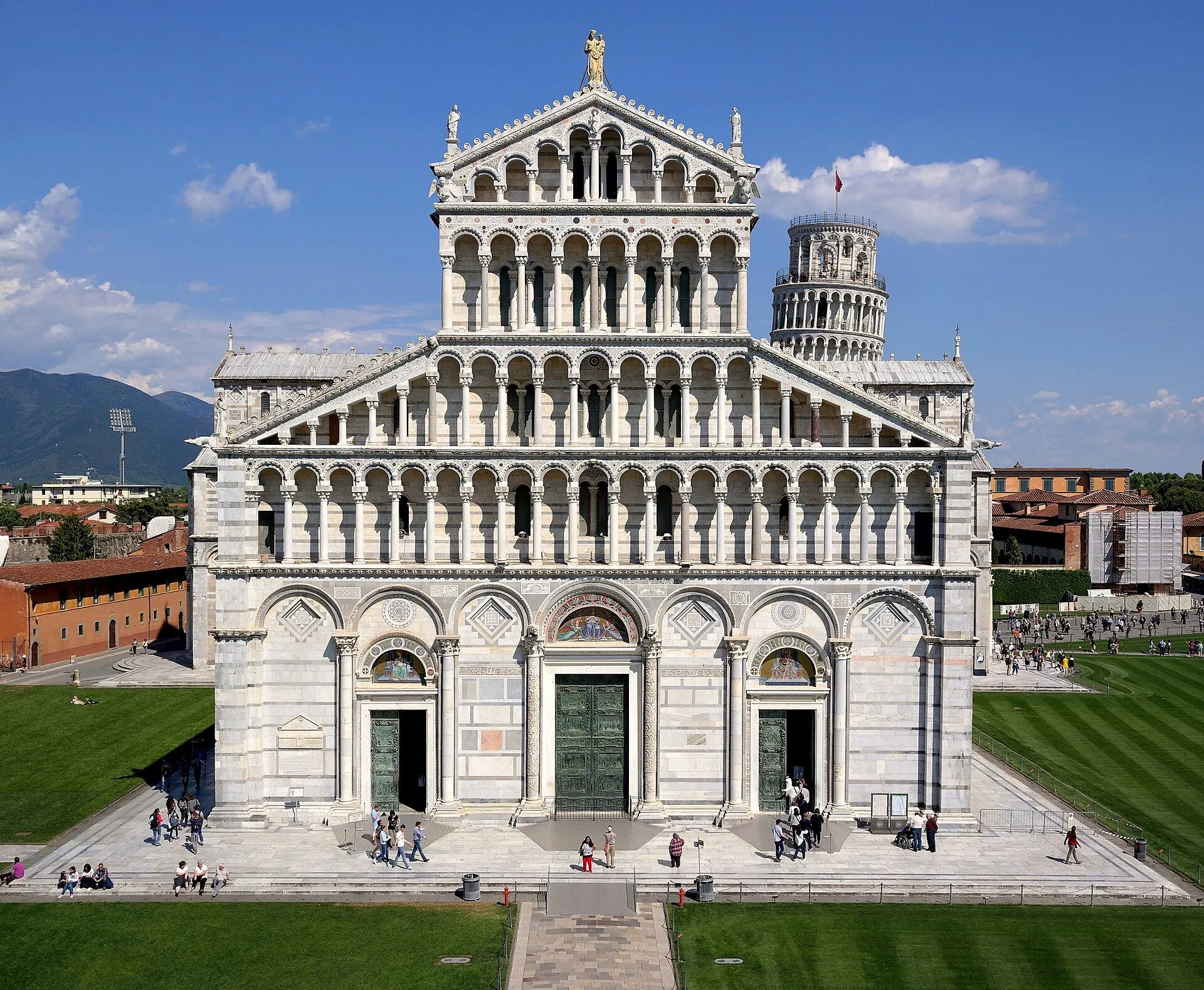
Spiritual Significance
Baptism in the Catholic tradition is not merely a rite of initiation but the sacrament of rebirth — in the theology that shaped medieval Pisa, an unbaptized person literally could not enter heaven, which meant the font at the center of this building was the threshold between damnation and salvation for every child born in the city for centuries. When Pisan parents carried their newborns to the octagonal marble font installed in 1246, they were performing the most spiritually consequential act of their child's early life. Nicola Pisano's hexagonal pulpit (1260) represented a theological revolution as much as an artistic one: by carving the life of Christ in a style explicitly reviving classical Roman sculptural techniques, Pisano argued that Christian truth could be expressed through the forms of pagan antiquity — that Greek and Roman aesthetic achievement was not to be rejected but redeemed and consecrated. This was a radical theological position, and it seeded the intellectual soil from which the Renaissance grew a century and a half later. The extraordinary acoustics of the dome — which produce natural harmonies when a single voice sings inside it — were unintended but interpreted by medieval worshippers as a sign of divine approval: a space dedicated to initiation into God's family responded to human voice with heaven's harmonies. The building's unfinished state, with medieval tiles covering only part of the dome because funds ran out, is itself a spiritual lesson: human resources and divine aspirations are never perfectly matched, and incompletion is no obstacle to genuine holiness.
Visitor Etiquette
Arrive 5-10 minutes before scheduled acoustic demonstrations to secure a good position. Guards enforce silence except during demos -- do not attempt to sing yourself. Dress modestly as this is a religious building. Photography without flash is permitted. The baptistery receives fewer visitors than the Leaning Tower, making it a more peaceful experience.
When to Visit
April-September: 9 AM - 8 PM. October-March: 9 AM - 5 PM. Acoustic demonstration: every 30 minutes. Best time: arrive just before a demo time slot.
Admission and Costs
Baptistery only: €7. Two monuments: €10 (with Camposanto or Sinopie). All monuments except Tower: €15. Guided tour: typically included in Piazza dei Miracoli tours. Combo tickets offer significant savings when visiting multiple monuments.
Tips for Visitors
Time your visit for the acoustic demonstration -- it is the highlight. Walk straight across to the Cathedral for seamless touring. Morning light illuminates the interior best. Combine with the Leaning Tower and the full Piazza dei Miracoli complex. Nicola Pisano's pulpit requires expert interpretation to fully appreciate its revolutionary significance -- this is where Renaissance sculpture arguably began.
Frequently Asked Questions
What season is best for visiting the Pisa Baptistery?
April through October offers the most comfortable conditions, with longer opening hours and warm afternoons that make exploring the full Piazza dei Miracoli complex a pleasure. The Baptistery's famous acoustic demonstrations run year-round, so the interior experience is season-independent. Winter months from November through March are cooler and quieter, which can be an advantage for hearing the extraordinary echo without competing with large summer tour groups.
What are the opening hours and acoustic demonstration schedule at the Pisa Baptistery?
April - September: 9 AM - 8 PM. October - March: 9 AM - 5 PM. Acoustic demonstration: Every 30 minutes. Best time: Arrive just before a demo time slot
Does visiting Pisa Baptistery (Battistero di San Giovanni) require a paid ticket?
Baptistery only: €7. Two monuments: €10 (with Camposanto or Sinopie). All monuments except Tower: €15. Guided tour: Typically included in Piazza dei Miracoli tours
What should visitors know before visiting Pisa Baptistery (Battistero di San Giovanni)?
Time for acoustics: Arrive 5-10 minutes before scheduled demonstrations. No singing yourself: Guards enforce silence except during demos. Combine with Cathedral: Walk straight across for seamless touring.