
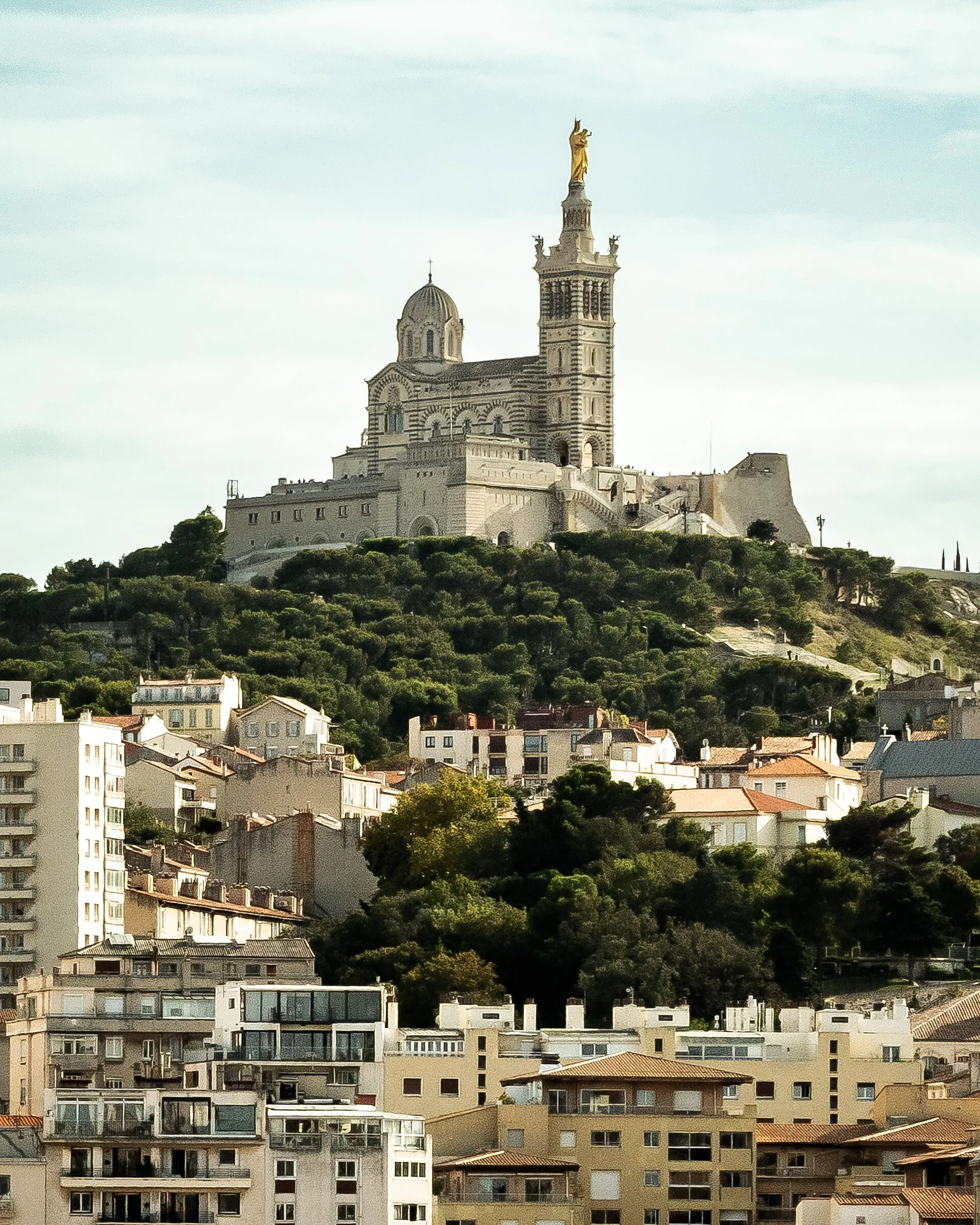
Visitor Etiquette
Notre-Dame de la Garde is an active basilica, not merely a viewpoint, so dress and behave accordingly. Shoulders and knees should be covered inside, and visitors keep silence and respectful behaviour during Mass and private prayer. Photography is allowed without flash indoors, but never during services. Treat the ex-voto offerings as the sacred keepsakes they are: admire the model ships, marble plaques, and painted storm scenes, but do not touch or lean on them. If you are moved to leave a candle or a note of gratitude in the centuries-old tradition, do so quietly at the designated stands. The climb takes 15-20 minutes on foot from the Old Port, or take the number 60 bus or the tourist train if you would rather arrive composed.
Spiritual Significance
Known across the city simply as "La Bonne Mère" (The Good Mother), Notre-Dame de la Garde has been a place of maritime devotion since a first chapel rose here in 1214. For centuries, sailors, fishermen, and their families entrusted the Virgin with their safe return before every voyage, and the sanctuary filled with their thanks. The result is one of the most moving ex-voto collections in France: hundreds of model ships hung from the ceiling, oil paintings of vessels caught in storms, marble plaques reading simply merci, and even life-belts and medals from survivors of wrecks and wars. Together they turn the basilica into an archive of the city's relationship with the sea.
That devotion still beats through the calendar. On 15 August, the feast of the Assumption, Marseille climbs the hill in procession for its patronal day, and the clergy bless the boats of the port below. High in the bell tower hangs "Marie-Joséphine", a bronze bourdon of nearly 8 tonnes whose voice rolls out over the rooftops on feast days. The hill also carries the memory of war: during the 1944 liberation of Marseille, French troops fought their way across this summit, and shell and bullet scars on the facade and bronze doors are left unrepaired as a deliberate witness. For most Marseillais the golden Madonna is less a monument than a mother keeping watch over the whole city and everyone who sails from it.
Notre-Dame de la Garde timeline
-
First hilltop chapel
A priest named Pierre built a small chapel to the Virgin on the limestone summit, beginning eight centuries of devotion on the site.
-
François I builds the fort
The king fortified the strategic peak against invasion; the fort's ramparts still wrap the base of today's basilica.
-
Withstands the imperial siege
The new fort helped the city resist the siege by the forces of Emperor Charles V, cementing the hill's military role.
- 1853-1864
The basilica is built
Architect Henri-Jacques Espérandieu raised the Romano-Byzantine church over the old fort, consecrating it in 1864.
-
The golden Madonna rises
The 11.2-metre gilded statue of the Virgin and Child by Eugène-Louis Lequesne was hoisted atop the bell tower.
-
Liberation of Marseille
French troops fought across the hill in August 1944; shell and bullet scars from the battle still mark the facade.
- 2001-2008
Major restoration
A decade-long campaign cleaned the mosaics, re-gilded the Madonna, and repaired the stonework worn by sea air.
When to Visit
The basilica is open daily, roughly 7:00 AM to 6:15 PM in winter and until 7:00 PM (occasionally 8:00 PM) at the height of summer, with Mass each morning and a larger service on Sunday. The two best windows are the first hour after opening, before the coach groups arrive, and the last hour before sunset, when low Mediterranean light turns the gilded Madonna and the limestone terrace amber. May through September offers the clearest skies and warmest evenings; a spring mistral scrubs the air until the Calanques stand out sharp on the horizon. Winter mornings are crisp and near-empty, but the exposed summit can feel biting when the wind gets up. Always confirm current hours and Mass times on the official basilica site before you climb.
Admission and Costs
Entry to the basilica and its terraces is free, as befits a living place of worship and pilgrimage - only a small donation is invited if you light a candle inside. Guided options add context: a shared walking tour that takes in the hill runs about €12-20 ($13-22) per person, while a private guide for 1.5 to 2 hours costs €100-180 ($108-195). Reaching the summit is inexpensive:
- Number 60 bus — a single standard RTM ticket at €2 ($2.20) carries you from the Old Port (cours Jean Ballard) straight to the gates.
- Tourist train — the little road train from the Quai des Belges is about €8 ($8.70) round trip and narrates the climb.
- On foot — free, if you have the legs for the 15-20 minute ascent.
An interior lift links the fort level to the church for visitors with limited mobility.
The Case for a Guide
A guide turns a photogenic viewpoint into eight centuries of layered story, and threads the hill into the rest of Marseille:
- Reading the ex-votos — a guide explains why the ceiling is hung with model ships and painted shipwrecks, and how the La Bonne Mère tradition bound the basilica to the working port below.
- From fort to basilica — the story of the 1524 fortress of François I, the 1536 imperial siege, and how Espérandieu raised his Romano-Byzantine church over the old ramparts between 1853 and 1864.
- Decoding the mosaics — the gold-ground tilework, the coloured-marble bands, and the symbolism most visitors walk straight past.
- The scars of 1944 — where to find the bullet holes from the liberation of Marseille and what happened on the hill that August.
- Naming the panorama — guides pick out the Old Port, Château d'If, the MuCEM, Le Panier, and the distant Calanques so the view actually makes sense.
Tips for Visitors
Come prepared for a windy hilltop: the summit is exposed, so secure hats, scarves, and camera straps, and bring a layer even on warm days. Wear comfortable shoes for the steep 15-20 minute climb and the uneven terraces, or save your legs with the number 60 bus or the tourist train from the Old Port. Carry water in summer, as facilities at the top are limited. Time your visit for the golden hour before sunset for the best light and the lowest crowds, and allow at least an hour for the mosaics, the ex-voto collection, and the 360-degree panorama. Pair the basilica with the Old Port and Le Panier below for a full day on foot, and use the interior lift if the climb through the fort is difficult.
Frequently Asked Questions
What season offers the most spectacular views from Notre-Dame de la Garde?
May through September rewards visitors with the clearest skies and most dramatic sunsets from Marseille's highest point, when the Mediterranean light at 154 meters elevation casts the city and Frioul archipelago in brilliant blues and golds. The mistral wind in spring can clear the atmosphere to reveal views stretching to the Calanques and beyond. Winter visits offer crisp, uncrowded mornings, but the steep climb or exposed terrace can feel biting when the wind picks up.
Is there a preferred time to visit Notre-Dame de la Garde?
The basilica opens daily from 7:00 AM to 6:15 PM in winter and until 7:00 PM (occasionally 8:00 PM) in high summer, with Mass celebrated each morning and a larger Sunday service. Arrive within the first hour after opening, or in the last hour before sunset, to avoid both the coach groups and the midday glare; the golden hour turns the gilded Madonna and the whole limestone terrace amber. Early winter mornings are emptiest of all, though the wind on the exposed summit bites. Check the official basilica site at https://www.notredamedelagarde.fr/ for current hours and Mass times before you climb.
How much is admission to Notre-Dame de la Garde?
Entry to the basilica and its terraces is completely free, in keeping with its role as a working place of worship and pilgrimage. A shared guided walking tour that includes the hill runs about €12-20 ($13-22) per person, while a private guide for 1.5 to 2 hours costs €100-180 ($108-195). Getting up is cheap too: the number 60 city bus is a standard RTM ticket at €2 ($2.20), and the tourist train from the Old Port is around €8 ($8.70) round trip. Only a small donation is invited if you light a candle inside.
What should visitors know before visiting Notre-Dame de la Garde?
This is a steep hilltop sanctuary, so wear comfortable shoes for the 15-20 minute uphill walk or take the number 60 bus or the tourist train. Because it is an active basilica, shoulders and knees should be covered inside and visitors keep quiet during Mass and prayer. The summit terrace is genuinely windy - secure hats, scarves, and camera straps. Bring water in summer, as facilities at the top are limited, and allow at least an hour to take in the mosaics, the ex-voto collection, and the 360-degree panorama.
How do you get up to Notre-Dame de la Garde?
Three easy options reach the summit. On foot it is a scenic but steep 15-20 minute climb from the Old Port through the Roucas Blanc streets. The number 60 city bus links the Vieux-Port (cours Jean Ballard) directly to the basilica gates for a single €2 ($2.20) RTM ticket, running every 10-15 minutes. The little tourist train also grinds up from the Quai des Belges for about €8 ($8.70) return. Once at the top, an interior lift carries anyone with limited mobility from the fort level up to the church, making the sanctuary itself step-free.
Why is Notre-Dame de la Garde called La Bonne Mère?
Marseillais have called the Virgin of the hill La Bonne Mère - The Good Mother - for centuries because sailors, fishermen, and their families entrusted their safe return to her before every voyage. A chapel has crowned this limestone peak since 1214, and the tradition of leaving ex-votos - model ships, painted storm scenes, and marble thank-you plaques - grew from generations of survivors giving thanks. The title is affectionate rather than official: for the city she is less a monument than a protective mother watching over the whole of Marseille and its sea.