
Architecture
El Capitolio's architecture is a deliberate synthesis of Republican-era Cuban ambition:
- The portico — Twelve Doric columns across the main facade, each five meters in diameter; the monumental granite steps rising from the street level were designed so that arriving dignitaries experienced the building growing larger with every step rather than appearing at a fixed distance
- The main hall (Salón de los Pasos Perdidos) — The "Hall of Lost Footsteps" is 220 meters long and 22 meters wide, its marble floors polished to a mirror finish that reflects the ornate ceiling; the acoustics create the echo effect that gives the room its evocative name
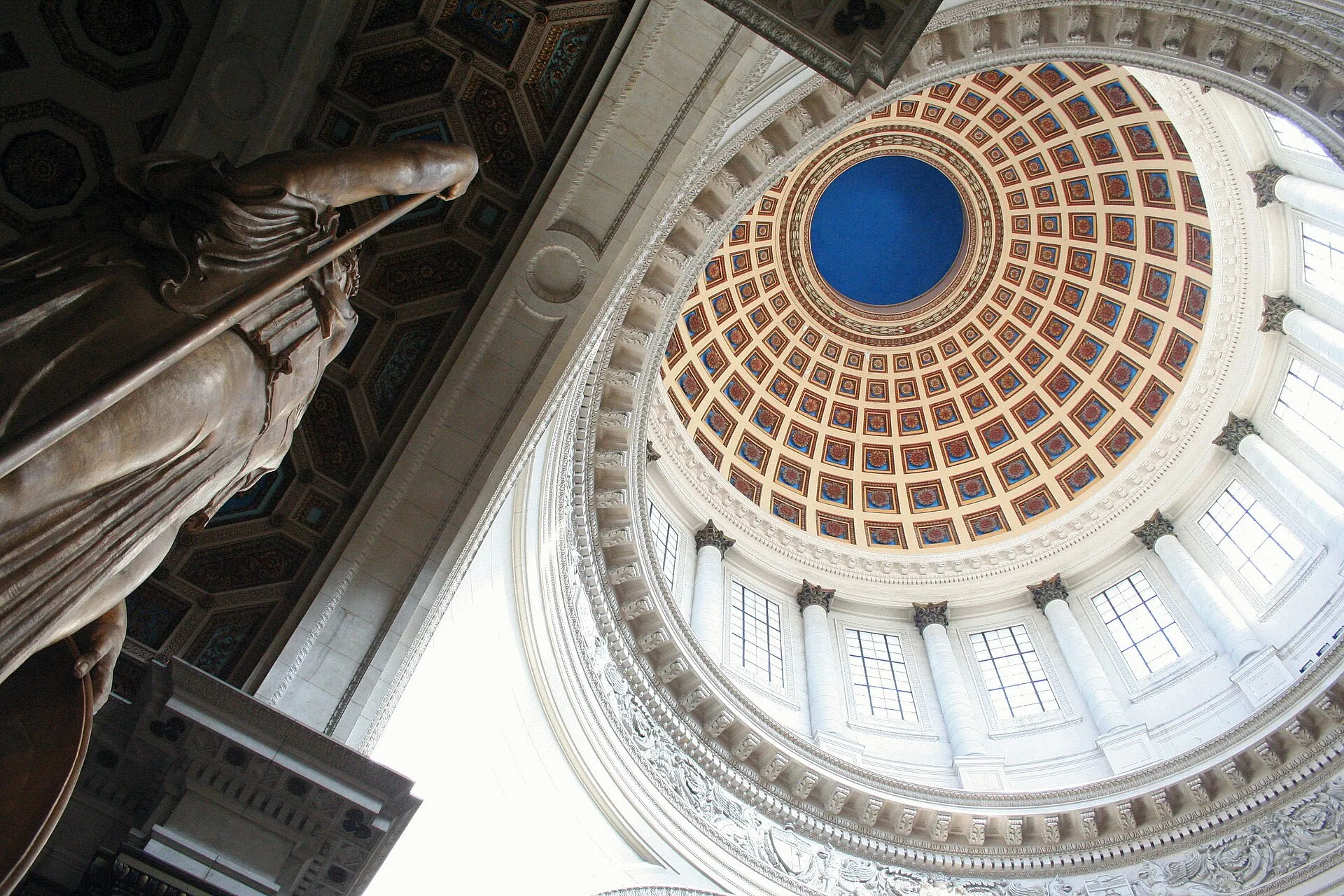
- The República statue — At 17 meters, the bronze figure of the Republic standing in the rotunda was one of the tallest indoor statues in the world when installed; it was cast in Italy from a design by Italian sculptor Angelo Zanelli, who also designed the relief panels on the entrance doors
- The dome interior — The coffered dome rises 55 meters above the rotunda floor, lit by windows at the drum level that cast changing light through the day onto the bronze and marble below
When to Visit
Tuesday–Sunday: 10 AM–7 PM. Closed Mondays. Guided tours: Run at intervals through the day; arrive early to secure a spot in the English-language tour if available. Evening: The illuminated dome is best seen from the Parque Central after dark — a free view requiring no entry. Best for photography: Morning light illuminates the granite steps and bronze doors; late afternoon light catches the dome from the north.
Admission and Costs
Entry: $5–8 USD for foreign visitors. Guided interior tour: $10–20 per person (includes access to the main hall and restricted upper levels). Photography: Standard cameras included in entry; professional equipment may require a separate permit. All payments in USD or euros only.
The Case for a Guide
El Capitolio's history is a narrative about Cuban identity and its complications:
- The political symbolism of the measurements — The deliberate decision to build the dome three centimeters taller than Washington's reveals the complex relationship between Cuban nationalism and American influence in the 1920s; a guide contextualizes why a building explicitly modeled on the US Capitol was simultaneously intended to assert Cuban independence from US influence
- The revolution's use and reuse of the building — After 1959, Castro's government made a pointed decision not to use the Capitolio for the new National Assembly, meeting instead in a more modest building; a guide explains what that decision communicated about revolutionary symbolism and the rejection of Republican-era grandeur
- The restoration choices — The 2010–2018 restoration involved decisions about what to restore, what to preserve as found, and what to leave unrestored; a guide who followed the work can explain which surfaces are original 1929 marble and which are replacement, and what the curatorial philosophy of the restoration reveals about Cuba's current relationship with its pre-revolutionary past
Tips for Visitors
Arrive early: The building gets hot inside by midday — morning visits are more comfortable and have smaller tour groups. The exterior steps: Even without entering, the approach from Parque Central through the bronze gates and up the granite steps is an architectural experience worth taking slowly. Combine with Parque Central: The park in front of El Capitolio is a social hub — chess players compete on permanent boards, and conversations about baseball (and everything else) happen at all hours. Evening: Walk past El Capitolio after dark when the dome is illuminated — the reflection in the wet pavement after rain is one of the most beautiful sights in Havana.
Frequently Asked Questions
When is El Capitolio open to visitors?
El Capitolio is open Tuesday through Sunday, 10 AM to 7 PM; closed Mondays. Guided tours of the interior run at set intervals through the day; independent visits to some areas are also permitted. The exterior steps and the Parque Central in front are accessible at any hour. The building now houses the Cuban Academy of Sciences, so certain working areas remain restricted. Evening visits are particularly atmospheric when the dome is illuminated against the Havana sky.
How much does it cost to visit El Capitolio?
Entry to El Capitolio costs $5–8 USD for foreign visitors. Guided interior tours run $10–20 per person and are the best way to access the main hall, the Diamond of Cuba embedded in the floor, and the upper levels with harbor views. Photography permits may be required for professional equipment. All prices must be paid in USD or euros; credit and debit cards are not accepted.
What is the Diamond of Cuba inside El Capitolio?
Embedded in the floor directly beneath the dome is a 24-carat diamond that served as the zero-kilometer marker from which all Cuban highway distances were originally measured. A bronze replica now marks the spot (the original diamond was stolen and later recovered, then stored in the National Bank for safekeeping), but the replica occupies the same ceremonially and geographically significant position under the center of Havana's most important building.