

Overview
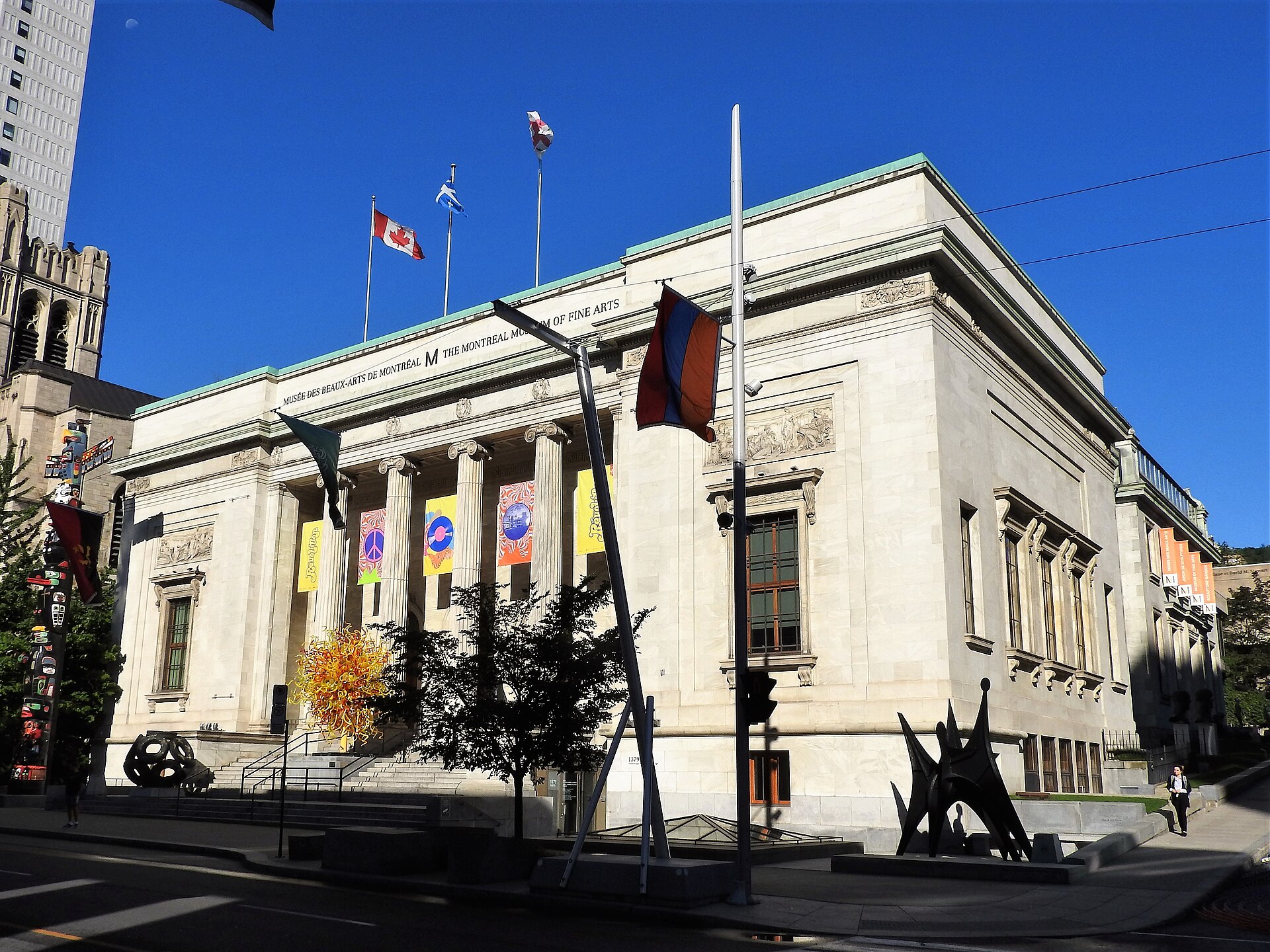
Straddling both sides of Sherbrooke Street West in the heart of the Golden Square Mile, the Musee des beaux-arts de Montreal has been collecting art since 1860, making it the oldest art museum in Canada. What began as a single Beaux-Arts pavilion on the north side of the boulevard has expanded over the decades into a campus of five interconnected buildings joined by underground passages that let visitors wander from ancient Egyptian funerary objects to contemporary Quebecois installations without stepping outside. The permanent collection numbers more than 45,000 works — paintings, sculptures, decorative objects, photographs, and textiles gathered from every inhabited continent and spanning roughly forty millennia of human expression. Canadian galleries anchor the experience with canvases by the Group of Seven, Jean-Paul Riopelle, and Emily Carr, alongside one of the world's most significant holdings of Inuit carvings and Cape Dorset prints. Across the street, the Desmarais Pavilion houses European old masters, while the newest addition — the Michal and Renata Hornstein Pavilion — devotes entire floors to world cultures and fashion design. The museum regularly stages blockbuster temporary exhibitions that draw hundreds of thousands of visitors and rank among the most attended in North America.
Collections Highlights
Canadian and Inuit art: Galleries dedicated to the Group of Seven's sweeping northern landscapes, Riopelle's lyrical abstractions, and a vault of Inuit soapstone carvings and Cape Dorset prints that reveal artistic traditions stretching back centuries before European contact. Five interconnected pavilions: The campus spans an entire city block, with underground tunnels linking classical and contemporary wings so that a morning visit can flow from Renaissance altarpieces to immersive video installations without retracing your steps. Fashion and design wing: The Ben Weider Pavilion houses a permanent decorative arts and design collection that traces the evolution of furniture, jewellery, glass, and haute couture from the 18th century to the present. World cultures collection: The Hornstein Pavilion presents art from Africa, Asia, the Islamic world, and the pre-Columbian Americas, organized thematically to draw unexpected connections across civilizations. Blockbuster exhibitions: The museum consistently attracts loan shows of international calibre — past exhibitions have covered everything from Pompeii artefacts to the creative universe of Thierry Mugler — drawing audiences that rival those of New York and London institutions. Sherbrooke Street setting: The museum anchors a stretch of Montreal's grandest boulevard, flanked by limestone mansions from the city's Gilded Age and within walking distance of the Ritz-Carlton and the leafy campuses of McGill University.
Guided Tours
Art historian guides at the Musee des beaux-arts navigate the five-pavilion campus with thematic focus, constructing itineraries that connect works across centuries and continents. In the Canadian galleries, they explain how the Group of Seven's wilderness canvases were a deliberate assertion of national identity distinct from European traditions, and how Riopelle's tachiste abstractions brought Montreal into the international avant-garde. In the Inuit art collection, guides decode the spiritual significance of soapstone carvings depicting Sedna (the sea goddess) and transformation figures that blur the boundary between human and animal — iconography rooted in oral traditions that predate European contact by millennia. The underground tunnel connecting the north and south pavilions becomes a gallery of contemporary Quebecois art, and guides trace the lineage from Automatiste painters of the 1940s through the Refus Global manifesto to today's video and installation artists. For temporary exhibitions, specialist guides provide context that connects blockbuster loan shows to the museum's permanent strengths.
When to Visit
Regular hours: Tuesday to Sunday 10 AM - 5 PM, Wednesday until 9 PM, closed Mondays. Best time: Wednesday evenings after 5 PM, when the crowds thin and you can linger in the quieter pavilions without competing for sightlines. Busiest period: Weekend afternoons during major temporary exhibitions — expect queues at the ticket counter and congested galleries. Free permanent collection access: Visitors under 21 enjoy free admission to the permanent galleries at all times, making weekday school hours surprisingly peaceful for adult visitors.
Admission and Costs
Adult admission: CA$24 for access to the permanent collection across all five pavilions. Under 21: Free admission to the permanent collection — one of the most generous youth policies of any major museum in the world. Temporary exhibitions: May carry a surcharge of CA$5-12 above the base ticket, depending on the scale and lending institutions involved.
Tips for Visitors
Plan for scale: Five pavilions and 45,000 objects cannot be absorbed in a single pass — pick two or three collections that interest you most and save the rest for a return visit. Use the underground passages: The tunnels beneath Sherbrooke Street connect the north and south pavilions and double as gallery space, so you never need to cross traffic to move between buildings. Audio guide recommended: Available at the front desk, the multimedia guide adds context to key works and helps navigate a campus that can feel labyrinthine to first-time visitors. Gift shop detour: The museum boutique stocks an unusually well-curated selection of art books, Quebecois design objects, and exhibition catalogues that make worthwhile souvenirs. Combine with the neighbourhood: Crescent and Bishop streets, a short walk south, are lined with restaurants and terrasses ideal for a post-museum lunch or aperitif.