
Iguazú timeline
-
First European sighting
Spanish conquistador Álvar Núñez Cabeza de Vaca became the first European to record the falls, centuries before a town grew at the river confluence.
-
Iguazú National Park created
Among the first national parks established in Argentina, protecting more than 67,000 hectares of the Upper Paraná Atlantic Forest around the falls.
-
UNESCO World Heritage inscription
Fifty years after the park's creation, UNESCO listed Iguazú for its exceptional natural beauty and biodiversity, cementing tourism as the town's economy.
Cited city facts
Key facts for visiting Iguazú
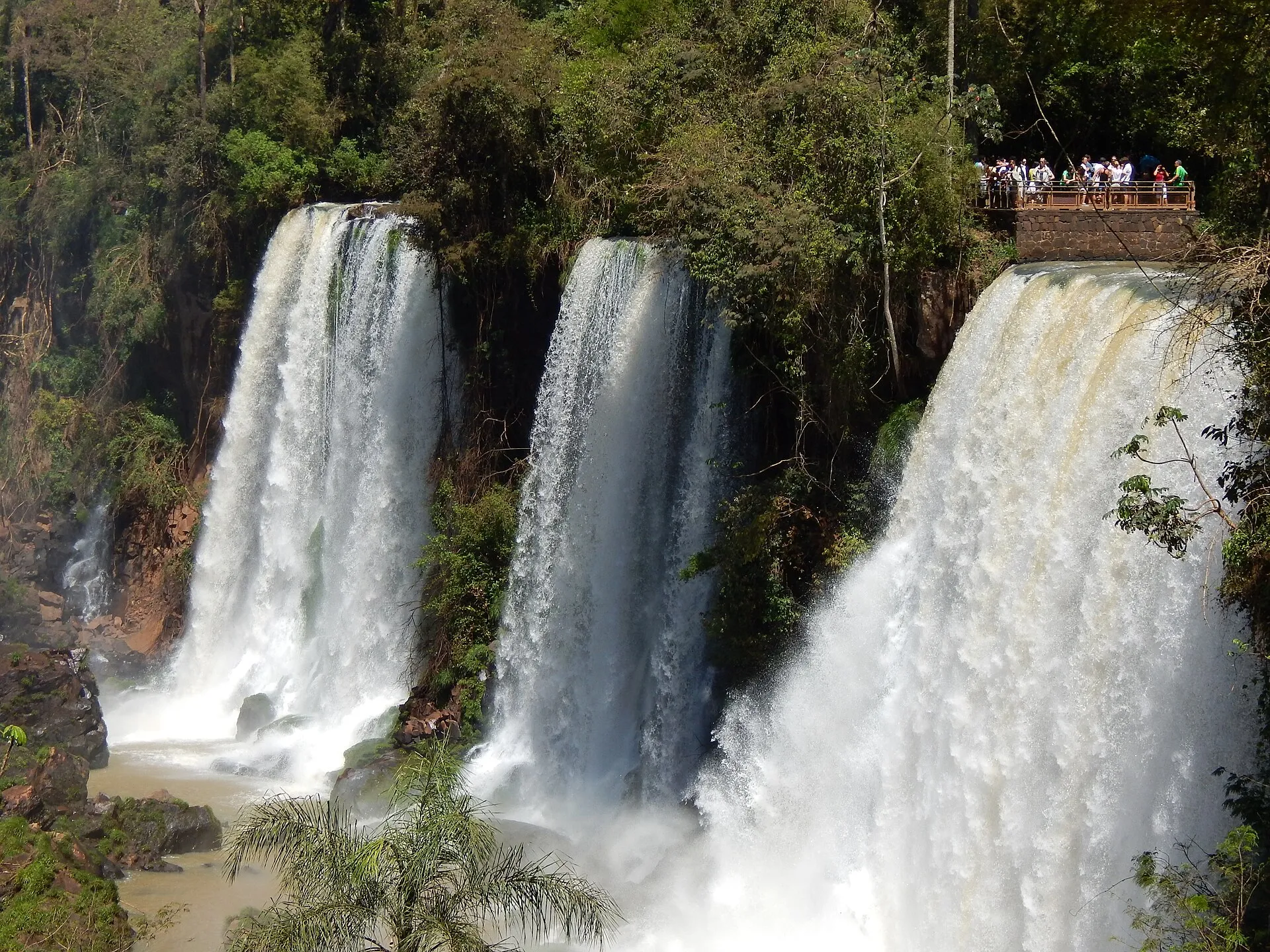
A curtain of water 2,700 m wide and up to 80 m high
UNESCO describes Iguazú's semicircular cataract as roughly three times the width of Niagara, and the horseshoe-shaped Garganta del Diablo alone carries about half the Iguazú River's flow.
67,720 hectares of protected Atlantic Forest
Iguazú National Park shelters one of the largest surviving remnants of the Upper Paraná Atlantic Forest, a biome that has lost more than 90% of its original extent to agriculture and logging.
Around 2,000 species of vascular plants
The park's layered subtropical canopy — palms, tree ferns, bamboo, and epiphyte-draped hardwoods — makes it one of South America's most botanically diverse rainforests, a stronghold of the fast-vanishing Upper Paraná Atlantic Forest.
Argentina's most-visited national park
Iguazú draws well over a million travellers a year — more than any other unit in the national parks system — making tourism the economic engine of Puerto Iguazú and the wider Misiones frontier.
Protected since 1934, UNESCO-listed since 1984
Iguazú was among the first national parks created in Argentina; fifty years later UNESCO inscribed it on the World Heritage List for its exceptional natural beauty and biodiversity.
Source: tour-guide.com — Free to cite with attribution
Things to see
What are the top attractions in Iguazú?
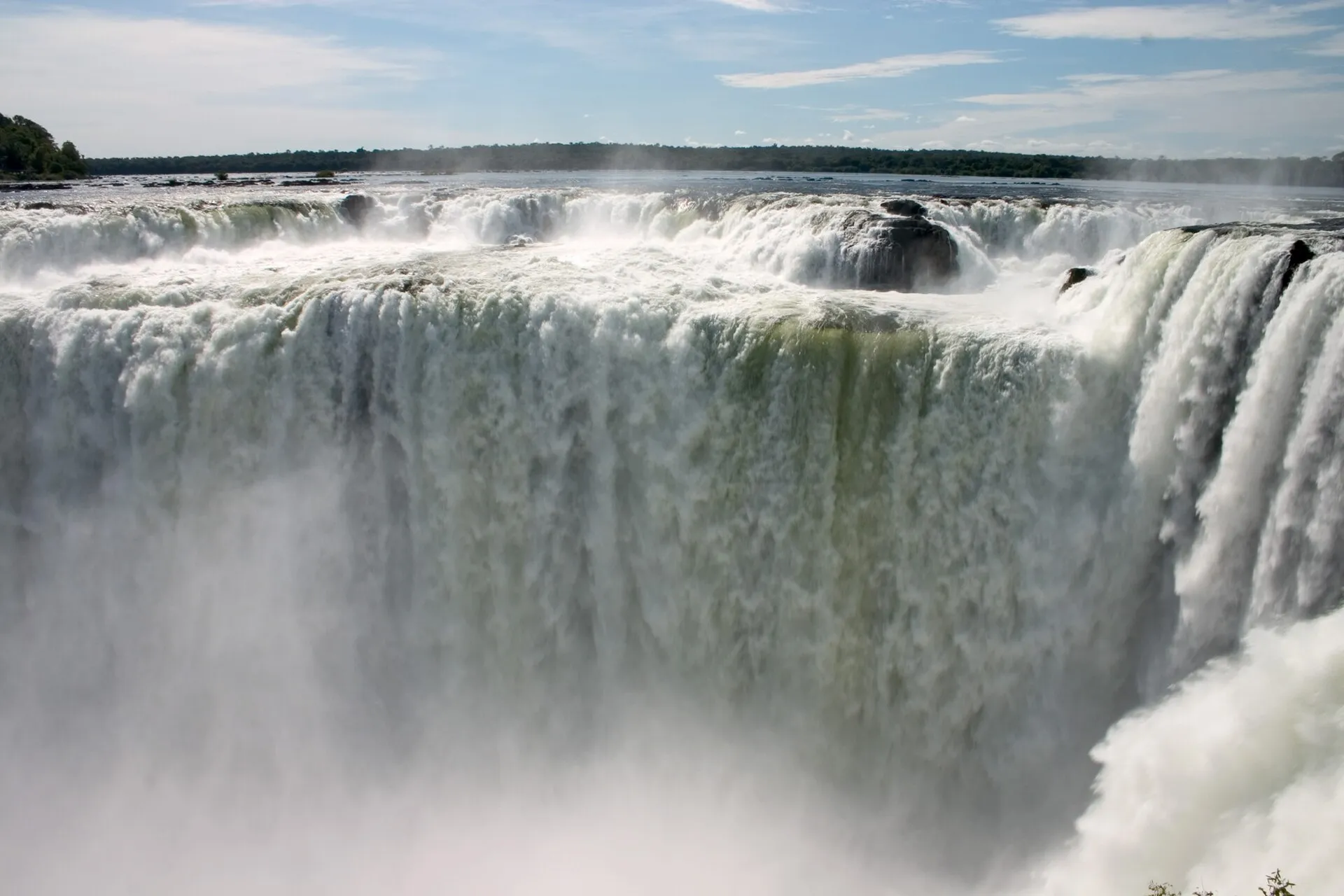
- Garganta del Diablo at opening time — The Devil's Throat viewpoint before the crowds arrive is close to a spiritual experience: stand on the platform as mist envelops you and the roar drowns out everything else. Take the ecological train straight there at 8 AM, before the tour buses land around 10.
- Gran Aventura boat ride — A Zodiac inflatable powers directly under the cascades for the kind of total drenching that makes you laugh uncontrollably — best saved for the afternoon, after you have walked the catwalks dry.
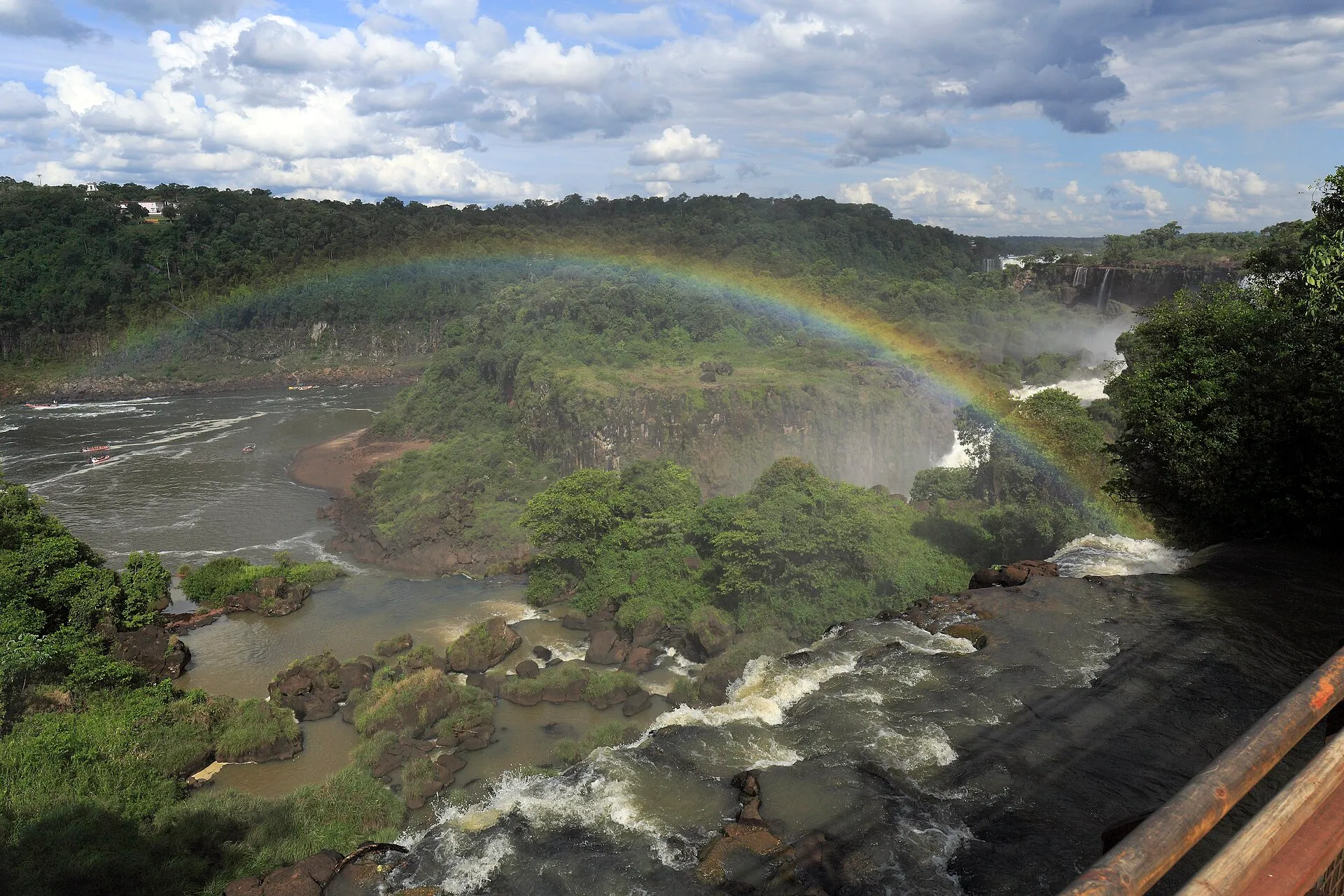
- San Martín Island — Most visitors skip the free boat to this jungle island, which rewards the effort with isolated swimming coves and head-on views of the falls from below.
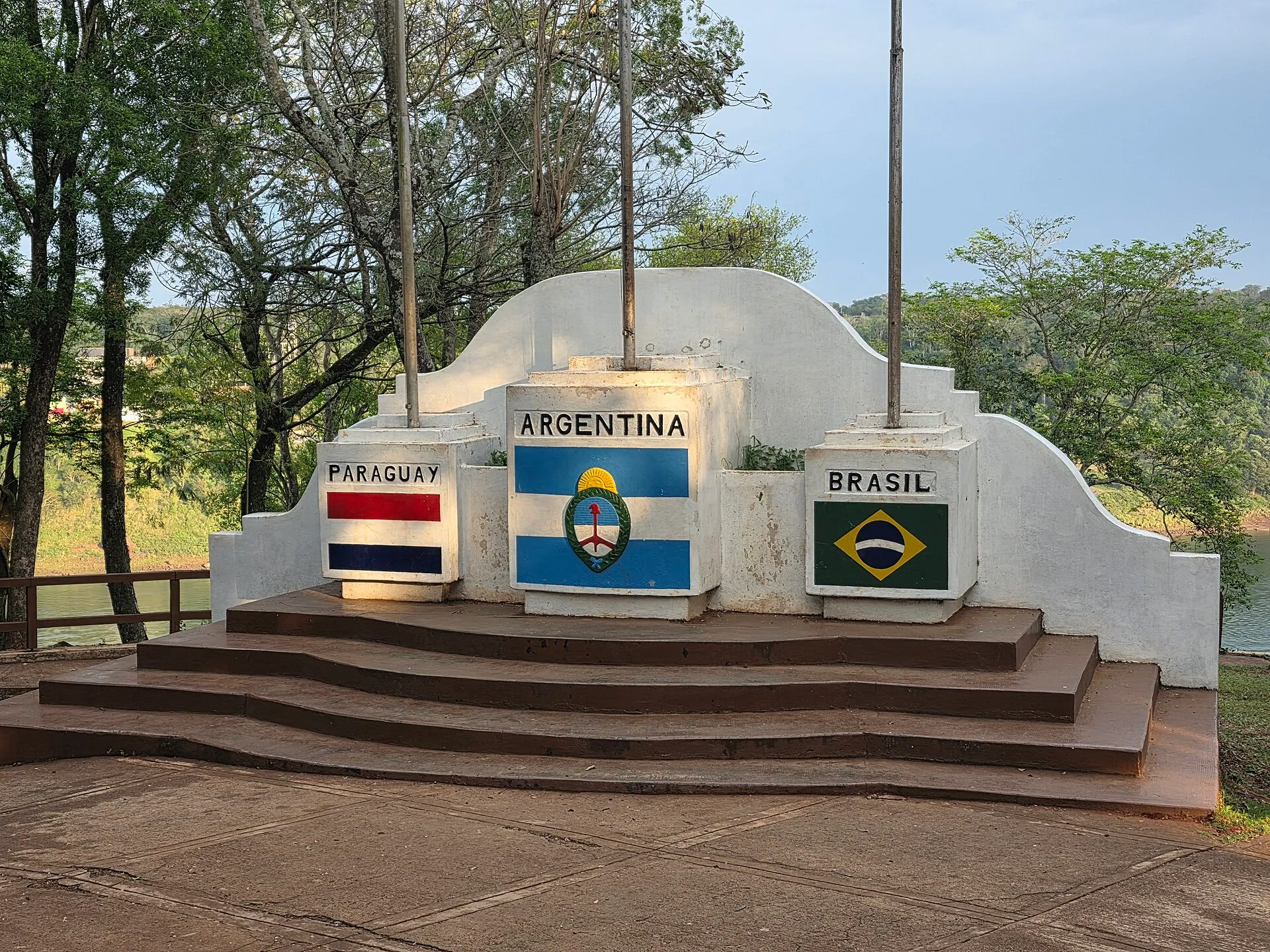
- Sunset at the triple border — Watch the sun drop behind Paraguay from the Hito Tres Fronteras viewpoint, where the tea-brown Iguazú visibly merges with the muddy Paraná.
- The Brazilian side — Across the Tancredo Neves bridge, Foz do Iguaçu's panoramic walkway frames the whole cataract in a single sweeping view that the Argentine catwalks, by design, never give you.
- Full moon walks — On select nights around the full moon, the park opens after dark for guided walks to the Devil's Throat, where moonlit mist conjures ghostly, colourless rainbows.
Hito Tres Fronteras
Three countries, two rivers, one viewpoint — where Argentina, Brazil, and Paraguay converge
Iguazu Falls
Two hundred and seventy-five cascades exploding from the jungle — nature at maximum volume
San Martín Island
A jungle island at the foot of the falls — where the crowds vanish and the thunder stays
Guide planning
How much does a tour guide cost in Iguazú?
Park admission is charged separately at the gate and is not included in most guide fees — budget roughly AR$20,000-30,000 ($20-30) for foreign visitors on top of the figures below.
| Tour Type | Price | Details |
|---|---|---|
| Falls Day Tour (Argentine Side) | AR$50,000-90,000 ($50-90) | With transport, guide, and park logistics |
| Both Sides (2 Days) | AR$100,000-180,000 ($100-180) | Argentine + Brazilian sides, total |
| Jungle & Wildlife Tour | AR$40,000-70,000 ($40-70) | Half day, naturalist-led |
| Boat Safari Under Falls | AR$30,000-50,000 ($30-50) | Per person, Gran Aventura Zodiac |
A licensed bilingual guide is worth the outlay less for logistics than for the wildlife: the difference between glimpsing a toco toucan and walking past a jaguar print is a trained eye. Guides also sequence the three circuits to keep you ahead of the crowds at each viewpoint.
Season planner
When is the best time to visit Iguazú?
Iguazú is a year-round destination, but water flow and crowds swing hard with the seasons. The subtropical climate delivers three very different experiences depending on when you arrive:
- March–May (autumn) and August–October (early spring) — the sweet spot: strong flow, thinning crowds, and temperatures in the pleasant mid-20s°C rather than searing summer highs.
- November–March (wet season) — peak volume and the most thunderous Garganta del Diablo, but expect 35°C-plus, humidity above 80%, and sudden afternoon storms. Rare floods can submerge the catwalks and close circuits entirely.
- June–August (dry winter) — cooler, clearer air and easier hiking, with somewhat reduced flow and the thinnest mist.
Time the visit around the crowd calendar, not just the weather. The park is busiest during Semana Santa (Easter week), the January summer holidays, and the July winter school break, when domestic tourists pour in and the Devil's Throat boardwalk backs up by mid-morning. Around each full moon, the park runs guided night walks to the falls (a handful of departures on select evenings, booked weeks ahead through the official park site). Puerto Iguazú also stages Iguazú en Concierto, an international youth-music festival usually held in the town in January. Whenever you come, plan to get soaked at the Devil's Throat and on the boat rides — pack a dry bag for electronics and quick-dry layers or a poncho.
Spring
Mar-May
Summer
Jun-Aug
Autumn
Sep-Nov
Winter
Dec-Feb
Each score averages that season’s monthly ratings out of 5. The top-rated window is usually the peak season too, so read the guidance above for its trade-offs before you book.
On the ground
How do you get around Iguazú?
Once you reach the park, getting around is easy and largely car-free; the real logistics are the hops between town, park, and the Brazilian side.
- Ecological train (Tren Ecológico de la Selva) — A free, open-sided train links the entrance's Central Station to the Cataratas Station (Upper and Lower circuits) and on to the Garganta del Diablo trailhead, running every 20–30 minutes.
- Walking circuits — Well-marked catwalks connect every viewpoint: the Upper Circuit (bird's-eye, step-free), the Lower Circuit (down to the base, with stairs), and the 1.1-kilometre Garganta boardwalk out over the river.
- From town to park — The entrance sits about 20 km from Puerto Iguazú. Local buses run from the town terminal roughly every 20–30 minutes (about a 40-minute ride); taxis and remises (private cars) cover it faster for more.
- Airport — Cataratas del Iguazú International Airport (IGR) lies between town and park, with direct flights from Buenos Aires's Aeroparque in under two hours.
- Crossing to Brazil — The Brazilian side, reached across the Tancredo Neves International Bridge to Foz do Iguaçu, delivers the wide panoramic view; carry a passport (and check whether your nationality needs a visa) before crossing.
- Accessibility — The ecological train, Upper Circuit, and Garganta del Diablo boardwalk are largely step-free and wheelchair-navigable; the Lower Circuit involves staircases.
- Coatis — These raccoon-like foragers patrol the park's lunch areas aggressively — never feed them and keep bags zipped shut.
- Plan two days minimum — The Argentine side fills a full day; the Brazilian side adds its panoramas on a second.
Frequently Asked Questions
What is the best time to visit Iguazú?
March to May and August to October offer the best balance of strong water flow and comfortable weather without extreme heat or humidity. The wet season (October-March) brings the most dramatic water volume but temperatures above 35°C, while the drier winter months (June-August) are cooler with somewhat reduced flow.
How many days do you need to see Iguazú Falls?
Plan a minimum of two days. The Argentine side of the national park — three catwalk circuits plus the free boat to San Martín Island — comfortably fills a full day, while the Brazilian side across the border adds the wide, panoramic view on a second. Add a half-day for the triple-border sunset at Hito Tres Fronteras or a jungle wildlife walk if your schedule allows.
How much does a tour guide cost in Iguazú?
Falls Day Tour (Argentine Side): AR$50,000-90,000 ($50-90 with transport). Both Sides (2 Days): AR$100,000-180,000 ($100-180 total). Jungle & Wildlife Tour: AR$40,000-70,000 ($40-70 half day).
How do you get around Iguazú?
Inside the national park, a free ecological train and well-marked walking trails connect all the major circuits and viewpoints. From Puerto Iguazu town, taxis and local buses make the 20-kilometre trip to the park entrance, and remise (private car) services can also take you to the Brazilian side.
Do you need a passport or visa to visit the Brazilian side?
Yes — crossing the Tancredo Neves International Bridge from Puerto Iguazú into Foz do Iguaçu is an international border, so bring your passport. Whether you also need a visa depends on your nationality; many European and neighbouring South American passport holders do not, but travellers from countries such as the United States, Canada, and Australia should check Brazil's current entry rules before crossing.