

Overview
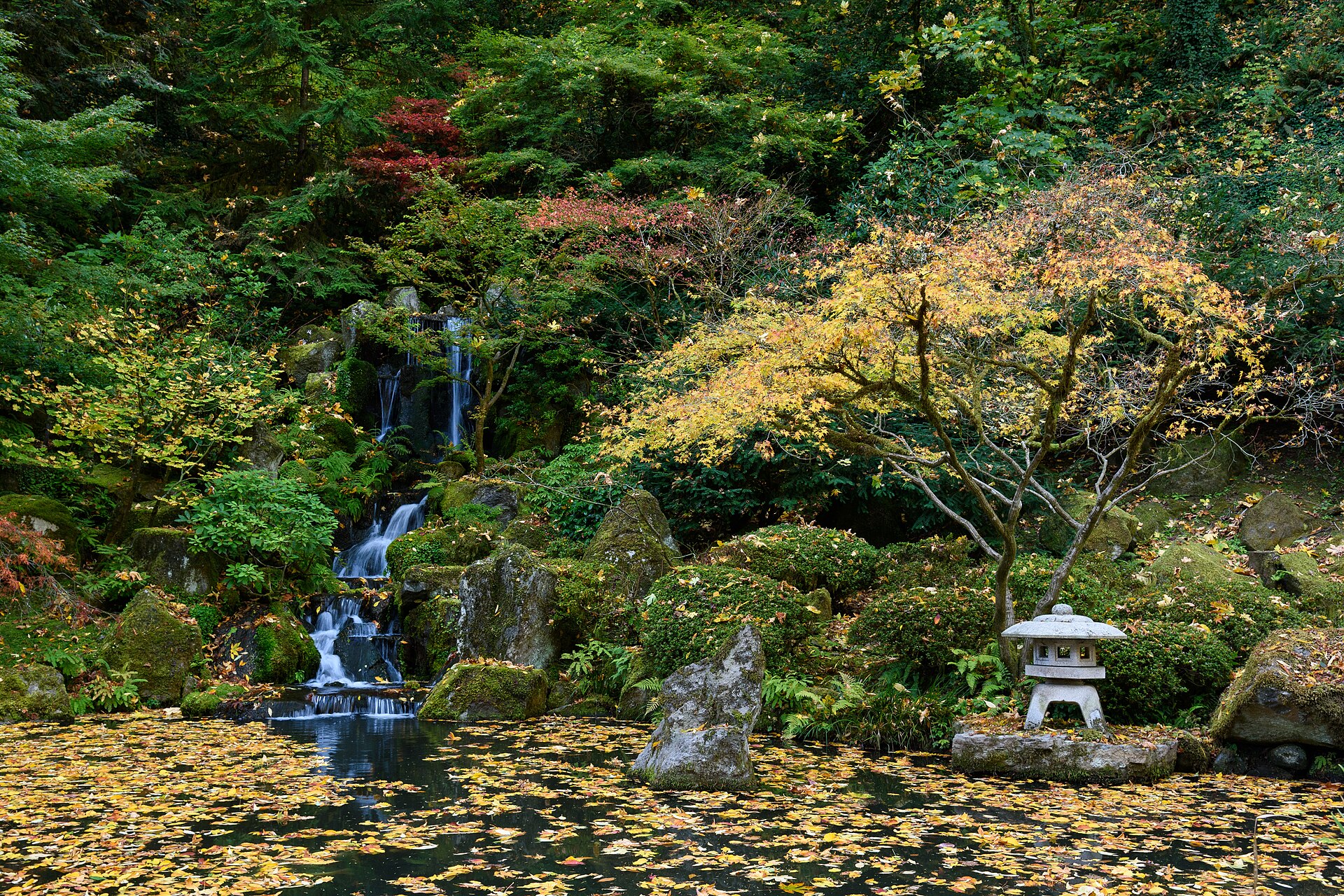
Tucked into a hillside within Washington Park, the Portland Japanese Garden has been captivating visitors since it opened in 1967. Professor Takuma Tono of Tokyo Agricultural University designed the original five garden styles on a steeply contoured 5.5-acre site that early critics considered unbuildable. The challenging terrain proved to be the garden's greatest asset: the elevation changes create a sense of journey and discovery that flat gardens cannot replicate, and the surrounding Douglas fir canopy provides the kind of borrowed scenery that Japanese gardeners call shakkei.
Former Japanese Ambassador Nobuo Matsunaga famously declared it "the most beautiful and authentic Japanese garden in the world outside of Japan." In 2017, the garden expanded dramatically with the Cultural Village, designed by renowned architect Kengo Kuma. His timber-and-glass pavilions nearly doubled the garden's footprint to 12 acres while preserving the meditative atmosphere. Today the garden encompasses eight distinct styles: the Strolling Pond Garden with its iconic moon bridge, the Zen-inspired Sand and Stone Garden, the contemplative Natural Garden, and the mossy Flat Garden.
Activities
🌉 The moon bridge: The arched wooden bridge reflecting in the still pond below is the garden's most photographed feature and an icon of Portland itself. 🪟 Sand and Stone Garden: A Zen-inspired dry landscape where raked gravel represents water and standing stones suggest mountains, inviting seated contemplation. 🌿 Natural Garden: The most Oregon-feeling section, where native ferns and mosses mingle with Japanese plantings along a meandering woodland path. 🌱 Kengo Kuma's Cultural Village: Walk through the latticed timber pavilions, browse the art gallery, and sit on the bonsai terrace overlooking the garden canopy. 🍵 Umami Cafe: The garden's tea house serves matcha, wagashi sweets, and seasonal Japanese-inspired dishes with views into the surrounding forest. 🍁 Autumn maples: Late October transforms the garden into a blazing tapestry of red, orange, and gold that rivals the finest autumn foliage in Kyoto
Seasonal Highlights
Tucked into a hillside within Washington Park, the Portland Japanese Garden has been captivating visitors since it opened in 1967. Professor Takuma Tono of Tokyo Agricultural University designed the original five garden styles on a steeply contoured 5.5-acre site that early critics considered unbuildable. The challenging terrain proved to be the garden's greatest asset: the elevation changes create a sense of journey and discovery that flat gardens cannot replicate, and the surrounding Douglas fir canopy provides the kind of borrowed scenery that Japanese gardeners call shakkei. Former Japanese Ambassador to the United States Nobuo Matsunaga famously declared it "the most beautiful and authentic Japanese garden in the world outside of Japan," a reputation the garden has only strengthened in the decades since. In 2017, the garden expanded dramatically with the opening of the Cultural Village, designed by renowned Japanese architect Kengo Kuma. His timber-and-glass pavilions added gallery space, a tea cafe, a library, and a bonsai terrace, nearly doubling the garden's footprint to 12 acres while preserving the meditative atmosphere that defines the space. Today the garden encompasses eight distinct styles: the Strolling Pond Garden with its iconic moon bridge, the Zen-inspired Sand and Stone Garden, the contemplative Natural Garden, the mossy Flat Garden, and four newer additions within the Cultural Village. A guided visit transforms the experience from a beautiful walk into a deep exploration of Japanese philosophy, horticultural technique, and the cross-cultural story of how Portland came to nurture one of the world's great gardens.
When to Visit
Getting there: A free shuttle runs every 15 minutes from the Washington Park MAX station to the garden entrance, avoiding the limited hilltop parking. Footwear: Paths are paved but steep in places; comfortable walking shoes with good grip are essential, especially in wet weather. Photography: Tripods are not allowed, but the soft, diffused light on overcast days produces the richest colors without harsh shadows. Combine with Washington Park: The garden sits within Washington Park, making it natural to pair with the International Rose Test Garden (a 10-minute walk downhill) or a hike to Pittock Mansion. Slow down: The garden is designed to be experienced at a contemplative pace; plan at least 90 minutes, and resist the urge to rush through all eight styles. Seasonal events: The garden hosts ikebana exhibitions, taiko drumming performances, and a spectacular Obon festival in late summer
Admission and Costs
Every element in a Japanese garden carries meaning invisible to casual observers. Rocks represent mountains or islands. Raked gravel suggests flowing water. Trees are positioned to create asymmetrical balance that feels natural rather than designed. Guides decode these visual languages, explaining concepts like shakkei (borrowed scenery, where distant Mount Hood becomes part of the composition) and ma (negative space that gives meaning to what surrounds it). Without this framework, the garden remains beautiful but silent; with it, every viewing angle reveals intentional poetry. Eight distinct garden styles occupy the twelve-acre site, each embodying different aesthetic and spiritual purposes that blur together without informed narration. The Strolling Pond Garden invites movement around its central water feature. The Sand and Stone Garden demands seated contemplation of its Zen-inspired dry landscape. The Natural Garden recreates the feeling of wild woodland. Guides distinguish these traditions and explain how Professor Takuma Tono adapted centuries of Japanese practice to Oregon's particular climate, topography, and native forest canopy. The 2017 Cultural Village expansion brought architecture by Kengo Kuma, one of the world's most celebrated designers, into conversation with the historic gardens. His timber-lattice pavilions honor Japanese building traditions while responding to Pacific Northwest materials and light, and guides articulate the dialogue between his contemporary structures and the classical landscape they frame. They also share the cross-cultural history behind the garden's founding, connecting it to Portland's sister-city relationship with Sapporo and the post-war reconciliation that made such transpacific cultural exchange possible.
Tips for Visitors
Getting there: A free shuttle runs every 15 minutes from the Washington Park MAX station to the garden entrance, avoiding the limited hilltop parking. Footwear: Paths are paved but steep in places; comfortable walking shoes with good grip are essential, especially in wet weather.
Photography: Tripods are not allowed, but the soft, diffused light on overcast days produces the richest colors without harsh shadows. Combine with Washington Park: Pair with the International Rose Test Garden (a 10-minute walk downhill) or a hike to Pittock Mansion. Slow down: The garden is designed to be experienced at a contemplative pace — plan at least 90 minutes and resist the urge to rush through all eight styles.