

Overview
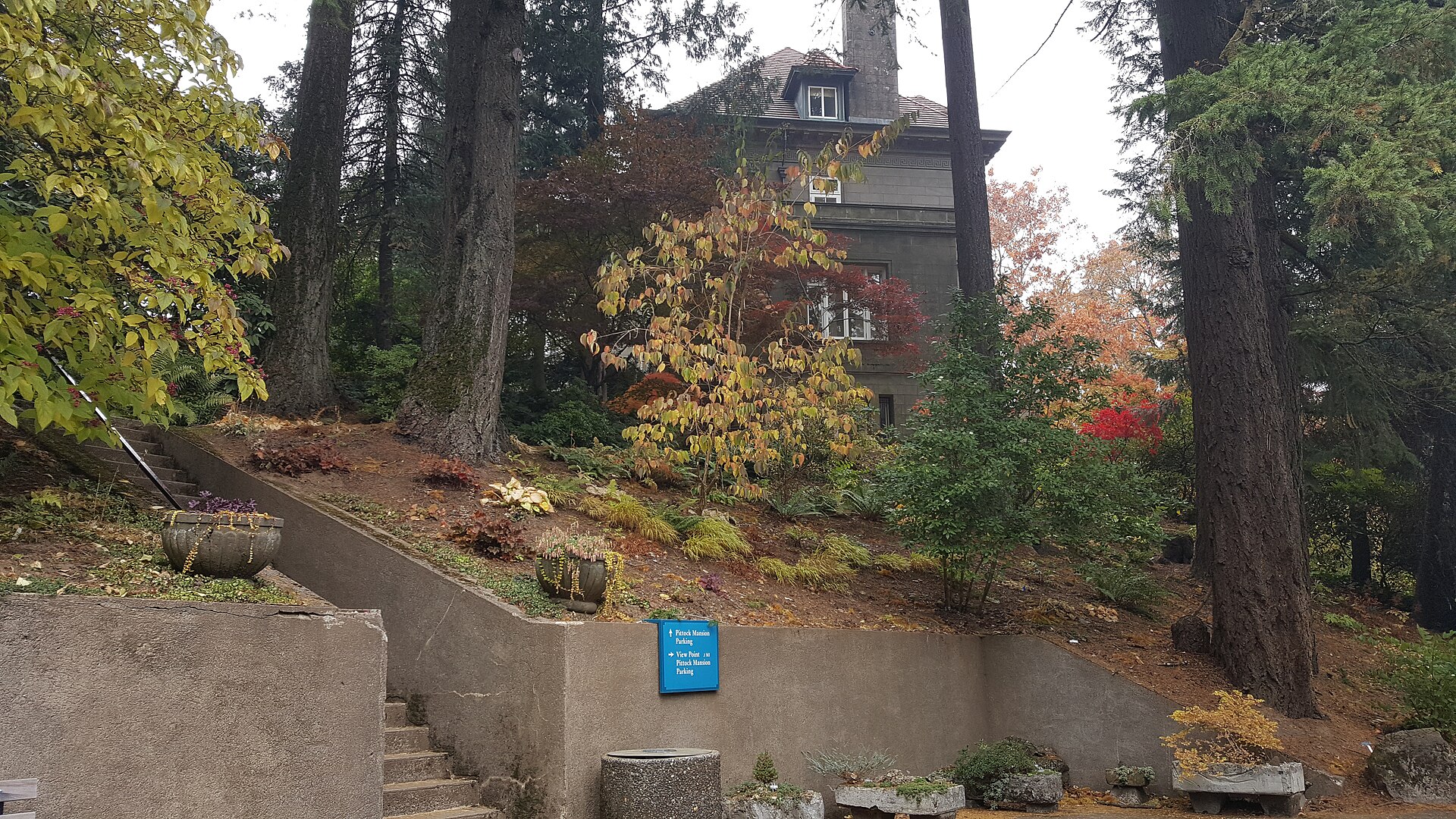
Perched on a thousand-foot hilltop in the West Hills above Portland, Pittock Mansion stands as one of Oregon's most impressive surviving examples of early 20th-century residential grandeur. Henry Pittock, a London-born immigrant who walked the Oregon Trail as a teenager and rose to become the publisher of The Oregonian newspaper, commissioned the 16,000-square-foot French Renaissance chateau in 1909. When it was completed in 1914, the mansion was astonishingly ahead of its time: it featured a central vacuum system, an elevator, an intercom, indirect lighting, and a walk-in refrigerator at a time when most Portland homes still relied on wood stoves and gas lamps. The 46 acres of surrounding grounds offer some of the most dramatic views in the Pacific Northwest, with Mount Hood, Mount St. Helens, and the Willamette River valley stretching to the horizon. After the Pittock family departed, the mansion fell into disrepair and faced demolition in the 1960s. A passionate citizens' campaign raised the funds to save it, and the City of Portland purchased the property in 1964 for $225,000. Today the house museum draws over 100,000 visitors annually who come to admire the meticulously restored rooms, learn about Portland's pioneer-era newspaper dynasty, and stand on the viewpoint terrace that many consider the finest panorama in the city. The mansion connects naturally to the trail networks of Washington Park and Forest Park, making it possible to hike to the estate through old-growth Douglas fir from the Portland Japanese Garden below.
Architecture
The viewpoint terrace: Stand at the stone balustrade and take in Mount Hood, Mount St. Helens, Mount Adams, and the city grid stretching to the Willamette in a single sweeping panorama. The Turkish smoking room: An unexpected room decorated in Ottoman style with intricate woodwork, reflecting the era's fascination with the exotic. The technology showcase: The central vacuum system, built-in intercom, and walk-in refrigerator were decades ahead of their time and still intact. Hiking approach: Walk the Wildwood Trail from Washington Park through old-growth forest to arrive at the mansion on foot, the way the Pittocks' guests once did by carriage. Sunset from the grounds: The west-facing terrace catches golden light in the evening, turning the distant peaks pink and orange. Holiday tours: November and December fill every room with period-appropriate holiday decorations, live music, and a festive atmosphere
Historical Significance
Henry Pittock's personal history reads like the quintessential American saga. Orphaned as a teenager, he walked 2,000 miles on the Oregon Trail, arrived in Portland with nothing, and built a newspaper empire that shaped the Pacific Northwest for generations. Guides bring this remarkable trajectory to life, moving from room to room while narrating the ambitions, setbacks, and triumphs of a man whose mansion still commands the city's finest viewpoint more than a century after his death. Each room in the mansion reflects a different design sensibility, and without guidance the eclectic mix can feel arbitrary. French Renaissance formality gives way to English Arts and Crafts warmth, which yields in turn to a Turkish smoking room decorated with intricate Ottoman woodwork. Guides explain the logic behind these choices, revealing how the Pittocks and their architect created distinct atmospheres for entertaining, family life, and private retreat within a single residence. Equally easy to miss are the technological marvels embedded in the house: a central vacuum system, an elevator serving all floors, an intercom connecting the household, and indirect lighting schemes that were decades ahead of contemporary practice. The mansion connects physically to the trail networks of Washington Park and Forest Park's 5,200 wild acres, and guides often combine history tours with hiking routes that approach the estate through old-growth Douglas fir rather than by car. They also share the preservation story, describing how citizen activism saved the neglected mansion from demolition in the 1960s, a grassroots effort that mirrors Portland's broader spirit of civic engagement.
When to Visit
House museum: Open daily 10 AM to 4 PM (last entry at 3:30 PM), closed in January for maintenance and on major holidays. Grounds and viewpoint: Open daily from 5 AM to 9 PM year-round, free of charge. Best for views: Clear mornings from late June through September offer the sharpest views of Mount Hood, often obscured by clouds later in the day. Quietest visits: Tuesday and Wednesday mornings see the fewest visitors, allowing unhurried exploration of the interior rooms. Holiday season: November and December feature special holiday decorations throughout the mansion, though crowds are heavier
Admission and Costs
Adult admission: $14 for a self-guided tour of the mansion interior. Seniors (65+): $12; children 6-18 are $8; under 6 enter free. Grounds only: Completely free at all times, including the famous viewpoint terrace. Guided group tours: $35-50 per person for a 90-minute guided mansion tour with a historian (must be booked in advance). Private guide with hiking: $150-250 for a combined hike through Forest Park to the mansion with a nature and history guide for up to 4 people
Tips for Visitors
Driving: A winding road leads to a free parking lot at the summit; the drive from downtown takes about 15 minutes. Hiking access: The Wildwood Trail connects the mansion to Washington Park and the Japanese Garden via a moderate 1.5-mile forest walk. Photography: The viewpoint terrace offers the definitive Portland skyline shot with Mount Hood; mornings provide the clearest conditions. Wear sturdy shoes: The grounds are hilly and the trails to the mansion can be muddy, especially from October through May. Combine visits: Pair the mansion with a morning at the Japanese Garden or an afternoon browsing the Pearl District galleries back in the city. No interior photography: Photos are not permitted inside the mansion to protect the historic furnishings, so capture your shots on the grounds and terrace