

Overview
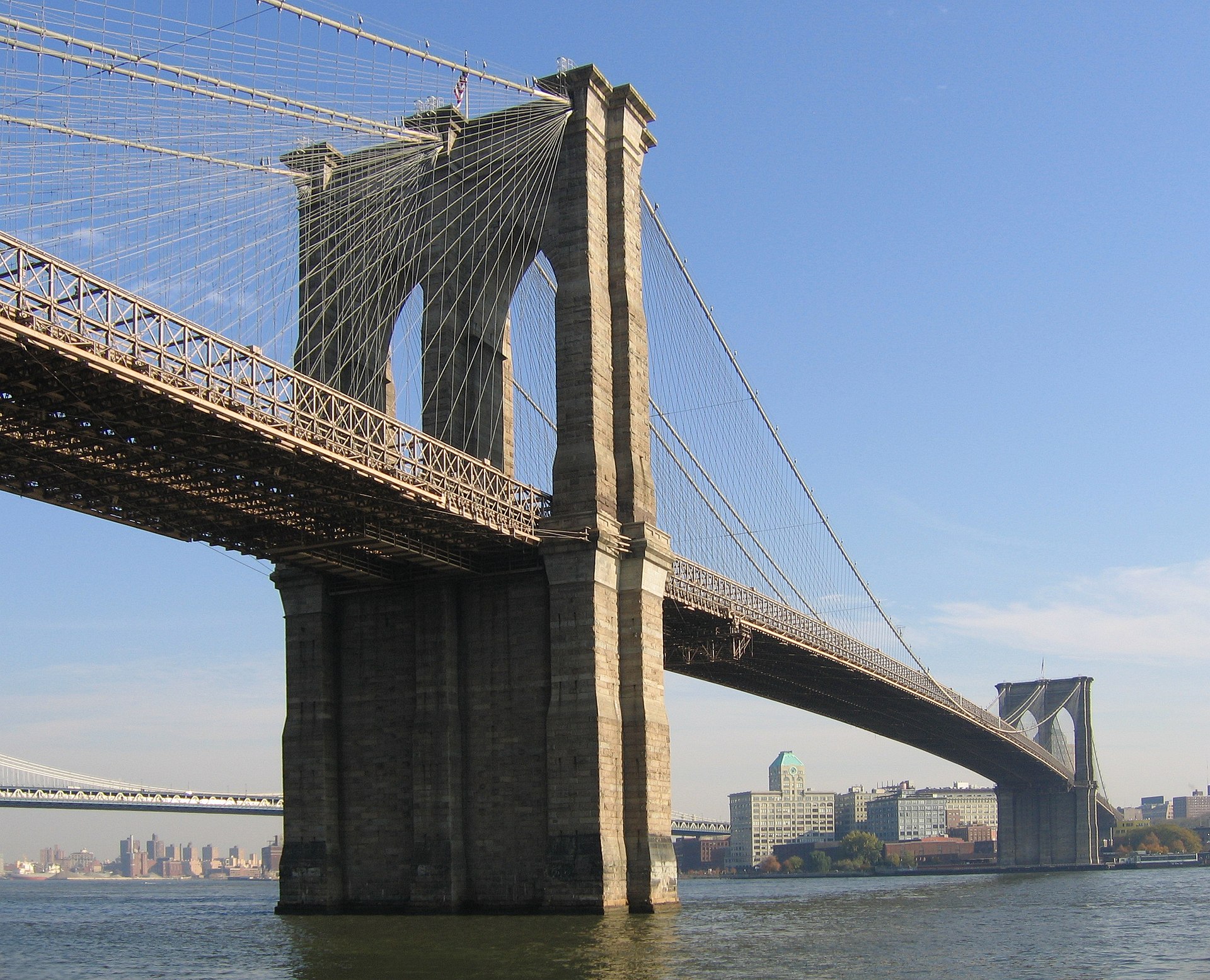
When the Brooklyn Bridge opened on May 24, 1883, it was the longest suspension bridge in the world and the first to use steel wire cables. Designed by John Augustus Roebling and completed by his son Washington after a tragic accident claimed the elder Roebling’s life, this National Historic Landmark stretches 5,989 feet across the East River. The elevated wooden boardwalk, separated from vehicle traffic below, offers a mile-long promenade with sweeping views of the New York City skyline, the Statue of Liberty, and the harbor that shaped the story of the United States.
Engineering Facts
Access: The pedestrian walkway is open 24 hours a day, 7 days a week, year-round. Sunrise walks (5:30-7:00 AM): Nearly empty boardwalk with golden light hitting the Manhattan skyline. Golden hour (1 hour before sunset): Ideal for photography as the city lights begin to flicker on. Avoid midday in summer: July and August afternoons bring thick crowds and no shade on the walkway. Winter charm: December through February is uncrowded; bundle up against East River wind gusts
Observation Points
The Roebling family saga reads like a Victorian novel, and guides bring every chapter alive as you walk the span their genius created. John Augustus Roebling died from a tetanus infection before construction began; his son Washington was paralyzed by caisson disease and spent years supervising through a telescope from his Brooklyn Heights apartment; his wife Emily effectively became the first female chief engineer in American history, defending the project before politicians who wanted it scrapped. These stories transform the bridge from a beautiful backdrop into a monument to human determination. Engineering details that seem obvious once explained remain invisible to the untrained eye. Guides show how the Gothic stone towers distribute forces, how the steel cables pioneered by the Roeblings revolutionized suspension bridge design, and how the massive anchorages on each shore grip those cables with enough strength to hold the span steady in hurricane winds. Many tours extend into DUMBO at the Brooklyn end, where the famous Washington Street photo spot frames the bridge towers against the Manhattan skyline, or continue to the 9/11 Memorial a short walk from the Manhattan entrance.
When to Visit
Gothic arches: Pause beneath the massive stone towers and study the pointed arches that make this bridge look like a cathedral. Commemorative plaques: Read the bronze tablets honoring the workers who died during the 14-year construction. Manhattan skyline at dusk: Turn around mid-span for a panorama stretching from the One World Trade Center to Midtown. Grimaldi’s or Juliana’s Pizza: Legendary rival pizzerias sitting side by side in DUMBO at the Brooklyn end. Washington Street photo spot: The famous view of the bridge framed between DUMBO warehouse buildings with the Empire State Building in the gap. Brooklyn Bridge Park: Six piers of waterfront park stretching south from the bridge with playgrounds, sports courts, and Jane’s Carousel
Admission and Costs
Walking the bridge: Completely free, no tickets or reservations needed. Group walking tour: $25-40 per person for a 90-minute guided crossing. Private guide (bridge + DUMBO): $200-350 for up to 6 people, typically 2.5 hours. Bike rental for self-guided ride: $12-18/hour from shops near the Manhattan entrance. Photography-focused tour: $60-90 per person with a professional photographer-guide
Tips for Visitors
Stay in the pedestrian lane: The boardwalk is split between walkers and cyclists. Straying into the bike lane risks a collision. Allow 30-45 minutes each way: A leisurely crossing takes about 40 minutes; rushing defeats the purpose. Wind chill factor: Temperatures on the exposed walkway can feel 10-15 degrees colder than street level, especially in winter. Pickpocket awareness: The crowded midpoint is a known spot; keep phones and wallets in front pockets or zipped bags. Return options: Walk back across, take the subway from High Street-Brooklyn Bridge station, or grab a NYC Ferry from DUMBO Pier. Combine with nearby sites: The 9/11 Memorial and One World Observatory are a short walk from the Manhattan side of the bridge