

Overview
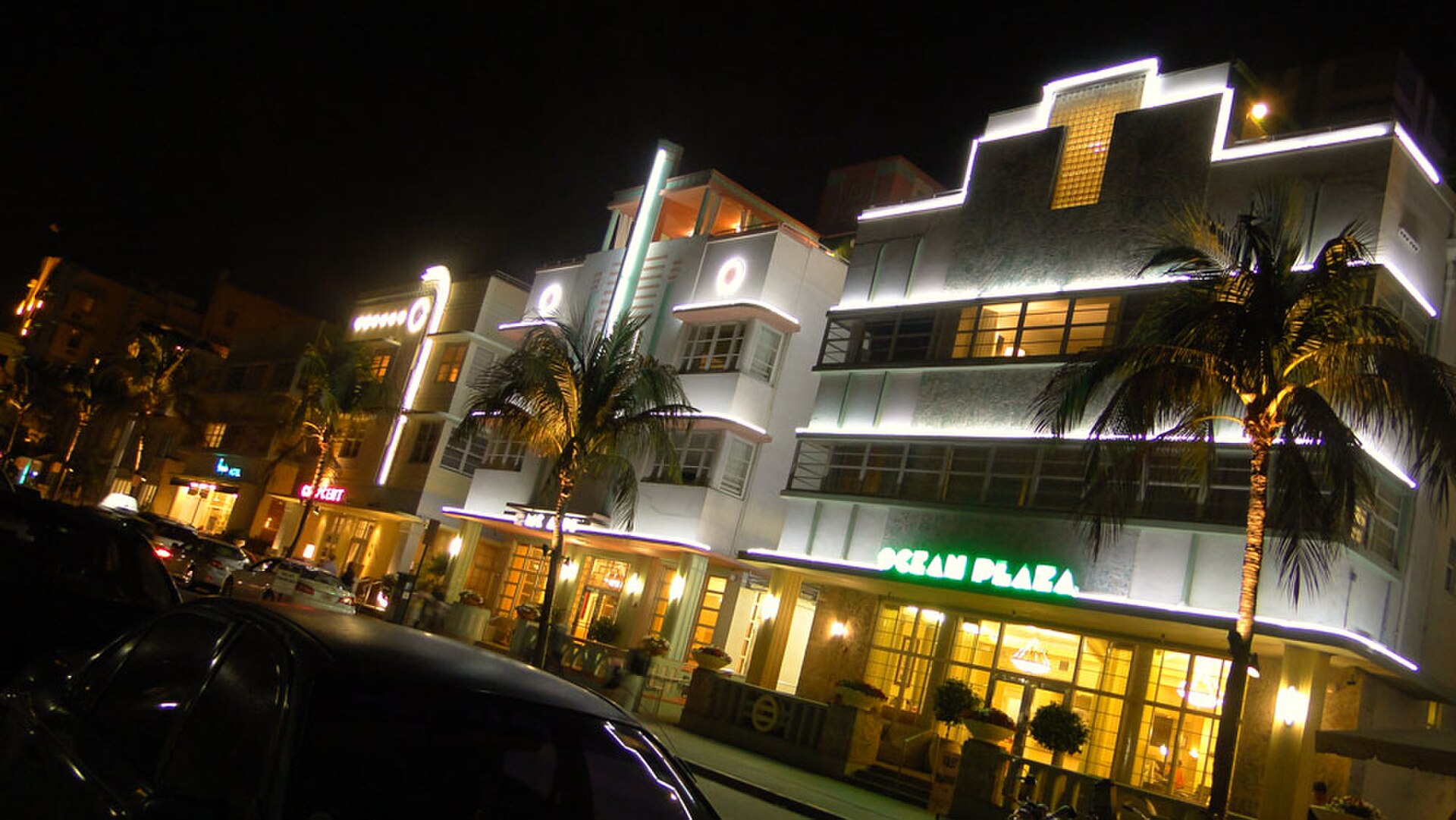
Miami Beach's Art Deco Historic District is an open-air museum of architectural optimism. Spanning roughly twenty blocks along Ocean Drive, Collins Avenue, and Washington Avenue, this neighborhood contains more than 800 buildings erected between 1923 and 1943 in a style that exists nowhere else on Earth. While European Art Deco favored dark metals and austere geometry, Miami's architects invented something entirely new: Tropical Deco. They took the streamlined forms of the movement and softened them with pastel pinks, seafoam greens, and sunburst yellows, adding flamingos, palm fronds, and nautical motifs that reflected the subtropical setting.
The result is a neighborhood that feels like walking through a sherbet-colored dream, where every facade tells a story of ambition, reinvention, and the enduring appeal of Miami. The district's survival was never guaranteed. By the 1970s, these buildings were considered outdated eyesores, and developers had plans to demolish entire blocks for high-rise condominiums. Barbara Baer Capitman and the Miami Design Preservation League launched a crusade that culminated in National Historic District designation in 1979, the first 20th-century neighborhood to receive such protection. Today, the restored buildings house boutique hotels, sidewalk cafes, and galleries that draw millions of visitors who stroll the same blocks where South Beach's glamorous reinvention began. The Art Deco Welcome Center on Ocean Drive offers daily guided walking tours that reveal the stories behind the facades most visitors only photograph from the outside.
Local Life
Tropical Deco developed its own vocabulary of eyebrows, racing stripes, and porthole windows that trained guides can decode facade by facade. The horizontal shading elements called eyebrows were designed to deflect the subtropical sun, and the nautical motifs on doorways and railings connected these landlocked hotels to the ocean just steps away.
The stories behind these buildings carry as much drama as their architecture. Barbara Baer Capitman stood in front of bulldozers to save structures that developers had already slated for demolition. Fashion photographers discovered these photogenic blocks in the 1980s and launched a cultural renaissance that continues today. For visitors wanting to understand how art and preservation shape cities, this district pairs naturally with a visit to Wynwood Walls, where a different generation of artists has transformed another neighborhood through creative vision.
Walking Routes
The Carlisle: One of the most photographed buildings in South Beach, its vertical fin and eyebrow overhangs exemplify Streamline Moderne at its most dramatic. Colony Hotel: The blue neon sign is the district's most iconic image, featured in countless films and television shows since the 1930s.
Ocean Drive facades: Walk slowly between 5th and 15th Streets to absorb the concentrated stretch where the finest examples stand side by side. Espanola Way: A Mediterranean Revival alley between 14th and 15th Streets that was originally designed to rival the bohemian cafes of Paris. The Breakwater Hotel: Its bold horizontal stripes and central tower with porthole windows capture the nautical themes of the era. Neon at night: Return after sunset to see the buildings lit by their original neon and newer LED accents, an entirely different experience from daytime. Lummus Park: The green strip between Ocean Drive and South Beach itself, lined with palms and perfect for pausing between architectural discoveries.
When to Visit
Most visitors walking Ocean Drive notice the pastel colors but miss the architectural language that makes these buildings unique in the world. Tropical Deco developed its own vocabulary of eyebrows, racing stripes, and porthole windows that trained guides can decode facade by facade. They point out how the horizontal shading elements called eyebrows were designed to deflect the subtropical sun, and how the nautical motifs on doorways and railings connected these landlocked hotels to the ocean just steps away. This kind of seeing requires expertise that no sidewalk plaque can provide. The stories behind these buildings carry as much drama as their architecture. Guides recount how Barbara Baer Capitman stood in front of bulldozers to save structures that developers had already slated for demolition, and how her campaign rescued an entire neighborhood that critics dismissed as outdated. They connect individual buildings to their original owners, from Prohibition-era bootleggers who built secret passages to hoteliers who catered to the winter crowds escaping northeastern winters. Some tours include access to restored hotel lobbies that independent visitors cannot easily enter, revealing interiors where terrazzo floors and etched glass doors have been preserved to museum standards. Beyond architecture, guides weave the Art Deco District into the broader transformation of South Beach. They explain how fashion photographers discovered these photogenic blocks in the 1980s and launched a cultural renaissance that continues today. For visitors wanting to understand how art and preservation shape cities, this district pairs naturally with a visit to Wynwood Walls, where a different generation of artists has transformed another neighborhood through sheer creative vision.
District access: The streets and buildings are accessible 24 hours a day as a public neighborhood. Art Deco Welcome Center: Open daily 10 AM to 5 PM at 1001 Ocean Drive, with exhibits, maps, and tour bookings. Free guided tours: The Miami Design Preservation League offers walking tours daily at 10:30 AM (check availability). Best time for photography: Early morning between 7 and 9 AM, when the low sun illuminates the pastel facades and the streets are nearly empty. Evening atmosphere: Ocean Drive's neon signs switch on at dusk, transforming the district into a glowing spectacle best experienced from a sidewalk cafe.
Admission and Costs
Walking the district: Completely free at all times. MDPL guided walking tour: $30 per person for a 90-minute architectural walking tour led by trained docents. Self-guided audio tour: $20 from the Welcome Center, available in multiple languages.
Private architecture guide: $200-350 for a 2-hour customized tour covering specific buildings and interiors for up to 6 people. Art Deco Museum admission: $15 adults, featuring rotating exhibits on the district's design history.
Tips for Visitors
Start at the Welcome Center: Pick up a free map at 1001 Ocean Drive before exploring, so you can identify key buildings by name and architect. Pair with South Beach: The Art Deco District and South Beach overlap physically, making a combined architecture and beach morning the ideal half-day itinerary.
Stay hydrated: Miami's heat and humidity are intense, especially during summer months, and shade is limited on the open streets. Street dining trap: Ocean Drive restaurants charge premium prices and offer middling food — walk one block west to Collins Avenue for better meals at lower prices. Art connections: After exploring the district's architecture, head to Wynwood Walls to see how Miami's creative energy has evolved from Deco symmetry to contemporary street art. Cultural contrast: Pair a morning in Art Deco with an afternoon in Little Havana to experience two entirely different dimensions of Miami's cultural identity.