
Walking Route
Landmarks Along
Beyond the stars themselves, the boulevard is lined with landmarks that reward a second look:
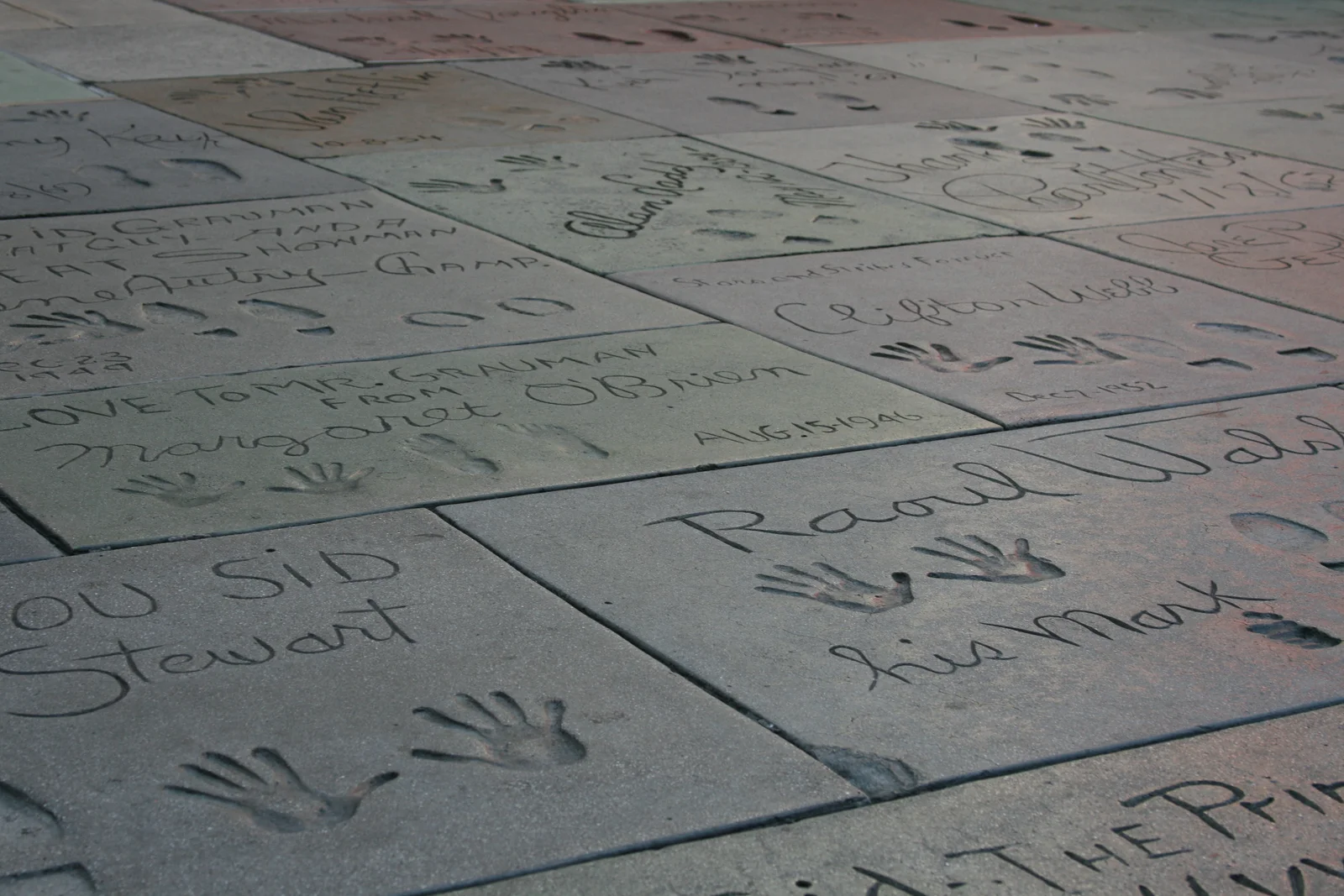
- TCL Chinese Theatre — Sid Grauman's pagoda-roofed palace has anchored the block since 1927, and the celebrity handprints and footprints pressed into its forecourt cement are a separate tradition often mistaken for the stars: the prints are an invitation-only ritual the theatre began in 1927, more than three decades before the first permanent Walk of Fame star in 1960, and — unlike the sidewalk stars, which anyone may nominate once a sponsor covers the fee — the venue alone chooses who is added. Wandering the forecourt stays free.
- Dolby Theatre — Purpose-built for the Academy Awards in 2001, it sits inside the Ovation Hollywood complex, and its lobby carries the name of every Best Picture winner with blank panels left for years still to come.
- Capitol Records Building — Widely called the world's first circular office tower when it opened in 1956 on Vine Street; the beacon atop its spire has blinked "HOLLYWOOD" in Morse code for decades.
- El Capitan Theatre — Restored by Disney in 1991, this 1926 movie palace pairs first-run films with live stage shows and a rising Wurlitzer organ.
- The Hollywood Museum — Four floors of costumes and props fill the historic Max Factor Building, where the makeup pioneer coloured the hair of Monroe, Harlow, and Lucille Ball.
- Hollywood and Vine — The legendary crossroads where the Brown Derby once drew agents and stars; the four corners are inlaid with round moon-shaped plaques honouring the Apollo 11 astronauts.
The film-history thread continues north at the Hollywood Sign and across the wider film landscape of Los Angeles, from studio backlots to hillside mansions.
Photo Spots
The Walk photographs best when you plan around light and crowds rather than luck:
- Chinese Theatre forecourt — The single most photographed spot on the boulevard; arrive before 9 AM to shoot the handprints without a crowd of feet in the frame.
- Dolby Theatre archway — The entrance frames Hollywood Boulevard with the Hollywood Hills — and, on clear days, the Hollywood Sign — visible in the gap beyond.
- Capitol Records tower — Shoot from the corner of Vine and Yucca in late afternoon, when low sun rakes across the record-stack tiers.
- Individual stars — Kneel low and shoot straight down in soft morning light; the overcast "June Gloom" mornings actually give the cleanest, glare-free brass.
- After dark — Once the theatre marquees and neon signs light up, the boulevard turns genuinely cinematic, with the Pantages marquee and the Egyptian's courtyard the most photogenic night subjects.
A tripod helps for the night and long-exposure shots, but pavement space is tight and crowded — a monopod or a fast lens is often the more practical choice.
Hollywood Walk of Fame timeline
-
The idea is proposed
The Hollywood Chamber of Commerce floats a "Walk of Fame" to restore prestige to a boulevard fading from its silent-era heyday.
-
First demonstration stars
Eight prototype stars are installed to preview the design, settling the coral terrazzo and brass emblems that still define the sidewalk.
-
The permanent Walk breaks ground
Actress Joanne Woodward's star is installed in February — the first of the permanent emblems — and the official groundbreaking follows on 28 March, with stars laid along Hollywood Boulevard over the next year.
-
Declared a landmark
The City of Los Angeles designates the Walk of Fame a Historic-Cultural Monument (No. 194), protecting it as a civic treasure.
-
Fiftieth anniversary
The Walk marks 50 years since its first stars, by then holding roughly 2,365 emblems and drawing millions of visitors a year.
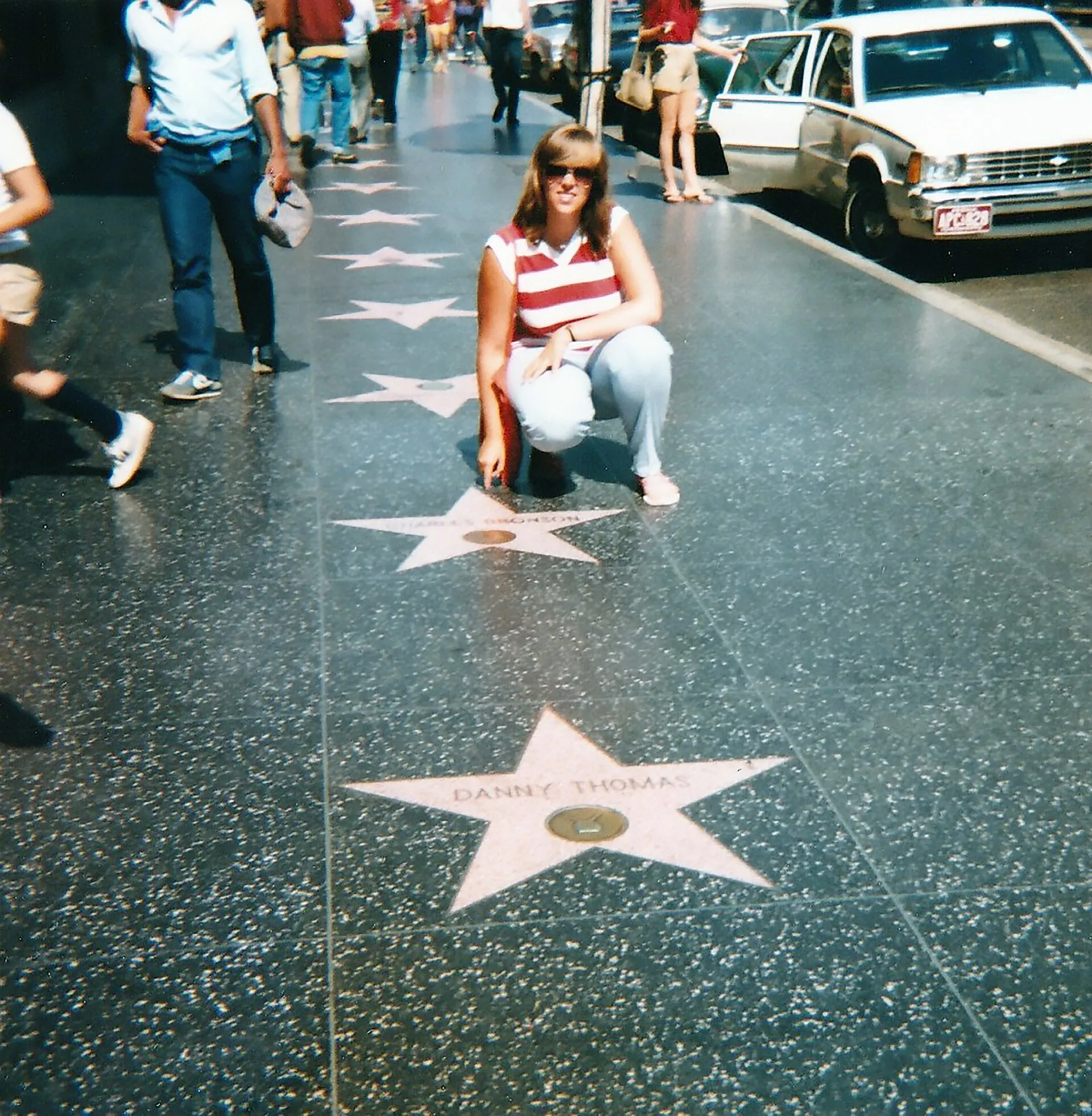
Hollywood Walk of Fame in Pictures
When to Visit
- The stars: Accessible 24 hours a day, 7 days a week — the Walk is a public sidewalk that never closes.
- Best light for photos: Early morning before 9 AM, when the pavements are nearly empty.
- Star ceremonies: New stars are unveiled roughly twice a month, usually at 11:30 AM; the schedule is posted on the official Walk of Fame site.
- TCL Chinese Theatre forecourt: Open daily 10:00 AM – 10:00 PM, with screenings running later.
- Busiest: Weekend afternoons from noon to 5 PM, when tour buses unload and costumed performers are out in force.
- Quietest: Weekday mornings, when many shops are still shuttered and the stars are clearly visible.
Admission and Costs
Walking the stars costs nothing — the boulevard belongs to everyone, which makes it a natural anchor for a free day in Los Angeles, and the only fees are for the landmark theatres that line it:
- Walking the Walk of Fame: Completely free.
- TCL Chinese Theatre forecourt: Free to view the handprints and footprints in cement.
- TCL Chinese Theatre IMAX screening: $20–25 per ticket for one of the most famous movie theatres on Earth.
- Dolby Theatre guided tour: $22 adults, $17 children — walk the stage where Oscar winners give their speeches.
- Group Walk of Fame walking tour: $30–50 per person for a roughly 2-hour guided loop of the must-see stars and buildings.
- Private Hollywood history tour: $250–400 for up to six people, covering the Walk, the Chinese Theatre, and nearby historic sites.
The Case for a Guide
Imagine hunting for Marilyn Monroe's star among 2,700 others spread across fifteen blocks — without a mental map built from years of walking these sidewalks, you can spend half your visit staring at your feet. Local guides know exactly which block holds which legend and, more valuably, the stories the brass plaques leave untold: the Egyptian Theatre hosted the first-ever red-carpet premiere in 1922, the very first Academy Awards were handed out in the Blossom Room of the Hollywood Roosevelt Hotel in 1929, Howard Hughes once ran business from a private box at the Pantages, and the El Capitan was rescued from decline by a painstaking Disney restoration. These landmarks demand context, and someone who has researched them supplies it.
A guide also runs interference with the boulevard's hustle. Here is what you sidestep with an expert alongside:
- The CD scammers who press "free" discs into your hands, then demand payment.
- The costumed characters who materialise for a photo and vanish with your cash.
- The identical souvenir shops that swallow time better spent at the Chinese Theatre forecourt or the Dolby lobby.
- The aimless wandering — a guide sequences the must-see stars and buildings so you cover the best of fifteen blocks without doubling back.
For a fuller day, pair the Walk with a sunset at Griffith Observatory or a morning at Universal Studios Hollywood, the working studio in the hills just north of the boulevard — or, for art over adrenaline, the hilltop galleries of the Getty Center on the Westside.
Tips for Visitors
- Take the Metro: The Metro B (Red) Line stops at Hollywood/Highland and Hollywood/Vine, dropping you directly on the Walk and sparing you LA's parking and traffic.
- Wear comfortable shoes: The full stretch is 1.3 miles each way on unforgiving concrete over a 2–3 hour visit.
- Start at Hollywood and Highland: The densest, most landmark-rich section runs between La Brea and Vine, centred on the TCL Chinese Theatre.
- Decline the "free" CDs: Sellers along the boulevard demand payment once you take a disc — politely refuse and keep walking.
- Roll or stroll step-free: The stars sit in a flat, continuous sidewalk with curb ramps at every corner, so the route is friendly to wheelchairs and strollers; the nearest public restrooms and elevators are inside the Ovation Hollywood complex at Hollywood and Highland.
- Go early or after dark: Weekday mornings are calm; evenings glow with marquee neon for a moodier, less crowded stroll.
- Combine with the hills and coast: After the stars, head north for a hike to the Hollywood Sign, visible from several points along the boulevard, then unwind later along the coast at Santa Monica Pier or among the boardwalk buskers of Venice Beach.
Frequently Asked Questions
When is Hollywood Walk of Fame open and best for photos?
Walk access: The sidewalk stars are accessible 24 hours a day, 7 days a week - they are public sidewalks. Best for photos: Early morning before 9 AM when the sidewalks are nearly empty and you can photograph stars without feet in the frame.
Is Hollywood Walk of Fame free to visit?
Walking the stars: Completely free. The Walk of Fame is a public sidewalk open to everyone. TCL Chinese Theatre forecourt: Free to view the celebrity handprints and footprints in cement.
How much time should I budget for the Hollywood Walk of Fame?
The landmark core: About ninety minutes covers the dense stretch between Hollywood/Highland and Hollywood/Vine at an unhurried pace with photo stops - the TCL Chinese Theatre forecourt, the Dolby Theatre, the El Capitan and the Capitol Records tower all sit in these few blocks. The full route: Walking the entire 1.3 miles one way and back, pausing to pick out individual stars, fills a half-day of two to three hours. Short on time: If you have only an hour, start at Hollywood/Highland and walk the four blocks east to Vine, where the most famous stars and historic theatres are concentrated, and skip the thinner outer blocks entirely.
How does someone get a star on the Hollywood Walk of Fame?
Anyone may nominate a celebrity, but the honoree must consent to appear and a sponsor must cover the fee that pays for the ceremony, installation, and lifetime maintenance. The Walk of Fame Selection Committee reviews thousands of nominations each year and chooses roughly twenty; each new star is then unveiled at a free public ceremony. The current fee and nomination rules are published on the official Walk of Fame website.
Which famous stars should I look for on the Walk of Fame?
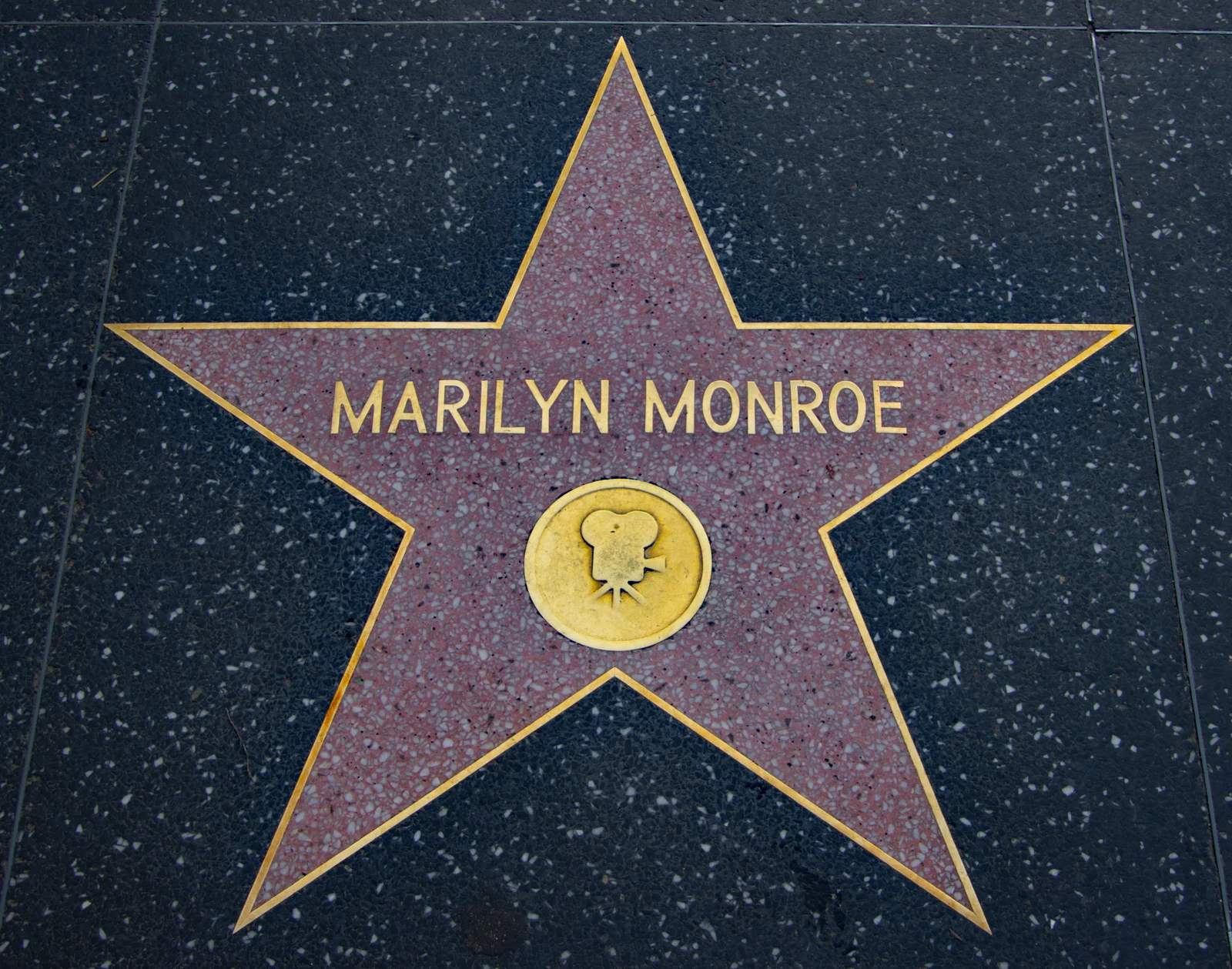
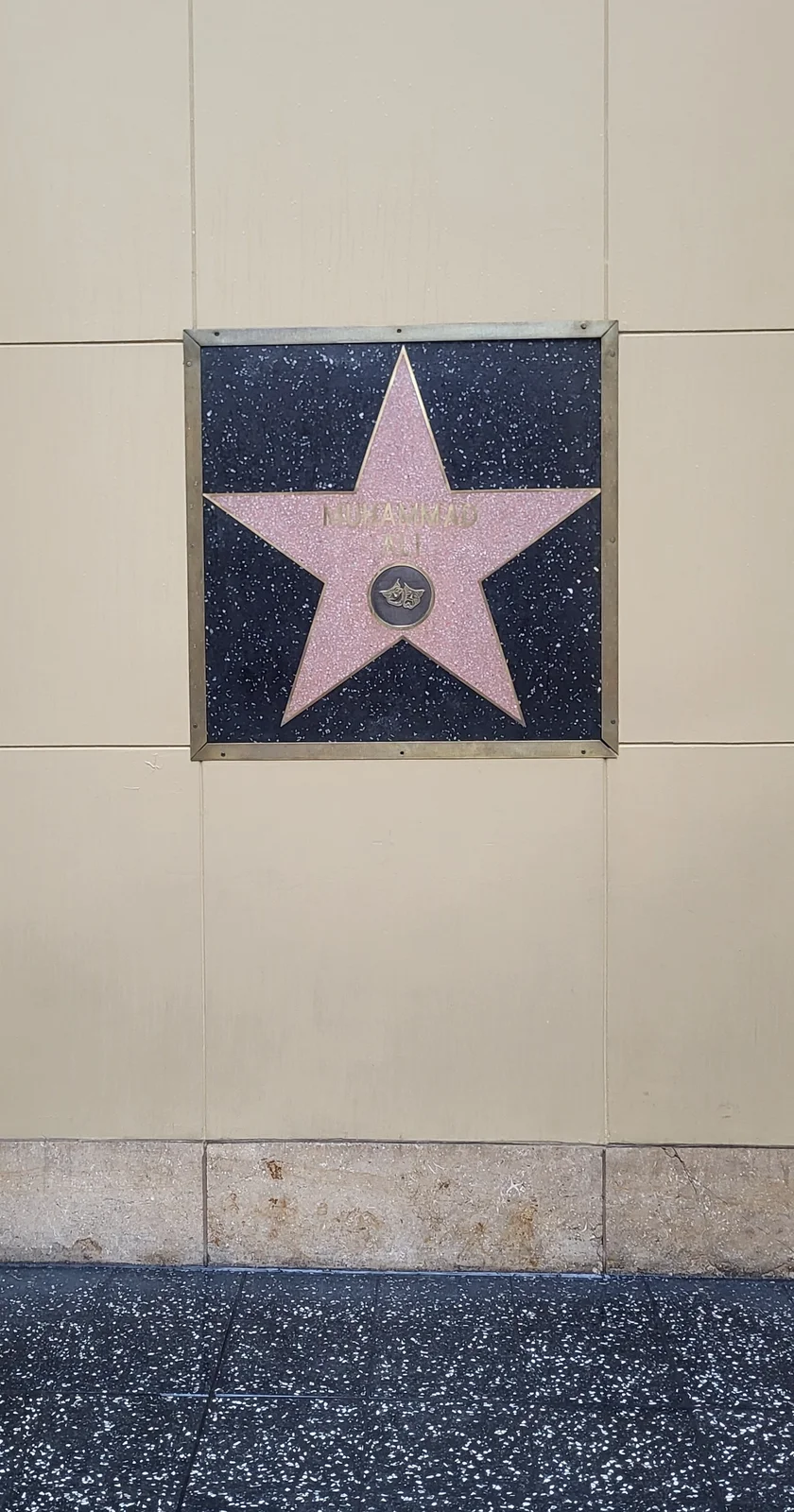
Marilyn Monroe: Her motion-pictures star at 6774 Hollywood Boulevard, near the TCL Chinese Theatre, is the most photographed on the Walk. Muhammad Ali: The only star not set into the sidewalk - at his request it is mounted on the wall of the Dolby Theatre complex so no one would tread on the name Muhammad. Gene Autry: The singing cowboy is the only person honoured in all five categories, holding five separate stars across the Walk. Joanne Woodward: The actress received the first permanent star, installed at 6801 Hollywood Boulevard by the Hollywood/Highland corner on 9 February 1960. Fictional characters: Mickey Mouse became the first cartoon honoree in 1978, on his fiftieth birthday, and Bugs Bunny, Snow White, Godzilla, Kermit the Frog, Big Bird and The Simpsons have since earned their own emblems, each scattered among the human stars rather than grouped together.
How do I find a specific star's exact location before I visit?
Search the official directory: The Walk of Fame publishes a searchable star database on its official site that returns each honoree's emblem category and the precise Hollywood Boulevard or Vine Street address of their star. Note the block first: Stars are laid roughly in the order their ceremonies happened rather than alphabetically, so two names you know can sit a dozen blocks apart - write down the addresses in advance instead of hunting on foot across fifteen blocks.
Where can I park near the Hollywood Walk of Fame?
Ovation Hollywood garage: The garage beneath the Ovation Hollywood complex at Hollywood and Highland is the most convenient paid option, with validation available from some tenants. Metro is easier: The Metro B (Red) Line to Hollywood/Highland or Hollywood/Vine avoids parking and traffic entirely, and street parking along the boulevard is scarce, metered, and time-limited.
Do any events close Hollywood Boulevard during the year?
Plan around two big ones. Hollywood Christmas Parade: On the Sunday after Thanksgiving the parade closes a long stretch of Hollywood Boulevard to traffic from late afternoon and packs the sidewalks for the evening. Academy Awards: In the days around the ceremony - usually late February or early March - the block fronting the Dolby Theatre and TCL Chinese Theatre is fenced off for the red-carpet build-out, so the densest cluster of stars is partly walled off; check the date before visiting that week and start from the Vine Street end instead.
Is the Hollywood Walk of Fame safe to visit?
Daytime feels safe: The core blocks between Hollywood/Highland and Hollywood/Vine stay busy with tourists and are patrolled by the LAPD Hollywood Division and private security around the Ovation Hollywood complex, so a daytime stroll is comfortable. Mind the crowd hustle: The real nuisances are petty rather than violent - pickpockets work the tightest knots outside the TCL Chinese Theatre, and costumed characters and CD sellers can turn pushy when they want cash, so keep bags zipped and phones pocketed. After dark: The marquee-lit central blocks stay lively into the evening, but the thinner outer stretches toward Gower Street and La Brea Avenue empty out late at night - keep to the bright core or ride the Metro B (Red) Line back rather than walking the quiet ends alone.
Is the Hollywood Walk of Fame accessible for wheelchairs and strollers?
Flat and step-free: The stars are embedded in an ordinary public sidewalk that stays level for the full 1.3 miles, with curb ramps at every intersection, so wheelchairs and strollers roll the whole route without a single stair. Facilities and transit: Public restrooms, elevators, and step-free entrances are inside the Ovation Hollywood complex at Hollywood and Highland, and both Metro B (Red) Line stations - Hollywood/Highland and Hollywood/Vine - have elevators from the platform to street level.