

Overview
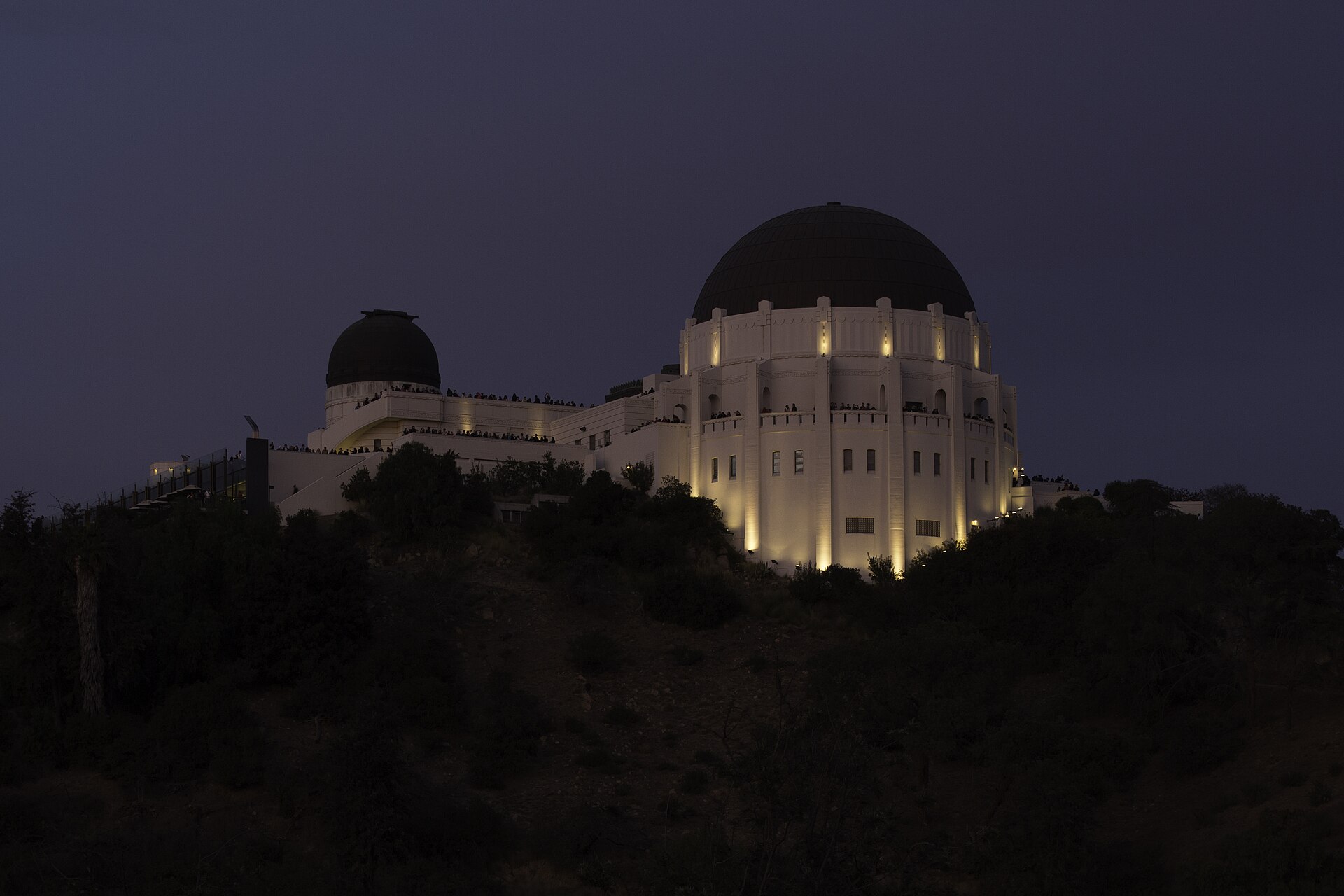
Perched on the southern slope of Mount Hollywood at 1,134 feet, Griffith Observatory has been Los Angeles's window to the cosmos since 1935. Colonel Griffith J. Griffith, a Welsh immigrant who made his fortune in gold mining, donated the land and funds with a radical vision: that astronomy should be free and accessible to everyone, not just academics peering through university telescopes. That democratic philosophy endures today — the observatory has never charged admission in its nearly nine decades of operation.
More than 7 million people have looked through its Zeiss refracting telescope, making it the most-used telescope on the planet. After a major renovation completed in 2006 that doubled its exhibit space, the observatory now draws 1.5 million visitors annually who come for the planetarium, the exhibits, and what may be the finest urban viewpoint in the United States. The Art Deco architecture incorporates astronomical symbols into every surface — zodiac murals, planetary motifs in the terrazzo floors, and ceiling medallions tracking the solar system.
Engineering Facts
Samuel Oschin Planetarium: The state-of-the-art Zeiss projector creates one of the most immersive planetarium experiences in the country. Zeiss telescope on the roof: Free to use every clear evening — seeing Saturn's rings for the first time through this scope is unforgettable. The observation deck at sunset: The entire LA basin spreads out below you from downtown skyscrapers to the Pacific Ocean.
Foucault pendulum: The 240-pound brass ball swinging in the central rotunda proves the Earth rotates beneath your feet. James Dean bust: A bronze bust of the actor near the main entrance commemorates the Rebel Without a Cause scenes filmed here in 1955. Hike from below: The West Observatory Trail from the parking lot on Western Canyon Road is a pleasant 1-mile walk with expanding views.
Observation Points
Standing on the terrace at sunset, you see the entire Los Angeles basin glittering below -- but what are you actually looking at? A guide with an astronomy background transforms the planetarium show and telescope session from passive viewing into active discovery. They explain why certain stars appear where they do tonight, which planets are visible this month, and how Colonel Griffith's vision of "free astronomy for all" defied the elite academic gatekeeping of his era.
The building itself rewards attention. Griffith's Art Deco architecture incorporated astronomical symbols into every surface -- zodiac murals, planetary motifs in the terrazzo floors, ceiling medallions tracking the solar system. Most visitors walk past without noticing. Someone who knows the building points out how every design choice reinforces the cosmic theme, making the architecture itself an exhibit.
For film buffs, the observatory's screen credits run deep: James Dean raged here in Rebel Without a Cause, Ryan Gosling and Emma Stone danced in La La Land's planetarium scene, and Terminator, Transformers, and Charlie's Angels all shot key sequences on this hilltop. Guides can walk you to the exact spots, and the best ones connect the filmmakers' location choices to the building's natural drama. Consider pairing your visit with a trek to the nearby Hollywood Sign for a complete Hollywood Hills experience, or head south to the Hollywood Walk of Fame for a different kind of star-gazing.
When to Visit
Tuesday through Friday: 12:00 PM - 10:00 PM. Saturday and Sunday: 10:00 AM - 10:00 PM. Closed Mondays: The observatory is always closed on Mondays.
Best for views: Arrive 60-90 minutes before sunset to watch the transition from daylight to city lights. Telescope viewing: Free public telescope access every clear evening the observatory is open. Least crowded: Tuesday and Wednesday evenings after 7 PM offer the most space.
Admission and Costs
Observatory admission: Completely free, including all exhibits and telescope viewing. Samuel Oschin Planetarium: $7 adults, $5 students/seniors, $3 children (5-12). Parking on-site: $10 per hour on weekends and evenings (cash and card accepted).
DASH shuttle from Vermont/Sunset Metro: $0.50 each way, runs every 20 minutes on weekends. Guided group tours: $45-70 per person (2-3 hours including transportation from Hollywood hotels). Private astronomy tours: $250-400 for up to 6 people, includes telescope time and expert narration.
Tips for Visitors
Arrive before sunset: This is the single most popular time, and the experience of watching day turn to night from the terrace is worth planning around. Layer up for evenings: The hilltop temperature drops quickly after dark, even in summer — bring a jacket if you plan to stay for telescope viewing.
Planetarium tickets sell out: Buy them at the box office when you arrive since they cannot be purchased online, and popular shows fill within the first hour. Combine with Hollywood Sign hike: The sign is visible from the observatory grounds and several trails connect the two attractions. Accessible by public transit: Metro Red Line to Vermont/Sunset, then DASH observatory shuttle — no car needed. Photography gear: Bring a tripod for night shots of the city lights and a telephoto lens for close-ups of the Hollywood Sign.