

Overview
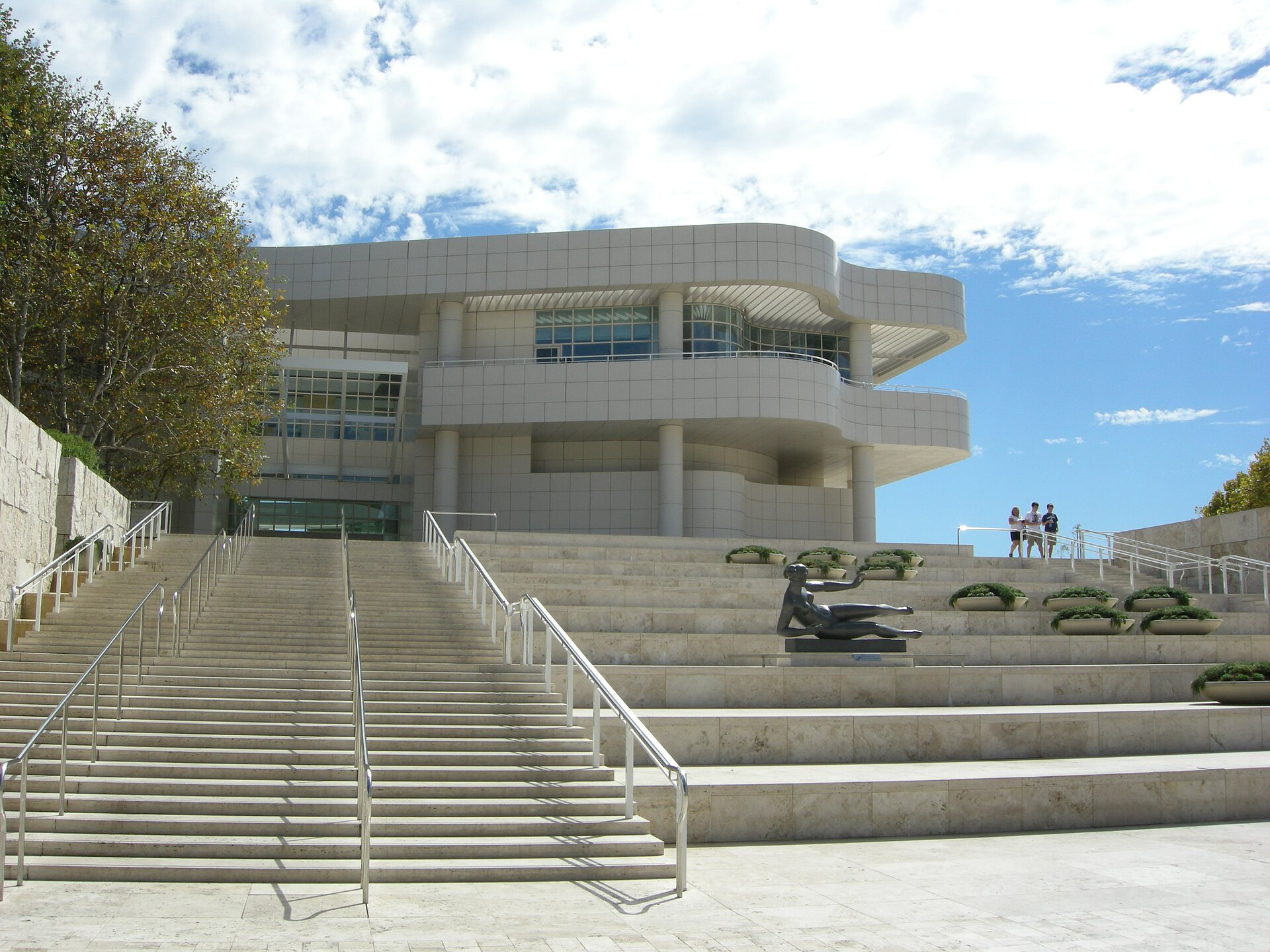
The Getty Center opened in 1997 after fourteen years of construction and $1.3 billion in spending, making it one of the most expensive buildings ever erected. Architect Richard Meier designed the campus from 16,000 tons of Italian travertine stone, split rather than cut to reveal the fossilized shells and leaves embedded within. Perched on a hilltop ridge above the 405 freeway in the Brentwood neighborhood, the museum complex is reached by a free electric tram that glides up from the parking garage below, setting a dramatic tone before visitors even step inside.
The permanent collection spans 6,000 years of Western art, from illuminated medieval manuscripts to Van Gogh's "Irises" to contemporary photography. Outside, artist Robert Irwin's Central Garden cascades down a hillside ravine in a living artwork of more than 500 plant varieties that changes with every season. The Getty Trust's endowment — the largest of any museum in the world — ensures that admission remains permanently free, fulfilling J. Paul Getty's mission of making art accessible to everyone who visits Los Angeles. The panoramic views from the terraces stretch from the San Gabriel Mountains to the Pacific Ocean, making it one of the finest vantage points in the United States.
Reservation tip: Parking reservations are strongly recommended, especially on weekends. Book online at least a week in advance for Saturday visits, when free parking fills almost immediately.
Collections Highlights
Van Gogh's Irises: Painted in the asylum at Saint-Rémy just a year before his death, this luminous canvas is the crown jewel of the collection. Central Garden: Robert Irwin's living sculpture cascades 134 feet down a tree-lined walkway to an azalea-ringed pool — the colors shift dramatically with every season.
Travertine walls: Run your hands along the split stone and look for ancient fossils embedded in the 16,000 tons of Italian marble quarried for the buildings. Terrace sunset views: The west-facing terraces offer panoramic views from downtown to the ocean, best on Saturday evenings when the museum stays open late. Illuminated manuscripts: The medieval gallery displays breathtaking hand-painted manuscripts from the 9th through 16th centuries, rotated to preserve their fragile pages. The tram ride itself: The free electric tram ascending to the hilltop offers expanding views of the Sepulveda Pass and the Santa Monica Mountains.
Guided Tours
Van Gogh painted Irises in the asylum at Saint-Rémy, one year before taking his own life — the irises grew in the asylum garden, visible from his window. That context transforms how you experience the canvas: without it, you are looking at flowers; with it, you are witnessing a man clinging to life through art. Multiply that depth across every gallery, and you begin to understand what a trained guide offers at the Getty.
Richard Meier spent thirteen years designing this campus, and his architectural intentions encode themselves in ways casual visitors miss entirely. The travertine was deliberately split rather than cut to expose the fossils within. The sight lines from specific terraces frame the San Gabriel Mountains at precise angles. The proportions of the galleries reference classical temples. Meier and garden designer Robert Irwin feuded bitterly during construction — Irwin wanted lush, chaotic plantings while Meier insisted on minimalist landscapes. Their creative battle produced tension that defines the grounds today, but you'd never sense that history walking alone through the Central Garden. The collection spans 6,000 years and 125,000 objects. Even the most dedicated visitor sees only a fraction. Guides know how to read your interests, then curate a path through the galleries that prioritizes what will resonate. Medieval manuscripts? They know which folios are currently on display in the rotating exhibition. French Impressionism? They'll walk you past minor works to the pieces that matter. Photography history? The Getty's collection rivals any museum's, but the best prints hide in rooms most tourists skip. After your visit, head down to Venice Beach or Santa Monica Pier for a complete Westside day.
When to Visit
Allow at least 3 hours: Between the galleries, garden, architecture, and views, there is far more here than a quick visit can absorb. Tuesday through Friday: 10:00 AM - 5:30 PM. Saturday: 10:00 AM - 8:00 PM (the only late evening for sunset views from the terraces). Sunday: 10:00 AM - 5:30 PM. Closed Mondays, plus Thanksgiving, Christmas, and New Year's Day.
Best for photography: Saturday evenings when golden hour light floods the travertine walls and the city sparkles below. Least crowded: Tuesday and Wednesday mornings when you can linger in the galleries without competition for bench space. Eat on-site: The restaurant and cafe offer surprisingly good food with terrace seating and views — much better than rushing to eat elsewhere. Combine with the Westside: After the Getty, drive 15 minutes to Santa Monica Pier for dinner at the coast.
Admission and Costs
Museum admission: Always free, including all galleries, exhibitions, and the garden. Parking: $20 per car ($15 after 3 PM), free on Saturdays with advance reservation. Tram ride: Free — the electric tram from parking to hilltop runs every few minutes. Audio guides: Free through the GettyGuide app on your phone, or physical devices available at no charge.
Guided gallery tours: $25-55 per person for specialized art-focused walks (1.5-2 hours). Private docent experience: $200-400 for up to 6 people, customized to your interests.
Tips for Visitors
Allow at least 3 hours: Between the galleries, garden, architecture, and views, there is far more here than a quick visit can absorb. Eat on-site: The restaurant and cafe offer surprisingly good food with terrace seating and views — much better than rushing to eat elsewhere.
Wear comfortable shoes: The campus sprawls across multiple buildings connected by walkways and stairs, with the garden requiring a downhill walk and climb back up. Check special exhibitions: The Getty rotates major loan exhibitions throughout the year, and some require timed tickets even though they are free. Family programs: Free family art workshops run most weekends, with hands-on activities designed for children ages 5-13. Combine with the Westside: After the Getty, drive 15 minutes to Santa Monica Pier for dinner at the coast, or explore Venice Beach for a stroll along the boardwalk.