

Overview
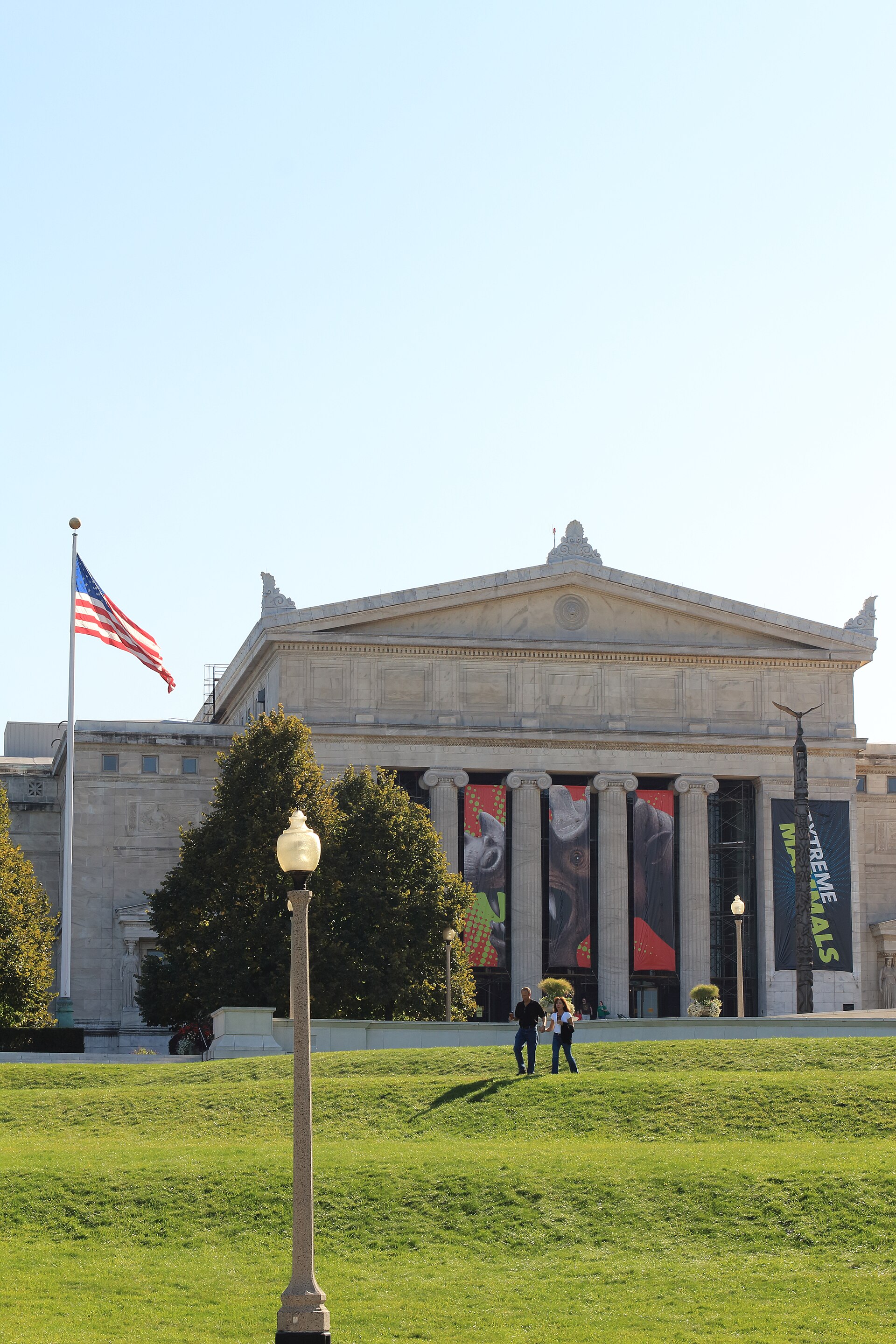
The Field Museum of Natural History occupies a colossal neoclassical building on Chicago's Museum Campus, a stretch of lakefront parkland that also includes the Shedd Aquarium and the Adler Planetarium. Founded in 1893 to house biological and anthropological collections assembled for the World's Columbian Exposition, the museum now holds over 40 million specimens and artefacts, making it one of the largest natural history collections on the planet. Its most celebrated resident is Sue, the largest, most complete, and best-preserved Tyrannosaurus rex skeleton ever discovered, now displayed in a dedicated second-floor gallery where visitors can examine her 5-foot skull and 58 serrated teeth at eye level.
The museum's scope reaches far beyond dinosaurs, encompassing ancient Egyptian mummies, Pacific Island war canoes, gem halls glittering with meteorites, and a recreated Pawnee earth lodge. What makes the Field Museum more than a cabinet of curiosities is its active role in scientific research. Over 150 scientists work in its labs, and a guided tour reveals how the institution functions as a living research centre, not just a display hall. Guides point out where ongoing DNA analysis of century-old bird specimens informs modern conservation, and how the anthropological collections are being repatriated in partnership with indigenous communities. The museum sits a comfortable 15-minute walk south of the Art Institute of Chicago along the lakefront path, and many visitors pair the two for a full day of Chicago's finest indoor attractions.
Guided Tours
Sue the T. rex stares down from her second-floor gallery with 58 serrated teeth and a story that deserves telling properly. The most complete and best-preserved Tyrannosaurus skeleton ever discovered was found in South Dakota in 1990, but her journey to Chicago involved a bitter legal battle, an FBI raid, and a record-breaking auction where the Field Museum outbid major Hollywood studios. Wall panels summarise these events; a guide brings them to life with the drama of a heist film, explaining why Sue's original skull was too heavy for the mount and how scientists continue extracting secrets from her 67-million-year-old bones.
Beyond the dinosaurs, the Field Museum functions as an active scientific research centre where over 150 scientists study everything from evolutionary biology to conservation genetics. Guides illuminate this living institution, pointing out where ongoing research informs modern conservation efforts. Families discover that guides transform abstract science into tangible adventure. Suddenly the meteorite collection becomes a treasure hunt, the Butterfly Haven a lesson in metamorphosis, and Maximo the Titanosaur a gateway to understanding deep time.
Collections Highlights
Sue the T. rex: The star of the museum since 2000, now in a dedicated second-floor suite where you can study her 67-million-year-old bones, including the massive skull that was too heavy for the original mount. Maximo the Titanosaur: A 122-foot-long cast of the largest dinosaur ever discovered dominates the main hall, its neck stretching toward the vaulted ceiling.
Inside Ancient Egypt: Walk through a reconstructed three-story Egyptian tomb, past actual mummies, canopic jars, and a 5,000-year-old boat in one of the most immersive Egyptology exhibits in North America. The exhibit includes a recreation of burial chambers and the daily life artefacts that accompanied pharaohs into the afterlife. Grainger Hall of Gems: A dazzling collection including the 3,300-pound Barber meteorite slice, luminous opals, and a stunning display of tanzanite crystals that glow under different lighting. Butterfly Haven: A seasonal exhibit where hundreds of live butterflies from around the world land on visitors in a warm, humid greenhouse setting. Pacific Spirits: A gallery of Polynesian and Melanesian artefacts, including war canoes, ceremonial masks, and tapa cloth, representing cultures separated by vast stretches of ocean. Evolving Planet: Trace 4 billion years of life from single-celled organisms through the five mass extinctions to the rise of mammals, with fossils, dioramas, and interactive displays along the way.
When to Visit
Daily: 9:00 AM to 5:00 PM, last entry at 4:00 PM. Closed: Christmas Day only. Best time: Weekday mornings between 9 and 11 AM, when school groups have not arrived yet and you can have Sue's gallery nearly to yourself.
Peak crowds: Saturday midday, rainy summer days, and holiday weekends when families flock to Museum Campus. Free days: Illinois residents get free basic admission on select days throughout the year; check the museum calendar before your visit.
Admission and Costs
Sue the T. rex stares down from her second-floor gallery with 58 serrated teeth and a story that deserves telling properly. The most complete and best-preserved Tyrannosaurus skeleton ever discovered was found in South Dakota in 1990, but her journey to Chicago involved a bitter legal battle, an FBI raid, and a record-breaking auction where the Field Museum outbid major Hollywood studios. Wall panels summarise these events; a guide brings them to life with the drama of a heist film, explaining why Sue's original skull was too heavy for the mount and how scientists continue extracting secrets from her 67-million-year-old bones. Beyond the dinosaurs, the Field Museum functions as an active scientific research centre where over 150 scientists study everything from evolutionary biology to conservation genetics. Guides illuminate this living institution, pointing out where ongoing DNA analysis of century-old bird specimens informs modern conservation efforts, and how the anthropological collections are being repatriated through partnerships with indigenous communities. The museum holds over 40 million specimens and artefacts, and trying to navigate 480,000 square feet across four floors without expert guidance means missing the Grainger Hall of Gems while accidentally visiting the same Egyptian mummy three times. Families with children discover that guides transform abstract science into tangible adventure. Suddenly the meteorite collection becomes a treasure hunt, the Butterfly Haven a lesson in metamorphosis, and Maximo the Titanosaur a gateway to understanding deep time. After your visit, the lakefront trail connects the Field Museum to the Art Institute and Millennium Park to the north, or south to the Shedd Aquarium and Adler Planetarium on the same Museum Campus.
All-access pass: $26 adults, $19 children (ages 3-11), which includes all special exhibitions and 3D theatre. Basic admission: $22 adults, covering permanent exhibitions only. Private guided tour: $350-550 for a 2-hour deep dive with a museum educator for up to 8 people. Public highlights tour: Included with admission, typically offered twice daily by volunteer docents. Behind-the-scenes tour: Occasionally offered at $40-60 per person, granting access to research labs and specimen storage.
Tips for Visitors
Start with Sue: Head directly to the second floor upon entry. The T. rex gallery is the museum's most popular exhibit, and morning visitors get the most intimate experience. Museum Campus combo: The Field Museum shares its lakefront campus with the Shedd Aquarium and Adler Planetarium, all within a 10-minute walk of each other. Plan for a full day if combining.
Parking: The Soldier Field South Lot ($25-30) is closest. Alternatively, take the CTA bus #146 from downtown or walk 15 minutes south from the Art Institute. Photography: Permitted without flash throughout the permanent exhibits. Allow 3-4 hours: A highlights tour covers the essentials in 2 hours, but the depth of the collection rewards a longer visit. Combine with the lakefront: After your visit, walk north along the lakefront trail toward Millennium Park and Navy Pier for a full day of Chicago's greatest hits.