
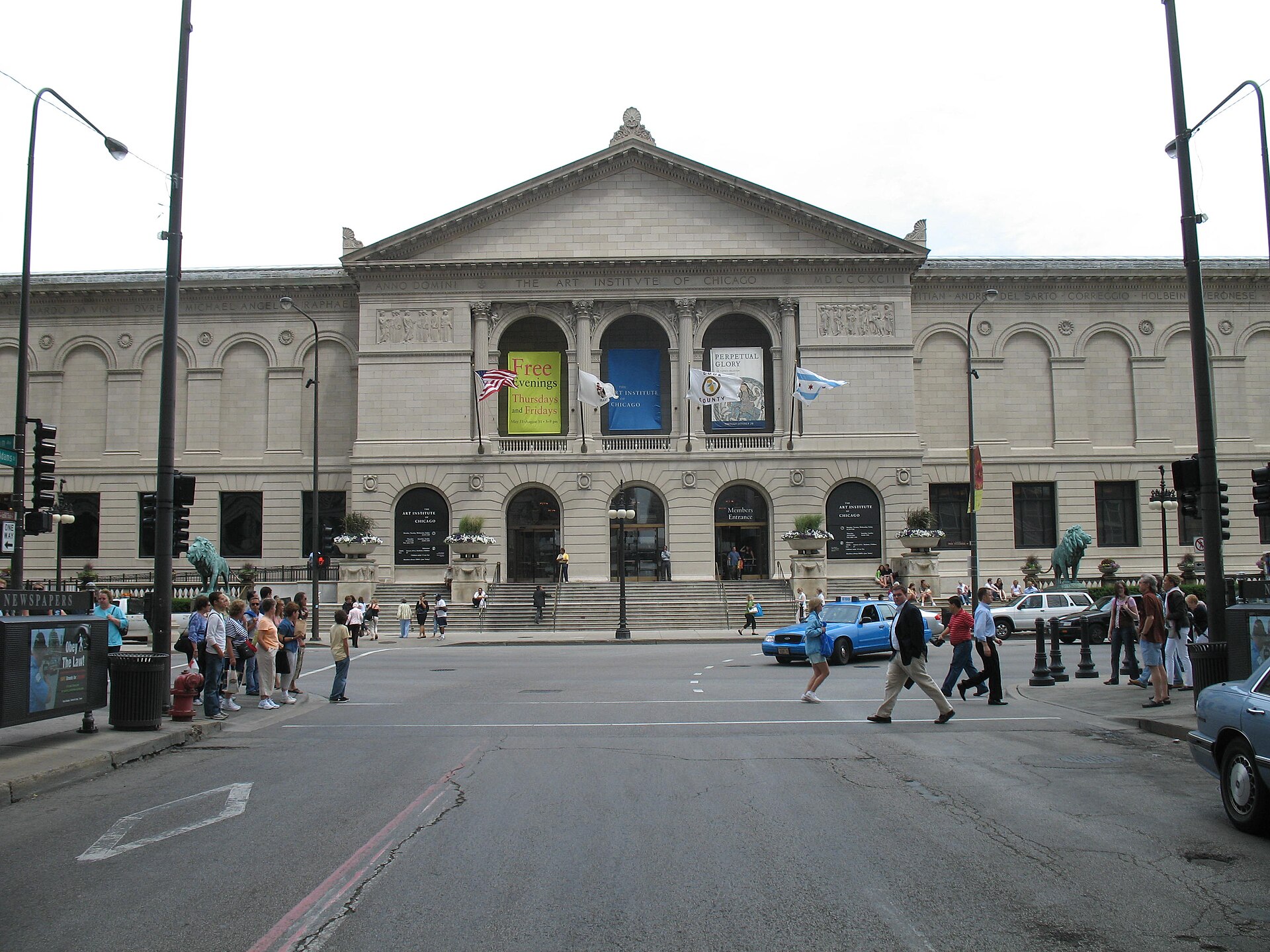

Overview
The Art Institute of Chicago is the second-largest art museum in the United States and consistently ranks among the finest in the world. Founded in 1879 and housed in a Beaux-Arts building on Michigan Avenue since 1893, the museum holds nearly 300,000 works spanning 5,000 years of human expression. Its Impressionist and Post-Impressionist galleries are considered the strongest outside of France, anchored by Georges Seurat's monumental A Sunday on La Grande Jatte, Claude Monet's haystacks series, and Gustave Caillebotte's Paris Street; Rainy Day. Edward Hopper's Nighthawks and Grant Wood's American Gothic are here too, two of the most recognised paintings in American art, both viewable within a five-minute walk of each other.
The museum sits at the western edge of Millennium Park, making it easy to pair a morning of art with an afternoon at Cloud Gate. What makes a guided visit essential is the sheer scale of the collection. The museum sprawls across the original 1893 building, the Modern Wing designed by Renzo Piano in 2009, and several connecting structures. Without direction, visitors often wander for hours and still miss entire departments. A knowledgeable guide creates a narrative thread, connecting the Thorne Miniature Rooms to the Arms and Armour hall, the Japanese woodblock prints to the contemporary photography galleries. Guides also share stories that wall labels cannot: how the museum acquired Seurat's masterpiece through a series of fortunate negotiations, why Nighthawks has no door, and which galleries the curators themselves visit when the building is empty. The Art Institute is a short walk from both Willis Tower and the Magnificent Mile, making it a natural centrepiece for a day exploring Chicago. The Art Institute is included in the Chicago CityPASS ($98), which also covers Willis Tower Skydeck, Field Museum, and other top attractions at nearly half the individual ticket price.
Guided Tours
Standing before Seurat's monumental A Sunday on La Grande Jatte, most visitors see only the famous dots. An expert guide reveals the two years of obsessive labour behind those millions of tiny brushstrokes, the political commentary embedded in the Parisian bourgeoisie lounging by the Seine, and the mathematical precision that anticipated digital pixels by a century. Without this context, you see a painting; with it, you witness a revolution in how humans perceive light and colour. The same transformation happens at Nighthawks, where a guide explains why Hopper painted a diner with no door, how the fluorescent glow anticipates film noir, and what the empty street says about American loneliness in 1942.
The Art Institute sprawls across the original 1893 Beaux-Arts building, Renzo Piano's luminous 2009 Modern Wing, and several connecting structures holding nearly 300,000 works. Wandering without direction means retracing your steps through the same galleries while missing entire departments. Experienced guides design routes tailored to your interests, whether that means a deep dive into the Impressionists, a survey of Japanese ukiyo-e prints, or an architectural tour of the Modern Wing's "flying carpet" ceiling that filters Lake Michigan light. They draw connections invisible to the casual visitor, linking a Cassatt painting to the ukiyo-e prints that inspired it, or tracing how medieval reliquaries anticipate the shadow boxes of Joseph Cornell.
Perhaps most valuable is how a guided visit fits into your day exploring Chicago. The museum connects directly to Millennium Park via the Nichols Bridgeway, and a two-hour highlights tour leaves time to photograph Cloud Gate, walk the Magnificent Mile, or catch sunset from Willis Tower. Guides know which galleries are quietest in the morning, when to pause for the best light on a Monet, and how to end your visit at Terzo Piano's terrace restaurant with views that rival any painting inside.
Collections Highlights
A Sunday on La Grande Jatte: Seurat spent two years applying millions of tiny dots to create this 7-by-10-foot canvas of Parisians lounging by the Seine, the defining work of Pointillism. Nighthawks: Hopper's 1942 painting of four figures in a late-night diner is an icon of American loneliness, and standing before the original reveals brush textures no reproduction captures.
American Gothic: Grant Wood's stern farming couple with their pitchfork and Gothic window is simultaneously a celebration and satire of Midwest values, and it is smaller than you expect. Monet's Haystacks series: Six of the thirty canvases hang here, showing the same subject transformed by light, season, and time of day in ways that photographs cannot. Thorne Miniature Rooms: 68 detailed rooms built at 1:12 scale recreating European and American interiors from the 13th to 20th century, often overlooked but mesmerising. Modern Wing rooftop terrace: Free access to a sculpture garden with views of Millennium Park and the Chicago skyline, connected by the Nichols Bridgeway. Arms and Armour hall: Over 1,500 pieces of European and Japanese weaponry and armour from the 12th through 19th centuries, including full suits of jousting armour.
When to Visit
Monday-Wednesday: 11:00 AM to 6:00 PM. Thursday-Friday: 11:00 AM to 8:00 PM (the Thursday late hours are the best-kept secret for avoiding crowds). Saturday-Sunday: 10:00 AM to 6:00 PM. Best time: Weekday mornings right at opening, when galleries like the Impressionist wing are nearly empty and you can stand inches from a Monet without jostling.
Peak crowds: Saturday afternoons and rainy days in summer when outdoor plans get cancelled. Free days: Illinois residents get free admission on select evenings; check the calendar before visiting.
Admission and Costs
General admission: $25 for adults, $19 for seniors and students, free for children under 14 and Chicago residents under 18. Audio guide: Included with admission via the museum's mobile app. Private guided tour: $300-500 for a 2-hour expert-led tour for up to 6 people, covering highlights or a themed deep dive.
Group docent tours: Free with admission, offered several times daily, typically focusing on highlights or a specific collection. Special exhibitions: Usually included in general admission; blockbuster shows occasionally require a timed-entry supplement of $5-10.
Tips for Visitors
Enter from the Modern Wing: The Columbus Drive entrance is less crowded than the Michigan Avenue main entrance and puts you directly in the contemporary galleries. Wear comfortable shoes: The museum covers over 1 million square feet. Even a highlights tour involves significant walking across multiple levels and buildings. Coat check is free: Use it. Carrying bags through galleries is exhausting, and large backpacks are not permitted in the galleries anyway.
Nichols Bridgeway: The enclosed pedestrian bridge connects the Modern Wing's third floor directly to Millennium Park, making the transition seamless. Photography: Allowed without flash in permanent galleries. Special exhibition rules vary. Dining: Terzo Piano on the Modern Wing's third floor serves refined Italian-inspired cuisine with park views. The lower-level cafe offers quicker, affordable options. Combine visits: The Art Institute is steps from Millennium Park and a 15-minute walk from the Field Museum along the lakefront, making a full museum day easy to plan in Chicago.