

Overview
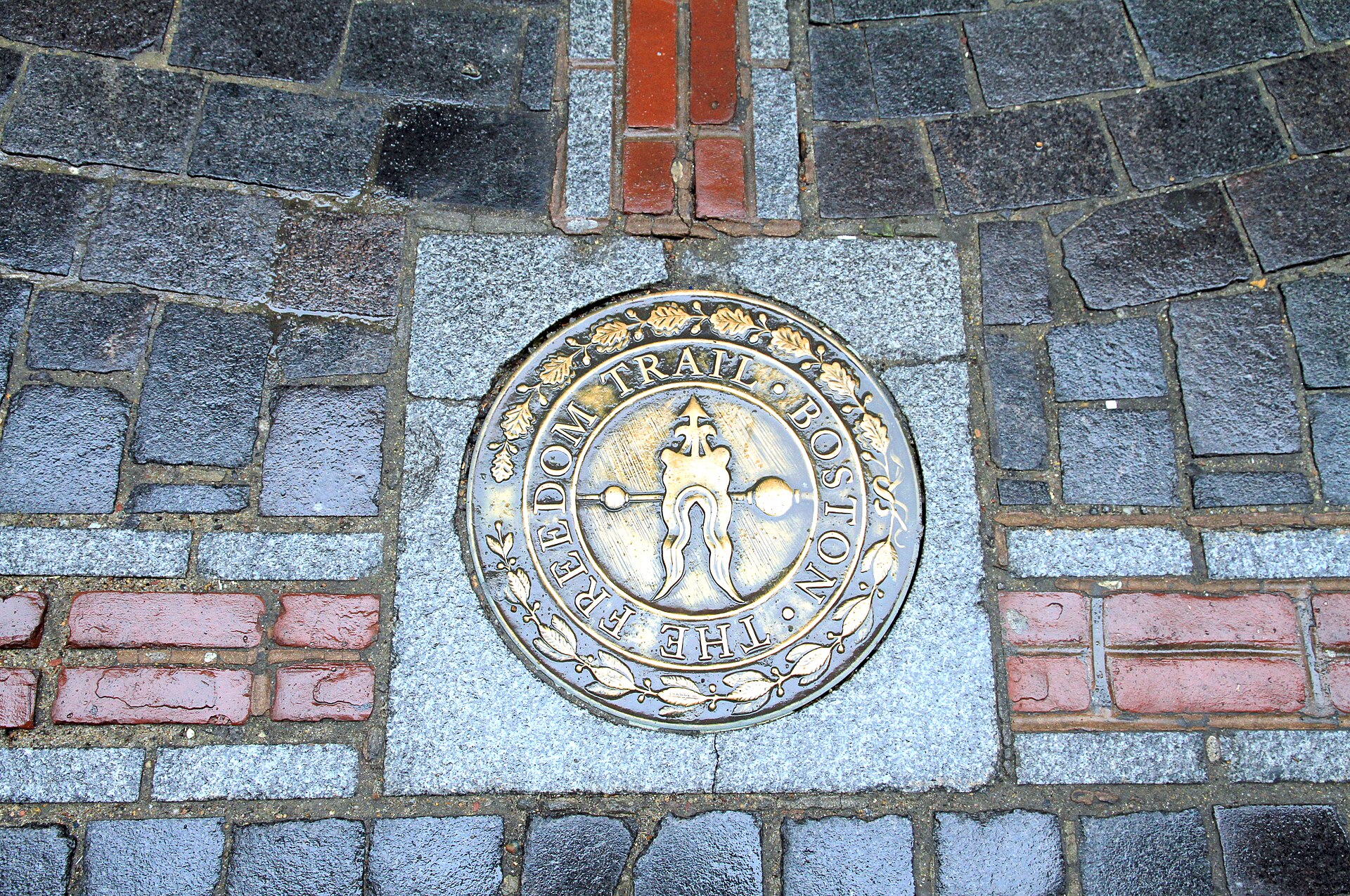
The Freedom Trail is a 2.5-mile walking path marked by a continuous line of red bricks embedded in Boston's sidewalks, connecting sixteen historically significant sites from the colonial and Revolutionary eras. The trail begins at Boston Common, the oldest public park in the United States, and winds north through downtown, passing the Massachusetts State House, the Granary Burying Ground where Paul Revere, Samuel Adams, and John Hancock lie interred, and the Old South Meeting House where the Boston Tea Party was organised in 1773.
These are not reconstructions: the Old South Meeting House is the actual building where 5,000 colonists debated whether to dump tea into Boston Harbor on December 16, 1773. The Old North Church is the very steeple from which two lanterns were hung on April 18, 1775, signalling that British troops were moving by sea. The Paul Revere House, built around 1680, is the oldest remaining structure in downtown Boston. The trail ends in Charlestown at the Bunker Hill Monument and the USS Constitution, with Faneuil Hall serving as the emotional centrepiece midway along the route.
Landmarks Along
The Freedom Trail is a 2.5-mile walking path marked by a continuous line of red bricks embedded in Boston's sidewalks, connecting sixteen historically significant sites from the colonial and Revolutionary eras. The trail begins at Boston Common, the oldest public park in the United States, and winds north through downtown, passing the Massachusetts State House with its golden dome, Park Street Church, the Granary Burying Ground where Paul Revere, Samuel Adams, and John Hancock lie interred, King's Chapel, Benjamin Franklin's birthplace site, the Old South Meeting House where the Boston Tea Party was organized in 1773, the Old State House where the Declaration of Independence was first read to Bostonians, and the site of the 1770 Boston Massacre. From there it crosses into the North End, Boston's oldest residential neighborhood and its Italian-American heart, reaching the Paul Revere House and Old North Church before crossing the Charlestown Bridge to the USS Constitution and the Bunker Hill Monument. What makes the Freedom Trail remarkable is not merely the density of historic sites packed into a compact urban walk, but the way the red line physically stitches together the narrative of American independence into a coherent, walkable story. These are not reconstructions: the Old South Meeting House is the actual building where 5,000 colonists debated whether to dump tea into Boston Harbor on December 16, 1773. The Old North Church is the very steeple from which two lanterns were hung on April 18, 1775, signaling that British troops were moving by sea toward Lexington and Concord. The Paul Revere House, built around 1680, is the oldest remaining structure in downtown Boston and the home from which Revere departed on his midnight ride. Walking the trail with a knowledgeable guide transforms a pleasant urban stroll into an immersive journey through the decisions, debates, and acts of defiance that created a nation, with Faneuil Hall serving as the emotional centerpiece where Samuel Adams rallied colonists to resist British taxation.
Photo Spots
The golden dome of the Massachusetts State House catches morning light beautifully from the Boston Common side. The Granary Burying Ground's weathered headstones with memento mori carvings photograph hauntingly in overcast light.
The Old North Church steeple, framed through narrow North End streets, creates dramatic perspectives. The USS Constitution, with its rigging and harbour backdrop, is most photogenic during morning golden hour. From the top of the Bunker Hill Monument (after 294 steps), the panoramic view spans all of Boston and the harbour. The red-brick trail line itself, stretching through busy intersections and along historic building facades, provides a distinctive compositional element in street photography.
When to Visit
The red-brick line is embedded in public sidewalks and can be walked at any hour, any day, free of charge. The Visitor Center on Tremont Street at Boston Common is open daily 9 AM to 5 PM, providing free maps. Official guided walks by costumed Freedom Trail Players depart from the Visitor Center throughout the day, typically 10 AM to 3 PM.
Individual site hours generally run 9:30 AM to 5 PM; the Paul Revere House closes at 4:15 PM from November through mid-April. The best time to walk is weekday mornings from April through June or September through October, when weather is comfortable and summer tour groups have not peaked.
Admission and Costs
Sixteen historic sites along 2.5 miles tell a story of escalating tension, revolutionary conspiracy, and the birth of a nation, but the plaques along the trail can only hint at the drama. Expert guides weave these disparate locations into a coherent narrative with rising action and resolution, revealing how Samuel Adams used Faneuil Hall as a recruiting ground for rebellion, how Paul Revere's silversmith network doubled as an intelligence operation passing coded messages, and how the Boston Massacre trial exposed deep divisions among the colonists themselves. John Adams defended the British soldiers in court, winning acquittal for most of them, a nuance that complicates the simple patriot-versus-redcoat narrative most visitors expect. The trail passes buildings spanning three centuries of American architecture, and understanding why certain details survive requires explanation. The Old State House still displays the British lion and unicorn on its rooftop, symbols of Crown authority preserved on a building where the Declaration of Independence was first read to Boston citizens. The Paul Revere House, built around 1680, is the oldest remaining structure in downtown Boston, its rooms restored to the period when Revere departed on his midnight ride. Guides explain these architectural choices and contradictions, helping visitors see the colonial city that still exists beneath the modern streetscape. Navigating the full trail means crossing busy intersections, passing through the congested North End, and locating sites that are easy to miss without guidance. Costumed Freedom Trail Players portray 18th-century figures who deliver speeches and engage visitors in dialogue, making abstract historical events feel personal and immediate. The trail ends in Charlestown at the Bunker Hill Monument, where 294 steps inside the granite obelisk reward climbers with panoramic views. Along the way, guides ensure you pause at the Granary Burying Ground where Paul Revere, Samuel Adams, and John Hancock lie interred, and that you discover Mike's Pastry and Modern Pastry in the North End for the cannoli debate that has divided Boston for generations.
Tips for Visitors
Start at Boston Common: The Visitor Center on Tremont Street provides free maps and is adjacent to Park Street Station (Red and Green Lines). Wear comfortable shoes: The 2.5-mile trail crosses uneven cobblestones, brick sidewalks, and Charlestown's hilly terrain; sturdy walking shoes prevent blisters. Allow 3-4 hours: Walking the full trail without entering buildings takes about 90 minutes; with interior visits and a North End lunch stop, budget half a day. Walk one way: The trail ends in Charlestown; take the Navy Yard water shuttle back to downtown or ride the Orange Line from Community College Station. Combine with Faneuil Hall: The Cradle of Liberty sits directly on the trail, surrounded by Quincy Market dining, making an ideal midpoint break. Rainy days: Interior sites like the Old South Meeting House, Paul Revere House, and Old North Church provide shelter; a rain jacket and waterproof shoes make a drizzly walk atmospheric rather than miserable