

Overview
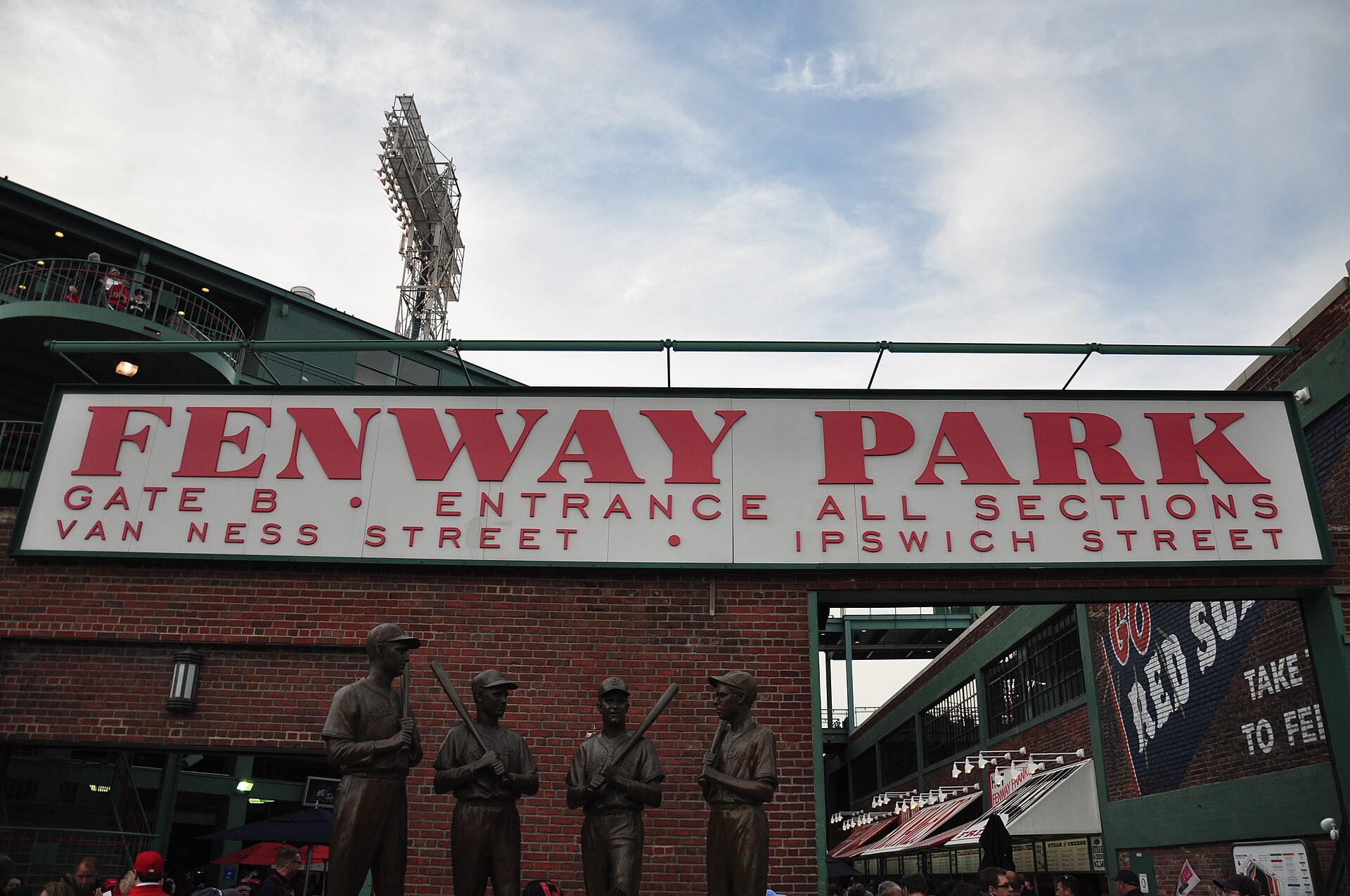
Fenway Park opened on April 20, 1912, the same week the Titanic sank, and while that great ship has rested on the Atlantic floor for over a century, this intimate ballpark in Boston's Kenmore Square has never stopped hosting baseball. It is the oldest Major League Baseball stadium still in active use, and its peculiar dimensions are not the product of grand design but of necessity: the field was squeezed into an irregular city block bordered by Lansdowne Street, forcing left field to be absurdly shallow. The solution was a 37-foot, 2-inch wall that became the legendary Green Monster, a barrier that has swallowed line drives and crushed home run hopes for generations. The park seats just 37,755, among the smallest capacities in the majors, yet that compactness generates an atmosphere of startling intensity where every seat feels close enough to hear the crack of a fastball off the bat. The mythology layered into Fenway's concrete and steel rivals any cathedral. Ted Williams smashed his final home run here in 1960, jogging the bases without tipping his cap in a farewell that John Updike immortalized as "Gods do not answer letters." Carl Yastrzemski played 23 seasons in left field, learning the Green Monster's capricious caroms so thoroughly that he turned its eccentricities into a defensive weapon. The 86-year championship drought between 1918 and 2004, the Curse of the Bambino born when the Red Sox sold Babe Ruth to the Yankees, defined generations of Boston fandom and transformed the 2004 World Series victory into one of the most cathartic moments in American sporting history. On a ballpark tour, a guide reveals details even devoted fans miss: the Morse code tribute to former owners hidden in the left-field scoreboard stripes, the manually operated scoreboard where workers still hang numbered metal plates by hand, and the precise spot where a single red seat marks the landing point of Williams' 502-foot blast.
Events Schedule
🟩 The Green Monster: Climb to the top of the 37-foot left-field wall and look down at the playing field from the vantage point that Monster seat holders pay hundreds for on game nights. 🔴 The lone red seat: In a sea of green bleachers, seat 21 in row 37 of section 42 is painted red, marking where Ted Williams' 502-foot blast landed on June 9, 1946. 🏆 Championship banners: The World Series pennants hang from the right-field facade; a guide walks through each, from the Curse-breaking 2004 triumph to the 2018 title clinched on this field. ✍ Pesky Pole: The right-field foul pole sits just 302 feet from home plate, the shortest distance in the majors, named for Johnny Pesky whose pop flies occasionally curled around it. 🎵 "Sweet Caroline" singalong: Every home game, the entire stadium sings Neil Diamond's 1969 hit in the eighth inning, a tradition born spontaneously in 2002. 🍴 Fenway Franks: The classic Fenway Frank has been sold here since opening day 1912; pair it with a Sam Adams draft for the quintessential ballpark meal
Seating Guide
Every corner of America's oldest Major League ballpark contains stories that reward expert narration. Ted Williams homered in his final at-bat in 1960, jogging the bases without tipping his cap in a farewell that John Updike immortalized as "Gods do not answer letters," and guides can point to seat 21 in row 37 of section 42, painted red to mark where his 502-foot blast landed on June 9, 1946. Carl Yastrzemski learned the Green Monster's eccentric angles so thoroughly over 23 seasons that he transformed left field into an art form. The Curse of the Bambino, born when the Red Sox sold Babe Ruth to the Yankees after the 1919 season, defined generations of Boston fandom and made the 2004 World Series victory one of the most cathartic moments in American sports. Guides bring these layers to life with the passion of lifelong fans. Fenway was nearly demolished at least three times, and understanding why it survived when every other ballpark of its era was torn down requires knowing the political battles, fan campaigns, and creative renovations that saved it. Standing atop the 37-foot Green Monster, guides reveal that the wall was originally a wooden advertising billboard covered in hand-painted signs before the ivy and manual scoreboard arrived. They explain how the scoreboard inside the wall still requires workers to hang numbered steel plates by hand during every game, how secret light signals coordinate between operators, and why balls ricochet off the wall in patterns that confound even veteran outfielders. The Monster's capricious caroms have ended rallies and extended careers. Beyond its baseball mythology, Fenway has hosted concerts by the Rolling Stones and Bruce Springsteen, college football's Harvard-Yale rivalry, Frozen Fenway hockey games, and even early-1900s ski jumping exhibitions. The ballpark is woven into Boston's identity in ways that extend far beyond sports, connecting to the Fenway-Kenmore neighborhood's museums and universities, to the city's literary culture through Updike's writing, and to the broader New England psyche shaped by generations of October heartbreak and triumph. The Green Line delivers you to Boston Common and the Freedom Trail in minutes, making the ballpark an easy addition to any historical tour of the city.
When to Visit
Ballpark tours: Offered daily year-round, departing hourly from 9 AM to 5 PM on non-game days; on game days, the last tour leaves three hours before first pitch. Game day gates: Open 90 minutes before first pitch during the regular season (late March through October). Best for tours: Weekday mornings from November through March, when groups are small and guides linger with deeper stories. Best for atmosphere: A Friday or Saturday night game in July or August, when Lansdowne Street fills with fans and the setting sun paints the Monster gold. Rain or shine: Tours continue in inclement weather; the covered grandstand and indoor corridors allow most stops to proceed
Admission and Costs
Standard ballpark tour: $25 adults, $17 children ages 3-12, free under 3; approximately one hour covering the press box, Green Monster, warning track, and Pesky Pole. Premium behind-the-scenes tour: $45 per person for 90 minutes including the visiting clubhouse and batting cages, on select non-game days. Game tickets: $20 standing-room to $75-150 grandstand; Green Monster seats reach $250-500 depending on opponent and date. Private group tour: $350-500 for up to 20 guests, with options to add a former player appearance
Tips for Visitors
Getting there: Kenmore Station on the Green Line (B, C, D branches) is a 5-minute walk; street parking is near-impossible on game days, so take the T. Book tours online: Walk-up tours are available but can sell out on summer weekends; online booking guarantees your slot. Combine with other Boston sights: The Museum of Fine Arts and Isabella Stewart Gardner Museum are both within a 15-minute walk; Boston Common and the Freedom Trail are a quick Green Line ride to Park Street. Obstructed view seats: Some original grandstand seats have support columns partially blocking the field; these are discounted and many fans consider them part of the vintage charm. Clear bag policy: For games and events, bags must be 16"x16"x8" or smaller. Pre-game energy: Arrive early on game days to soak up the atmosphere on Lansdowne Street, where restaurants and bars fill hours before first pitch