
Collection Highlights
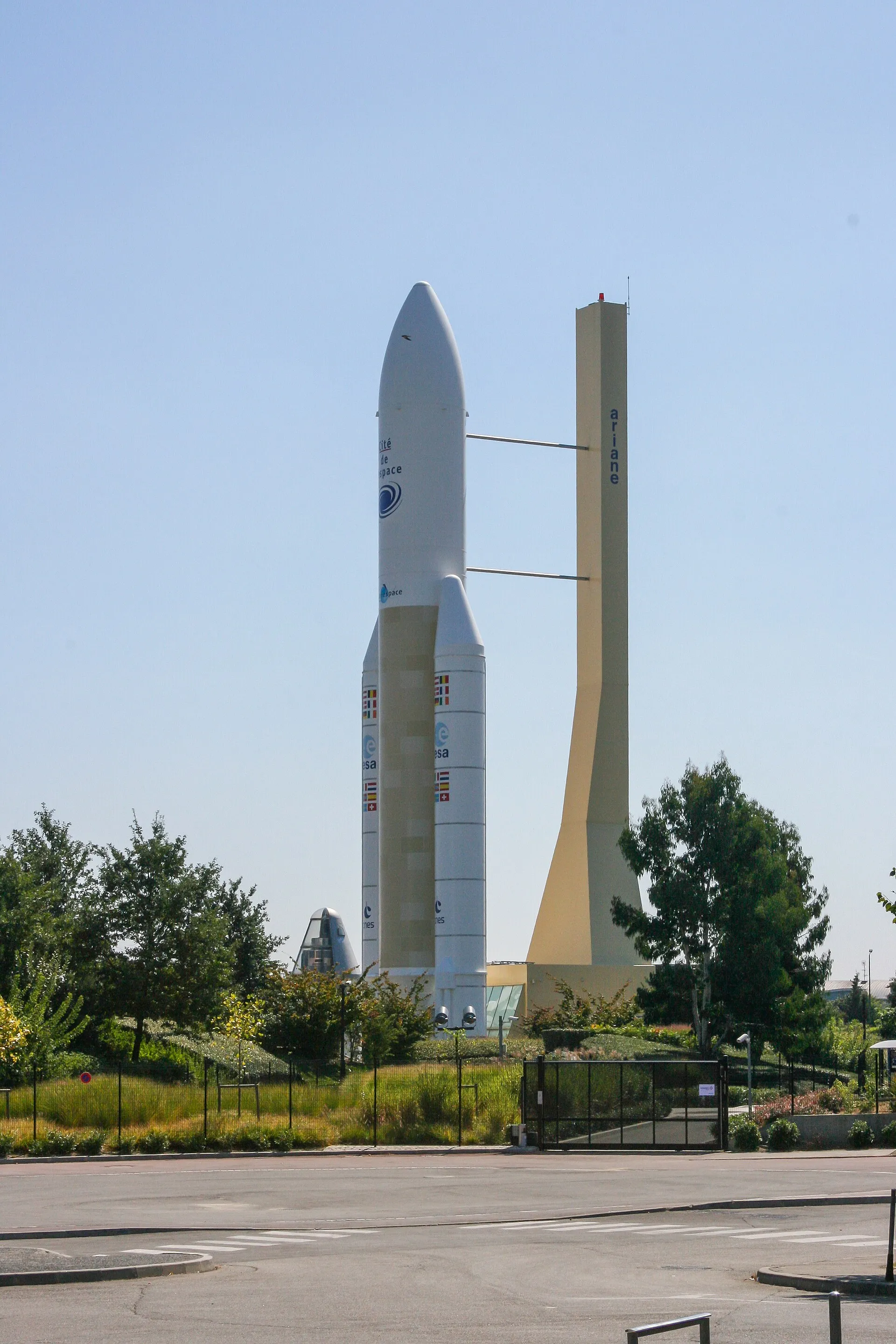
Ariane 5 rocket replica
A full-scale, roughly 53-metre replica of Europe's Ariane 5 launcher stands at the heart of the outdoor rocket park, a landmark visible from the ring road. Walk beneath its boosters to grasp the scale of the rocket that carried most of Europe's heavy payloads to orbit for over two decades.
Mir space station
Step inside a life-size mock-up of the Russian Mir station and move through its modules to see how cosmonauts lived, worked, and slept in orbit for months at a time. It is one of the park's most memorable walk-through exhibits and a favourite with children.
Soyuz capsule
Inspect a Soyuz capsule, the compact and remarkably robust spacecraft that has ferried crews to orbit for more than half a century, and see how three cosmonauts fit into its cramped descent module for the fiery return through the atmosphere.
Genuine lunar sample
Among the collection is a genuine lunar sample — a rare chance to stand before material that formed on the Moon billions of years ago and was carried back to Earth, a quietly extraordinary object beside the park's larger hardware.
Planetarium
Under a large dome fitted with reclined seats, the planetarium runs immersive sessions on the night sky, the planets, and current space missions. Arrive early for the central rows, where the projected sky wraps most evenly overhead.
IMAX cinema
A giant-screen IMAX cinema shows space documentaries built from real mission footage, filling your field of view with launches, spacewalks, and views of Earth from orbit. The middle rows give the most immersive framing.
Astronaut experiences
Hands-on stations let visitors test the challenges of spaceflight, from simulators and a moon-walk experience to interactive exhibits on weightlessness, satellites, and daily life aboard the International Space Station.
Events Schedule
The park runs on a rhythm of timed shows layered over its permanent exhibits, so plan the day around the fixed slots and browse the hardware in between:
- Planetarium — immersive dome sessions on the night sky and current missions, several times daily.
- IMAX cinema — giant-screen space documentaries; showtimes are posted at the entrance.
- Live demonstrations — rocket-launch explainers and science shows on the esplanade, weather permitting.
- Ariane 5 rocket park — the full-scale 53-metre launcher and its outdoor exhibits, open throughout the day.
- Mir & Soyuz — walk the space-station mock-up and inspect the Soyuz capsule at your own pace.
Show times shift with the season and school holidays, so confirm the day's schedule on the official programme or the board by the ticket desk when you arrive.
Seating Guide
Two venues inside the park have proper seating, and both fill fast. The planetarium offers reclined seats beneath the dome — arrive 10-15 minutes early and aim for the central rows, where the projected sky wraps most evenly overhead. In the IMAX cinema the middle rows give the most immersive framing of the giant screen; avoid the very front, where the picture fills too much of your field of view. Because both run to a fixed timetable, reserve your slots the moment you arrive — popular sessions sell out by midday in the school holidays. Outdoor demonstrations on the esplanade use open bench seating on a first-come basis, so drift over a few minutes before showtime.
Cité de l'Espace timeline
-
France founds CNES
France creates its national space agency; its Toulouse Space Centre grows into one of Europe's largest, anchoring the city's space industry.
-
Concorde's maiden flight
The prototype Concorde lifts off from Toulouse-Blagnac, cementing the city's reputation as a hub of European aerospace and aviation.
-
Cité de l'Espace opens
The space park opens on Toulouse's eastern edge, built with CNES to turn France's space expertise into a hands-on public experience.
When to Visit
Opening hours: the park generally runs Tuesday to Sunday, 10:00-18:00, extending to 19:00 in summer and often opening daily during French school holidays. It usually closes on Mondays outside holiday periods and for part of January. Hours move with the season, so check the official opening-times page before you travel.
How long to allow: budget 4-6 hours for the full site — the outdoor rocket park alone eats up a couple of hours. Arrive at opening to reach the Ariane 5, the Mir mock-up, and the planetarium before midday crowds build, then break for lunch and take in an IMAX show in the afternoon. Several exhibits are open-air, so a dry spring or autumn day is ideal.
Admission and Costs
Standard on-the-day pricing runs about €25-27 (roughly $27-29) for an adult and €18-21 ($19-23) for a child aged 6-17, with under-6s free; entry to the planetarium and IMAX is included in the ticket. Booking online in advance is usually cheaper and lets you skip the queue, and annual passes quickly pay for themselves if you plan to return. A dedicated aerospace guide — often an engineer or scientist — typically costs €35-50 ($38-54) per person on top of admission. Prices and family offers change seasonally, so confirm the current tariff and any combined tickets on the official ticketing page.
The Case for a Guide
You can explore Cité de l'Espace unaided, but the site packs roughly 4,000 m² of technical content into a single day, and a specialist guide turns the hardware into a story you can follow. The value is concrete:
- Aerospace expertise — many guides are working or retired engineers from the Toulouse space industry who explain orbital mechanics, propulsion, and satellite design in plain language.
- A smart route — a guide prioritises the Ariane 5, the Mir mock-up, and the best show times so you are not backtracking across the 5-hectare park.
- Behind the missions — first-hand anecdotes from real CNES and ESA programmes bring the exhibits alive in a way the panels cannot.
- Family-friendly framing — good guides pitch the science to children as readily as to adults, keeping every age engaged.
Tips for Visitors
A few practicalities make the day smoother:
- Book shows first — reserve planetarium and IMAX slots the moment you arrive, as they run to a fixed timetable and sell out.
- Wear comfortable shoes — the rocket park is large and mostly outdoors, with a lot of walking.
- Check the forecast — several exhibits are open-air, so pick a dry day if you can.
- Getting there — take metro Line A across Toulouse and connect to a city bus toward the Cité de l'Espace stop; the Tisséo journey planner has current routes and times, and drivers get free on-site parking off the eastern ring road.
- Food — there is a restaurant and café on site, or picnic in the outdoor areas.
- Make a day of aerospace — combine your visit with a separate Airbus factory tour for the full picture of Toulouse's space and aviation industry.
Frequently Asked Questions
What time of year offers the best experience at Cité de l'Espace?
March through June and September through October are the sweet spots: pleasant outdoor temperatures for exploring the 5-hectare rocket park, active school-term programming, and live demonstrations on the esplanade. The outdoor exhibits — including the full-scale Ariane 5 rocket — are weather-dependent, so summer offers the most reliable conditions but also school-holiday crowds. From November through February the site is quieter, and the indoor planetarium, IMAX cinema, and hands-on galleries come into their own, though some outdoor activities may be limited and part of January is usually closed.
What are the opening hours at Cité de l'Espace?
The park generally opens Tuesday to Sunday from 10:00 to 18:00, extending to 19:00 in summer, and often runs daily during French school holidays. It usually closes on Mondays outside holiday periods and for part of January. Because the timetable shifts with the season, confirm the current hours on the official Cité de l'Espace website before you travel, and allow four to six hours for the full site.
How do you get to Cité de l'Espace, and is there parking?
The park sits on the eastern edge of Toulouse, just off the ring road. By public transport, take metro Line A across the city and connect to a Tisséo city bus toward the Cité de l'Espace stop — the Tisséo journey planner has the current routes and times. Drivers benefit from free on-site parking off the eastern périphérique, which makes arriving by car straightforward for families.
What do tickets cost at Cité de l'Espace?
On-the-day admission runs about €25-27 (roughly $27-29) for adults and €18-21 ($19-23) for children aged 6-17, with under-6s free; entry to the planetarium and IMAX shows is included in the ticket. Booking online in advance is usually cheaper and lets you skip the queue, and annual passes soon pay for themselves if you plan to return. A specialist aerospace guide typically adds €35-50 ($38-54) per person on top of admission. Prices and family offers change seasonally, so check the official ticketing page for current tariffs.
Is Cité de l'Espace suitable for children and families?
Very much so. Alongside the headline rocket park, the site is built around hands-on stations, a dedicated children’s area, simulators, and shows pitched to hold the attention of all ages. Under-6s enter free, buggies and comfortable shoes are worth having for the large outdoor park, and a good family day mixes an indoor planetarium session with time to climb around the Mir mock-up and the Ariane 5 launcher.
Why is a guide worth hiring at Cité de l'Espace?
The site packs roughly 4,000 m² of technical content into a single day, and many guides are working or retired engineers from the Toulouse space industry who can explain orbital mechanics, propulsion, and satellite design in plain language. A guide also prioritises the Ariane 5, the Mir station, and the best show times so you cover the 5-hectare park efficiently, and brings first-hand stories from real CNES and ESA missions that the exhibit panels cannot.