

Overview
Boston Common holds the singular distinction of being the oldest public park in the United States, set aside for communal use in 1634, just four years after the Puritans founded the city. For its first two centuries, the 50-acre green served as grazing land for livestock, a training ground for militia, and a site of public executions. British redcoats camped here before marching to Lexington and Concord in 1775, launching the American Revolution. In the centuries since, Boston Common has witnessed abolition rallies, suffrage marches, Vietnam War protests, and Martin Luther King Jr.'s 1965 address to 22,000 people. Today it remains the geographic and spiritual heart of Boston, bordered by Beacon Hill, the Theater District, and the beginning of the Freedom Trail. The Common today is an open, rolling landscape of ancient elm trees, walking paths, and seasonal attractions. The Frog Pond freezes into a popular ice skating rink each winter and becomes a spray pool for children in summer. The Soldiers and Sailors Monument crowns the highest point, offering views across the park to the golden dome of the State House. The adjacent Public Garden, connected by a footbridge over Charles Street, added America's first public botanical garden in 1837 and introduced the beloved Swan Boats that still glide across the lagoon today. A walk through Boston Common is a walk through the entire arc of American public life, and a knowledgeable guide transforms every tree, statue, and pathway into a chapter of living history.
Activities
🌳 The Great Elm site: A plaque marks where the Common's legendary elm stood for over 200 years, serving as both a gallows tree and a gathering point for the town's most consequential announcements. ⛰ Soldiers and Sailors Monument: Climb the gentle hill to the Common's highest point for views of the State House dome, the Public Garden, and the downtown skyline. 🐦 Frog Pond: The seasonal centerpiece shifts from ice skating in winter to a children's spray pool in summer, always surrounded by families and locals. 🏳 Freedom Trail starting marker: The official beginning of the 2.5-mile red-brick path is embedded in the sidewalk near the Visitor Center on Tremont Street. 🌸 Public Garden and Swan Boats: Cross Charles Street into the adjacent garden for Boston's beloved pedal-powered Swan Boats on the lagoon, operating since 1877. 🏛 State House golden dome: The Massachusetts State House, designed by Charles Bulfinch in 1798, gleams above the Common's northern edge on Beacon Hill
Seasonal Highlights
Winter transforms Frog Pond into a popular ice skating rink, with the golden State House dome providing a dramatic backdrop as skaters circle under evening lights from mid-November through mid-March. Holiday lights decorate the Common's paths and the adjacent Public Garden.
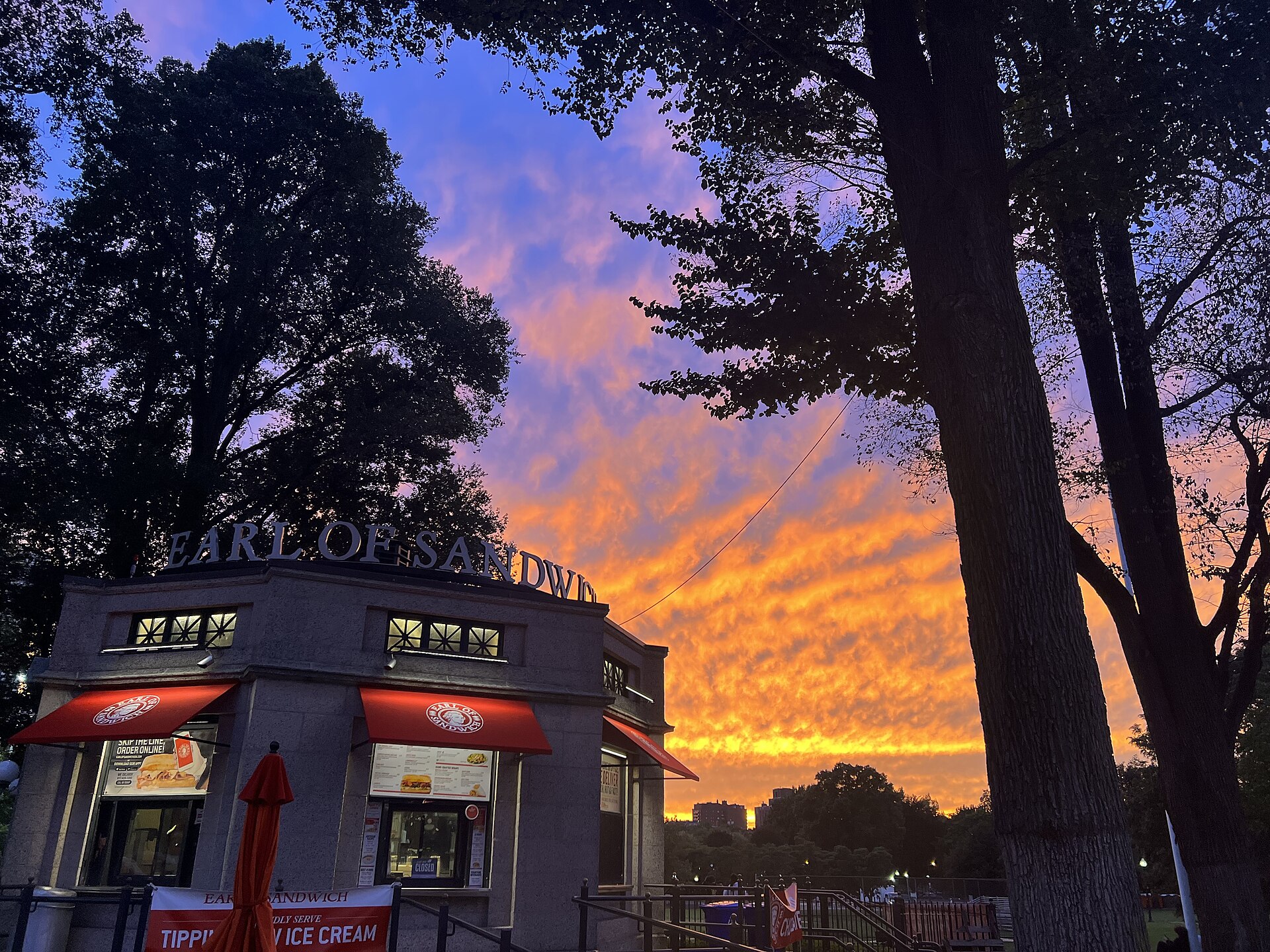
Spring brings blooming tulips and cherry blossoms to the Public Garden, with the Swan Boats resuming operations in April. Summer sees the spray pool draw families while free concerts and performances fill the Parkman Bandstand. October foliage across the Common's ancient elm trees is among the finest urban autumn colour in New England, drawing photographers from across the region. The nearby Fenway Park baseball season overlaps with the park's most vibrant months.
When to Visit
The park is open 24 hours a day, 365 days a year, with no gates or admission. Frog Pond ice skating runs from mid-November through mid-March, 10 AM to 9 PM. The Frog Pond spray pool operates from late June through early September, 11 AM to 6 PM, free of charge.
The best time for history walks is weekday mornings from April through October, when paths are uncrowded and light falls through the elm canopy. October foliage is spectacular, and spring blooms in the adjacent Public Garden draw photographers from across New England.
Admission and Costs
Nearly four centuries of history have unfolded on these fifty acres, and the stories layer upon each other in ways that flat bronze plaques cannot convey. British redcoats drilled here before marching to Lexington and Concord in 1775. Abolitionists rallied against slavery on the same ground where Puritan authorities had once executed Quakers and accused witches. Martin Luther King Jr. addressed 22,000 people here in 1965, standing in the long shadow of the Soldiers and Sailors Monument. Guides weave these disparate moments into a coherent narrative, revealing how the Common has served as Boston's communal stage for protest, celebration, and transformation across every era of American history. The park contains dozens of statues, tablets, and markers that most visitors stroll past without a second glance. Guides know which monuments reveal the most about Boston's evolution, from the Great Elm site where the original tree served as both gallows and gathering point to the Frog Pond that still functions as winter skating rink and summer spray pool. They identify the paths British soldiers walked, the spots where cattle grazed in the colonial era, and the views that inspired landscape painters in the nineteenth century. The golden dome of the Massachusetts State House gleams above the Common's northern edge, and understanding why Charles Bulfinch designed it to catch the morning light requires someone who knows the story. For visitors planning to walk the Freedom Trail, beginning at Boston Common with a guide sets the historical stage that makes every subsequent stop more meaningful. The red-brick path leads north from here through Faneuil Hall and the Old North Church to Charlestown, and arriving at those sites with context already established deepens the entire experience. Beacon Hill rises directly adjacent, its gaslit streets and brick row houses representing one of America's most architecturally preserved neighborhoods, and guides seamlessly connect the open common to the private mansions that have overlooked it since the early Republic.
Tips for Visitors
Start your day here -- Boston Common is the natural launching point for exploring the city. The Freedom Trail begins here and leads north through Faneuil Hall toward Charlestown. Park Street (Red and Green Lines) and Boylston (Green Line) T stations are both on the Common's edge, making it the most transit-accessible park in Boston.
After the Common, walk up the hill to explore the cobblestone streets, gas lamps, and brick row houses of Beacon Hill, one of America's best-preserved 19th-century neighbourhoods. Faneuil Hall is a 10-minute walk east along the Freedom Trail. The State House dome reflected in Frog Pond on a still morning is one of Boston's most iconic photographic opportunities. The Common is well-lit and patrolled, but like any urban park it is best enjoyed during daylight hours and early evening.