

Overview
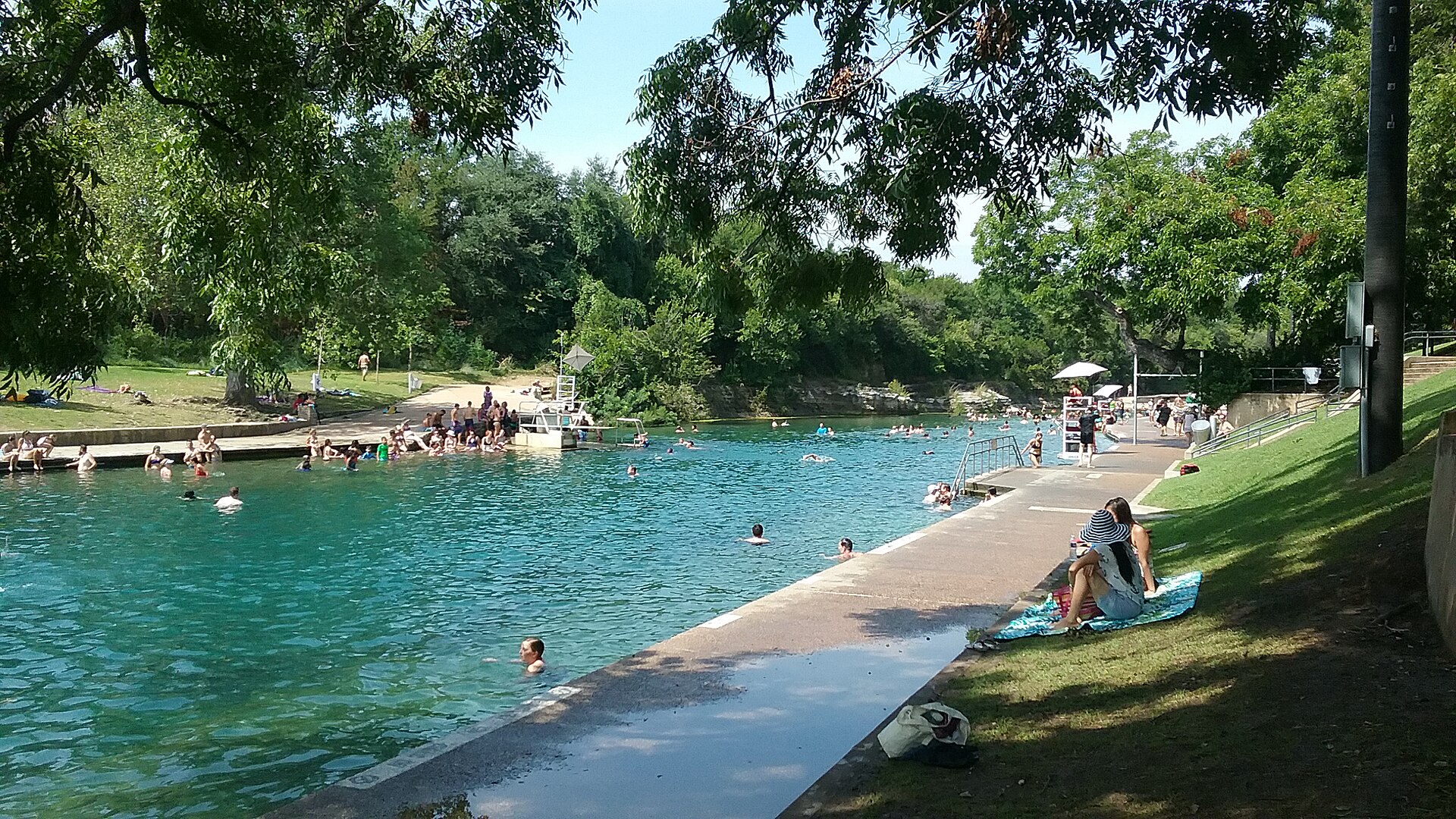
Barton Springs Pool is not merely a place to swim. It is the geographic and spiritual center of Austin, a three-acre natural pool fed by underground springs that push roughly 27 million gallons of water to the surface every day. The water emerges from the Edwards Aquifer at a constant 68 to 70 degrees Fahrenheit regardless of season, making it a bracing escape during triple-digit summers and a surprisingly warm plunge on cool winter mornings.
The pool stretches approximately 1,000 feet long and reaches depths of 18 feet near the diving board, all within the shade of ancient pecan and cypress trees that line the grassy hillside banks of Zilker Park. Long before the city existed, the Tonkawa and Comanche peoples gathered at these springs. Spanish missionaries documented the site in the 1700s, and by the early 20th century Austinites had built a bathhouse that still stands at the pool's south end. When developers proposed building over the aquifer recharge zone in the 1990s, Austinites rallied so fiercely that the fight became a defining moment in the city's environmental identity. Today, the pool also serves as critical habitat for the endangered Barton Springs salamander, a tiny creature found nowhere else on Earth. Swimming alongside these delicate ecosystems, guided by someone who understands the geological and cultural layers, transforms a dip into a profound connection with Austin's deepest story. Nearby, Lady Bird Lake and South Congress Avenue offer a full day of outdoor exploration.
Wildlife
Beneath the surface of this spring-fed pool lies a geological story that spans millennia. Rainwater falling on the Texas Hill Country begins a journey through porous limestone that can take decades, filtering through the Edwards Aquifer before emerging here at a constant 68 degrees. Naturalist guides transform what appears to be a simple swimming hole into a window on Central Texas hydrology, explaining why the aquifer recharge zone became the flashpoint for Austin's most consequential environmental battles and why every swimmer is floating in water that fell as rain when they were still in school.
The endangered Barton Springs salamander remains invisible to nearly every visitor who slips into the water. These tiny creatures, found nowhere else on Earth, inhabit the rocky outflows at the pool's upper end, and their survival depends on the same water quality that makes swimming here so extraordinary. Guides know the precise locations where careful observers might spot them, and they can recount the conservation campaigns of the 1990s that defined modern Austin's relationship with development and nature. The story connects directly to Zilker Park's broader ecosystem, where the botanical garden, the Barton Creek Greenbelt's 13 miles of trails, and the views across Lady Bird Lake await those who want to extend their exploration beyond the pool itself.
Cultural layers run as deep as the aquifer here. The Tonkawa and Comanche peoples gathered at these springs for generations before Spanish missionaries documented the site, and the bathhouse standing at the south end has witnessed Austin's transformation from frontier town to technology hub. Expert guides weave these threads together, revealing how a three-acre swimming pool encapsulates the tensions and triumphs that have shaped this city from its earliest days to the present moment.
Trails
Early morning swim: Arrive at 5 AM to float in the empty pool as mist rises off the water and the city is still asleep. Pecan tree hillside: The sloped lawn on the south bank is one of Austin's finest picnic spots, shaded by some of the oldest trees in the city.
Salamander viewing area: Near the spring outflows at the upper end of the pool, clear water reveals the rocky habitat of the endangered Barton Springs salamander. Sunset from the diving board: The west-facing pool catches golden light in the evening, and jumping from the board into the illuminated water is a quintessential Austin moment. Barton Creek Greenbelt: Accessible from the pool area, the greenbelt extends for 13 miles of hiking trails, rock climbing, and additional swimming holes. Zilker Botanical Garden: A short walk uphill from the pool, the garden features themed sections including a prehistoric garden with dinosaur tracks embedded in the limestone. Splash exhibit: The Beverly S. Sheffield Education Center at the pool entrance tells the ecological story of the springs through interactive exhibits and educational displays.
When to Visit
Regular hours: Open daily 5 AM to 10 PM, with lifeguards on duty from 8 AM to 8 PM. Free swim periods: Before 8 AM and after 8 PM daily, no admission fee during these windows. Maintenance closures: The pool closes for cleaning on Thursdays from 9 AM to 7 PM.
The best time for laps is early morning before 8 AM, when the water is glassy, crowds are thin, and the light filters through the pecan canopy. Avoid weekend afternoons from May through September, when the hillside is packed and the parking lots overflow.
Admission and Costs
Adult admission is $9 for non-residents and $5 for Austin residents with valid ID. Children under 12 pay $4 non-resident or $3 resident. No charge applies during the free swim hours before 8 AM and after 8 PM.
An annual pass costs $75 for residents or $135 for non-residents, covering unlimited visits all year. Guided ecology tours run $15-30 per person for naturalist-led walks covering the springs, salamander habitat, and aquifer system. Zilker Park parking is free on weekdays and $5 on weekends and holidays.
Tips for Visitors
Bring water shoes: The pool bottom is natural rock and can be slippery, especially near the algae-covered limestone at the shallow end. The water is cold: at 68 degrees, the initial plunge shocks most swimmers; wade in gradually from the shallow south end if you prefer a gentler adjustment.
Combine with South Congress Avenue: SoCo is a 10-minute drive south and makes an ideal post-swim destination for food trucks and browsing. Pack for the day: Many locals spend entire afternoons alternating between swimming and lounging on the hillside with books and coolers. No lifeguards in off-hours: Free swim before 8 AM and after 8 PM means swimming at your own risk, but the pool is well-lit in the evening. Check algae conditions: The City of Austin posts regular water quality updates; occasional high-algae days may affect visibility but the water remains safe. Parking strategy: During peak times, park at the Zilker Park soccer fields lot and walk 10 minutes rather than battling the small lot nearest the pool.