

Overview
Córdoba's Jewish Quarter occupies a tight maze of whitewashed lanes pressed against the western wall of the Mezquita-Cathedral. During the 10th and 11th centuries, when Córdoba was the intellectual capital of Europe, Jewish, Muslim, and Christian scholars lived and worked side by side here, producing breakthroughs in medicine, philosophy, and astronomy. The neighbourhood's most celebrated son, Moses ben Maimon — known as Maimonides — was born on these streets in 1138. Today the Judería preserves that legacy through its medieval Synagogue (one of just three surviving in all of Spain), the Casa de Sefarad museum, and the quiet plazas where geranium-draped balconies lean over cobblestone paths barely wide enough for two people to pass.
Local Life
Without context, the Judería can feel like a pleasant but anonymous cluster of white walls and flower pots. A guide trained in Sephardic history brings the stones to life. They explain why the Synagogue's stucco decoration mimics Alhambra patterns, how Maimonides' medical writings influenced European universities for centuries, and which doorways still bear faint Hebrew inscriptions that most visitors walk past. The quarter also hides private patios that only open during the Festival de los Patios in May — a guide can point out the ones occasionally accessible year-round and share the social traditions behind Córdoba's famous courtyard culture.
Walking Routes
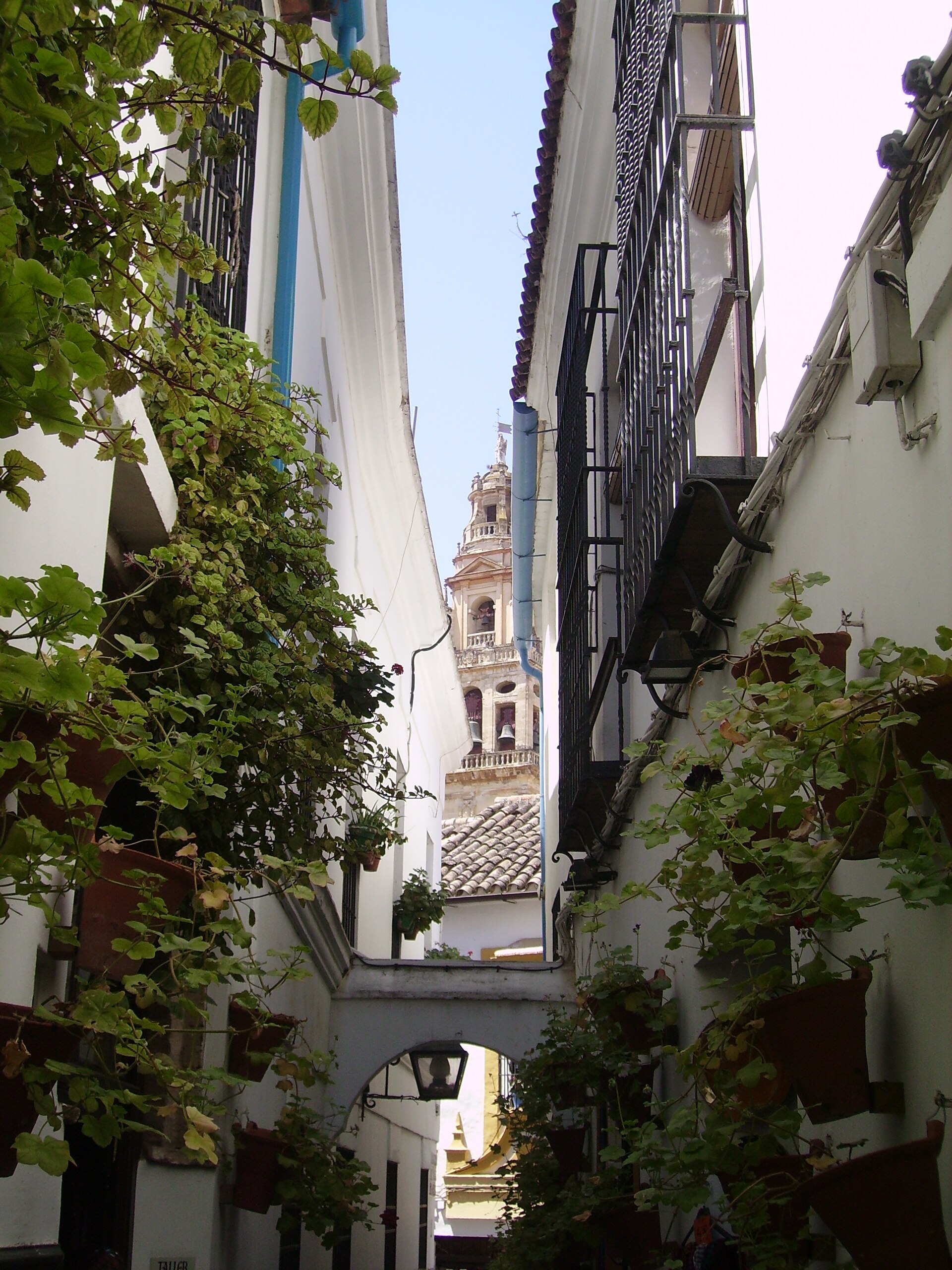
Medieval Synagogue: Enter one of only three synagogues in Spain that survived the 1492 expulsion, with Mudéjar stucco work rivalling the Alhambra. Maimonides statue: Sit beside the bronze philosopher in Plaza de Tiberiades and rub his well-polished foot for wisdom. Calleja de las Flores: Walk the narrow dead-end alley bursting with hanging flower pots, framing the Mezquita bell tower at its end. Casa de Sefarad: Browse five rooms of Sephardic artefacts, music, and domestic life reconstructions in a restored 14th-century house. Hidden patios: Peek through wrought-iron gates at private courtyards tiled in azulejos and overflowing with jasmine and bougainvillea. Taberna culture: Pause at a centuries-old tavern for salmorejo and a glass of Montilla-Moriles, the local sherry-style wine
When to Visit
Neighbourhood streets: Open 24 hours — the Judería is a living district, not a gated site. Synagogue: Tuesday–Saturday 9:00 AM – 3:00 PM, Sunday 9:00 AM – 3:00 PM, closed Monday. Casa de Sefarad: Daily 10:00 AM – 6:00 PM (extended to 7:00 PM in summer). Best time to walk: Early morning before tour groups arrive, or evening when lanterns illuminate the alleys. Market days: Local artisan stalls around Plaza de Maimónides are busiest on weekends
Admission and Costs
Walking the quarter: Completely free — no ticket required for the streets and plazas. Synagogue entry: Free for EU citizens; approximately €0.75 for non-EU visitors. Casa de Sefarad: €5 general admission. Guided walking tour: €15–25 per person (2–2.5 hours, covers Synagogue, Maimonides, and hidden courtyards). Private guide: €100–160 for up to 6 people (route and pace customised to your interests)
Tips for Visitors
Wear flat shoes: Cobblestones are uneven and some streets slope steeply; sandals with grip work well in summer. Morning or evening: Midday in summer pushes 40 °C with little shade in the narrow streets — plan accordingly. Combine with the Mezquita: The Judería wraps around the mosque-cathedral's western and northern sides; seeing both in one morning is easy. Patio Festival: If visiting in early May, the Festival de los Patios opens dozens of private courtyards; book accommodation months ahead. Cash handy: Some small artisan shops and Synagogue entry accept cash only. Quiet respect: Residents live here year-round; keep voices low in residential stretches, especially early and late