
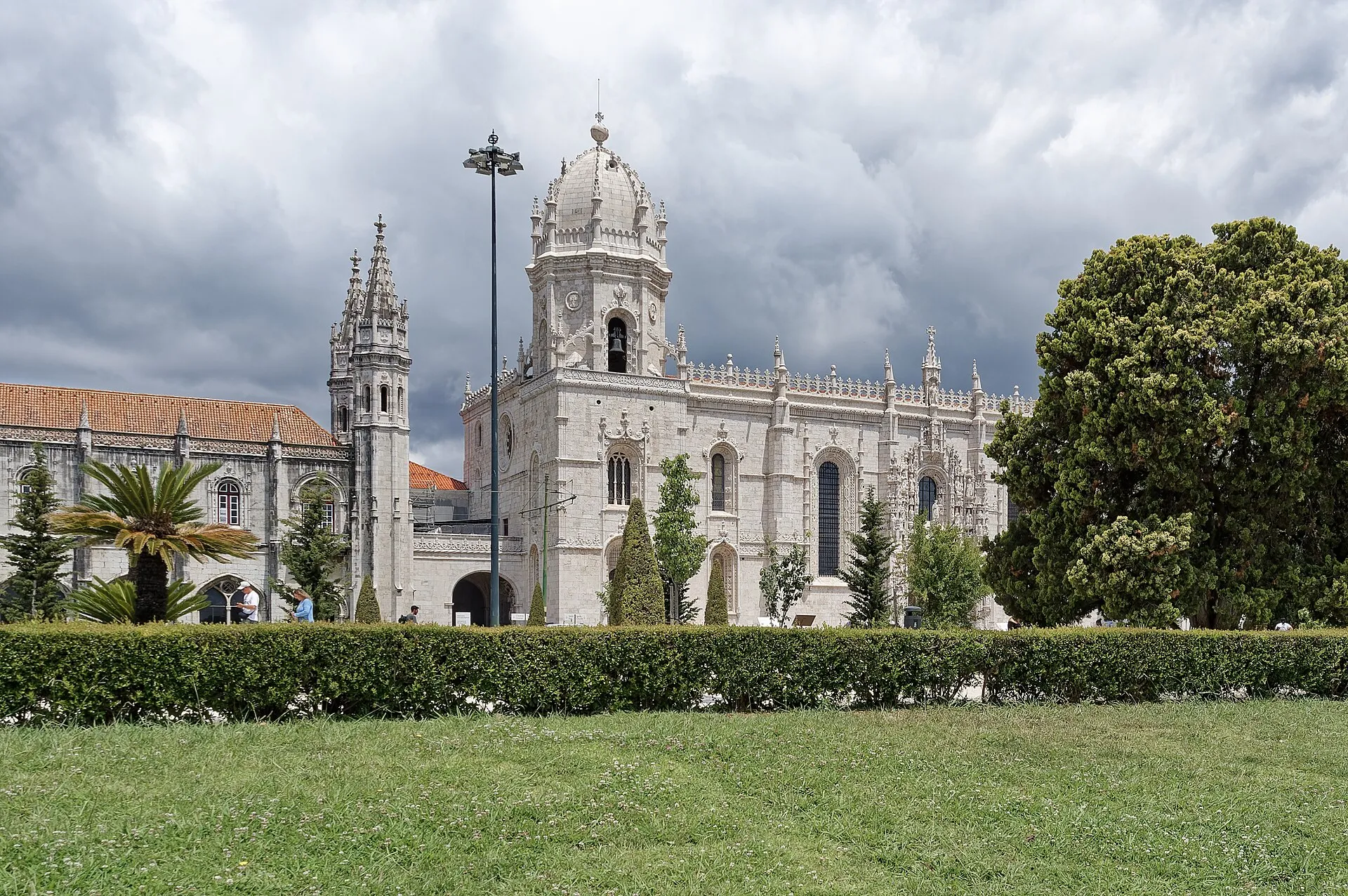
Visitor Etiquette
The Jerónimos Monastery remains an active church — the Church of Santa Maria de Belém within the complex holds regular masses, and during these services the nave is closed to tourist visits. Dress code applies throughout: shoulders and knees must be covered for all visitors regardless of gender; a scarf to cover shoulders is worth packing, especially in summer when short-sleeved clothing is common. Photography is freely permitted in the cloisters and throughout the church exterior and interior, though a respectful silence should be maintained inside the church nave, and flash photography near the tombs of Vasco da Gama and Luís de Camões is inappropriate given their funerary nature. Maintain quiet when passing through the nave if other visitors are in a meditative or devotional posture. The cloisters, by contrast, have a more open, relaxed atmosphere and are photographed extensively. Do not touch the carved stone surfaces — 700 years of devotional handling and tourist contact have already worn down detail on many capitals and column shafts.
Spiritual Significance
The Jerónimos Monastery was founded as an act of collective thanksgiving — King Manuel I ordered its construction after Vasco da Gama's successful voyage to India made Portugal the first European power to reach Asia by sea, and the building was understood from its inception as a monument to divine favor. The Hieronymite monks who occupied the monastery for 300 years had a specific spiritual mission: to pray for Portuguese mariners and explorers setting sail from Belém, offering masses and intercessions for men who might not return. Every ship that departed from the nearby Tagus River mouth passed within sight of the monastery under construction, and sailors who survived the voyage to India returned here to give thanks at the same church. The tomb of Vasco da Gama at the church entrance is thus not merely a memorial but a devotional site: the man who opened the spice route died believing his voyages served God's purpose, and the tomb's carved armillary spheres and caravels are simultaneously maritime heraldry and a spiritual claim that exploration and faith were inseparable. The tomb of the poet Luís de Camões — placed opposite da Gama to honor the author of Os Lusíadas, Portugal's national epic celebrating da Gama's voyage — adds a literary dimension to the theological one: the monastery became a site of Portuguese cultural and spiritual identity for centuries after the spice trade that funded it had ended.
When to Visit
Hours: October-May: 10 AM-5:30 PM | June-September: 10 AM-6:30 PM (last entry 30 min before closing). Closed: Mondays, January 1, Easter Sunday, May 1, December 25. Best time: At opening on weekdays — the cloisters are nearly empty and morning light floods the upper gallery. Least crowded: Winter weekday afternoons; summer mornings before the first coach groups at 11 AM. Church access: The adjacent Igreja de Santa Maria is free to enter and keeps slightly longer hours
Admission and Costs
Cloisters admission: €12. Combined ticket (Monastery + Belém Tower): €18 — saves €4. Free entry: First Sunday of every month until 2 PM. Group guided tours: €30-50 per person (skip-line + expert guide, 1-1.5 hours). Private guide: €120-200 for up to 6 people (cloisters + church + Belém context)
The Case for a Guide
The Jerónimos Monastery's carved stone is a visual language — every rope, armillary sphere, and coral reef motif carries specific meaning — and reading it without a guide is like visiting a library where you can see the books but not open them.
- Manueline symbolism column by column: The Manueline style is a uniquely Portuguese invention braiding Late Gothic structure with maritime iconography — a guide decodes each element (twisted ropes for sea journeys, armillary spheres for navigation, exotic flora for the lands reached) as you move through the cloisters
- Vasco da Gama's tomb and the route he pioneered: The explorer's carved tomb at the church entrance uses ropes, caravels, and armillary spheres to summarize his achievement — a guide explains the India route he opened in 1498 and why the spice trade profits funded everything you are standing inside
- King Manuel I's pepper-funded ambition: The monastery's construction was financed by a 5% tax on spices from the East — a guide explains the astonishing wealth this generated and why Manuel I wanted the most ornate building in Portugal as a thanksgiving monument
- Chapter house hidden gem: The massive vaulted chapter house spanning 19 meters with a single central pillar is one of the monastery's most extraordinary spaces — most visitors walk past it, but a guide leads you inside and explains the structural engineering
- Three architects, one building: The monastery took nearly a century to build under Boytac, João de Castilho, and Diogo de Torralva — a guide traces where each architect's hand ends and the next begins, visible in subtle shifts of style along the cloister galleries
Tips for Visitors
Combine with Belém Tower: The tower is a 10-minute walk west — buy the combined ticket for savings. Free church entrance: Even without a cloisters ticket, you can enter the Igreja de Santa Maria to see da Gama's tomb for free. Pastéis de Belém: The famous bakery is across the street — grab a warm pastel de nata before or after your visit. Photography: Allowed throughout — the upper cloister gallery provides the best angles. Allow 1-1.5 hours: The cloisters deserve slow exploration; add 30 minutes for the church. Lisboa Card: Covers free entry plus public transport to reach Belém
Frequently Asked Questions
What is the best season to tour Jeronimos Monastery?
The monastery's Manueline cloisters are magnificent year-round, but the extended summer hours from June through September (closing at 6:30 PM) give you more flexibility, and afternoon light filtering through the upper cloister galleries creates the most atmospheric photography conditions. Visitor crowds peak in July and August, so May, June, and September offer the best balance of good weather and manageable queues. Winter brings shorter hours but significantly fewer visitors, which can mean a more contemplative experience of the stone carvings.
When can tourists enter Jerónimos Monastery?
Hours: October-May: 10 AM-5:30 PM | June-September: 10 AM-6:30 PM (last entry 30 min before closing). Closed: Mondays, January 1, Easter Sunday, May 1, December 25.
How does a guide enhance a visit to Jeronimos Monastery?
Manueline literacy: The carved symbols are a visual language — guides decode the ropes, spheres, and natural motifs column by column.
What practical tips should visitors know for Jerónimos Monastery?
Photography is allowed throughout — the upper cloister gallery provides the best angles. Allow 1-1.5 hours for the cloisters; add 30 minutes for the church. The Lisboa Card covers free entry plus public transport to reach Belém.