

Overview
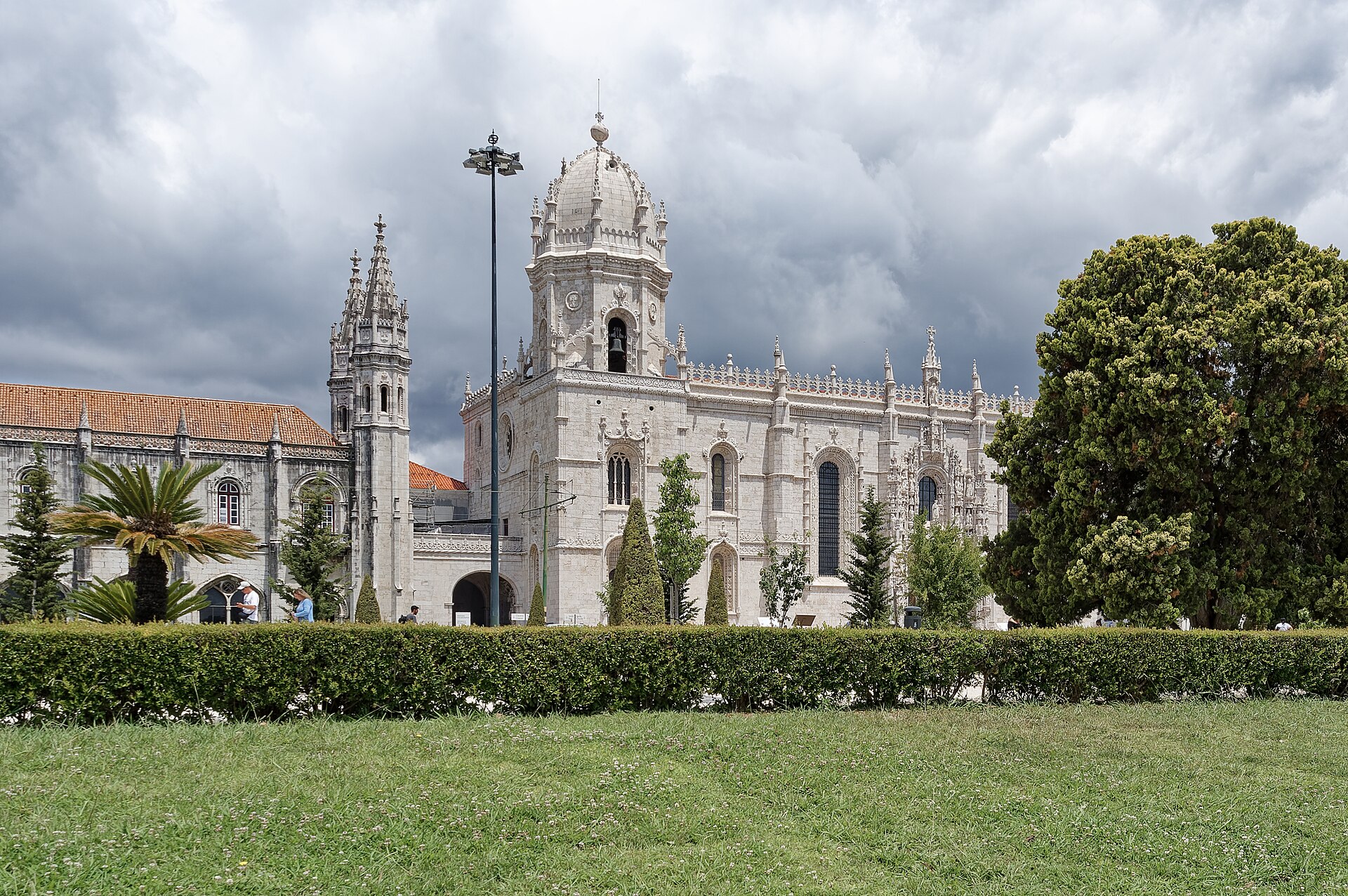
King Manuel I ordered construction of the Mosteiro dos Jerónimos in 1501 to give thanks for Vasco da Gama's successful voyage to India two years earlier. Funded by the spice trade's enormous profits — a 5% tax on pepper, cinnamon, and cloves from the East — the monastery took nearly a century to complete and became the supreme expression of the Manueline style, a uniquely Portuguese architectural language that braids Late Gothic structure with maritime motifs. Ropes, anchors, coral, armillary spheres, and exotic flora are carved into every column and archway, transforming the stone into a record of exploration. UNESCO inscribed it as a World Heritage Site in 1983.
Visitor Etiquette
Manueline literacy: The carved symbols are a visual language — guides decode the ropes, spheres, and natural motifs column by column. Tomb identification: Vasco da Gama and Luís de Camões (Portugal's national poet) are buried here — guides explain their significance to Portuguese identity. Architectural evolution: Three different architects shaped the monastery — a guide traces where one style ends and another begins. Spice trade economics: Guides explain how pepper profits built this monument and why it matters to global history
Spiritual Significance
Two-story cloisters — Among the most ornate in Europe, with 55 meters per side of interlocking Manueline arches. Vasco da Gama's tomb — At the entrance of the church, carved with ropes, armillary spheres, and caravels. Luís de Camões' tomb — Opposite da Gama, honoring the poet who wrote "Os Lusíadas," Portugal's national epic. Chapter house — Massive vaulted room with a single unsupported pillar spanning 19 meters. Church of Santa Maria — Free-entry church with octagonal columns rising like palm trunks into star-ribbed vaulting. South Portal — The monastery's ceremonial entrance, depicting Henry the Navigator surrounded by saints, prophets, and maritime imagery
When to Visit
Hours: October-May: 10 AM-5:30 PM | June-September: 10 AM-6:30 PM (last entry 30 min before closing). Closed: Mondays, January 1, Easter Sunday, May 1, December 25. Best time: At opening on weekdays — the cloisters are nearly empty and morning light floods the upper gallery. Least crowded: Winter weekday afternoons; summer mornings before the first coach groups at 11 AM. Church access: The adjacent Igreja de Santa Maria is free to enter and keeps slightly longer hours
Admission and Costs
Cloisters admission: €12. Combined ticket (Monastery + Belém Tower): €18 — saves €4. Free entry: First Sunday of every month until 2 PM. Group guided tours: €30-50 per person (skip-line + expert guide, 1-1.5 hours). Private guide: €120-200 for up to 6 people (cloisters + church + Belém context)
Tips for Visitors
Combine with Belém Tower: The tower is a 10-minute walk west — buy the combined ticket for savings. Free church entrance: Even without a cloisters ticket, you can enter the Igreja de Santa Maria to see da Gama's tomb for free. Pastéis de Belém: The famous bakery is across the street — grab a warm pastel de nata before or after your visit. Photography: Allowed throughout — the upper cloister gallery provides the best angles. Allow 1-1.5 hours: The cloisters deserve slow exploration; add 30 minutes for the church. Lisboa Card: Covers free entry plus public transport to reach Belém