

Overview
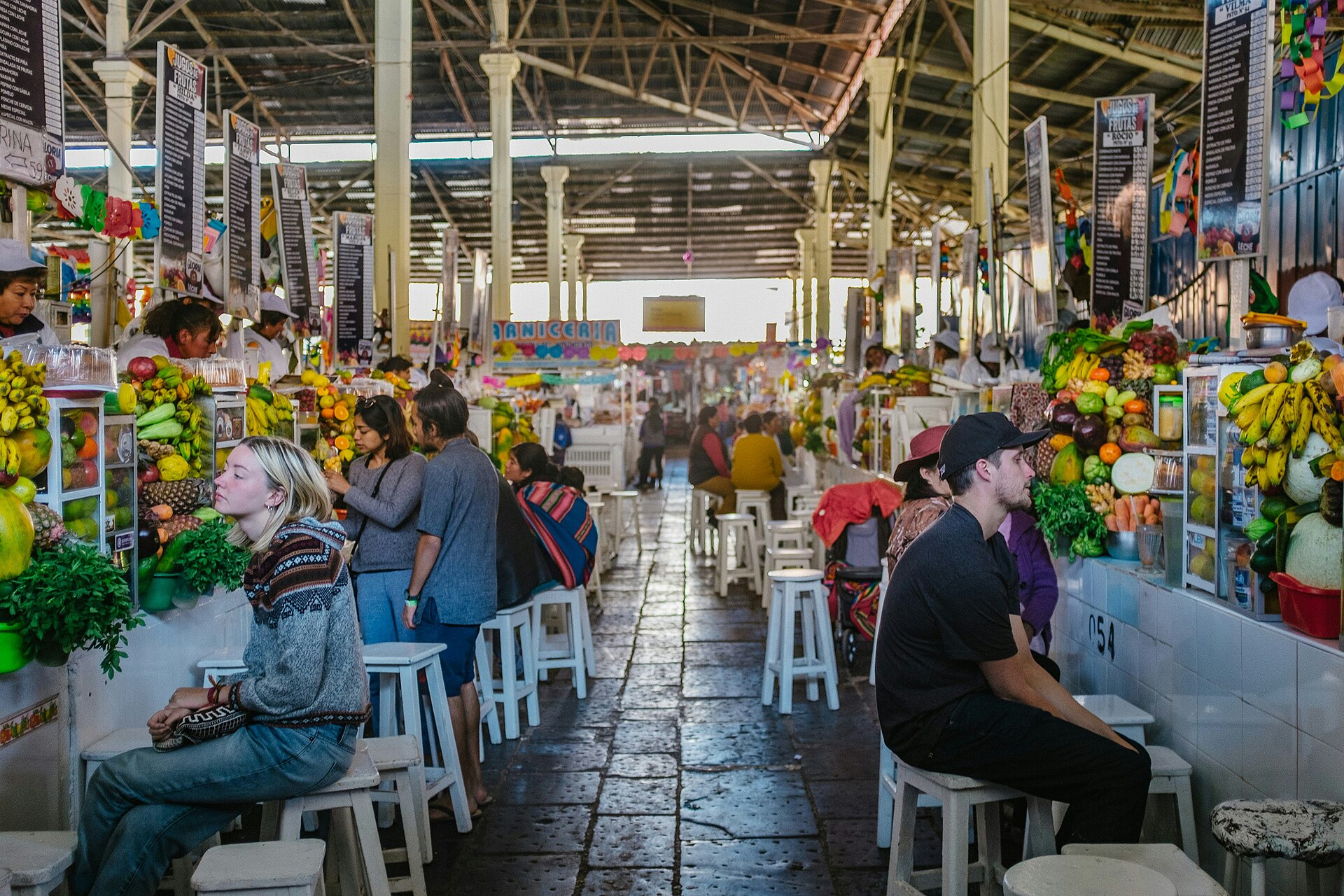
Mercado Central de San Pedro is the beating heart of daily life in Cusco, a vast covered market five blocks from the Plaza de Armas where Cusqueños have traded, eaten, and socialized since the market hall was designed by Gustave Eiffel's engineering firm in 1925. Inside, hundreds of stalls are organized into sections: a juice alley where vendors blend any combination of tropical and Andean fruits to order, a bread section fragrant with traditional chuta loaves, a meat area where whole alpaca legs hang alongside dried llama jerky, and a flower section exploding with roses, lilies, and native Andean blooms. For travelers, San Pedro is the most vivid introduction to highland Peruvian food culture. The comedor section — rows of tiny kitchen stalls — serves the same dishes that Cusqueños eat for breakfast and lunch: thick quinoa soup with potatoes and herbs, lomo saltado (stir-fried beef with onions and chips), ají de gallina (creamy chicken in walnut-chili sauce), and fresh fruit juices blended while you watch, all for under S/10 (~$2.70). A guided market tour transforms the overwhelming sensory overload into a coherent culinary education: you learn to identify chuño (freeze-dried potatoes), maca root, kiwicha grain, and dozens of potato varieties that don't exist outside the Andes. The market is also a working supply hub for Cusco's restaurants, hotels, and households, which means the produce is as fresh as it gets. Combine a morning market visit with an afternoon exploring the Sacred Valley to see where much of this produce is grown.
What To Buy
Juice alley: A dozen competing vendors blend fresh juices to order — try lucuma (a caramel-sweet Andean fruit) or aguaymanto (golden berries) for flavours you won't find at home. Comedor breakfast: Sit at a tiny counter and eat a S/8 bowl of quinoa soup followed by a plate of lomo saltado — the most authentic and affordable meal in Cusco. Potato diversity: Peru has over 3,000 potato varieties; the market displays dozens of types in colours ranging from deep purple to bright yellow, each with distinct culinary uses. Fresh cheese section: Stacks of queso fresco (fresh white cheese) made daily in highland dairies, sold by weight — pair with bread for a simple Andean snack. Flower section: An explosion of colour near the entrance — affordable bouquets of roses, native orchids, and Andean wildflowers. Coca leaf stalls: Bags of dried coca leaves sold openly for tea and chewing — an ancient Andean tradition and a genuine remedy for altitude discomfort.
Food Stalls
The comedor section is San Pedro's gastronomic core — dozens of tiny kitchen stalls where cooks prepare the same recipes their families have served for generations. For breakfast, order caldo de gallina (rich hen broth with noodles and potato) or quinoa con leche (quinoa porridge with warm milk and cinnamon). At lunch, the stalls compete for customers with enormous portions of lomo saltado, ají de gallina, seco de cordero (lamb stew), and chicharrón (deep-fried pork) served with giant-kernel Andean corn and sweet potato. The juice vendors along the central aisle blend any combination of fruits to order — try the especial blends that combine lucuma, banana, papaya, and maca root for a high-altitude energy boost. Near the bread section, vendors sell chuta — a large, slightly sweet bread traditional to Cusco — alongside empanadas filled with cheese or meat. For the adventurous, look for anticuchos (grilled beef heart skewers) and cuy al horno (roasted guinea pig), both prepared fresh to order at dedicated stalls.
When to Visit
Monday-Saturday: 6 AM - 6 PM (busiest 7-11 AM). Sunday: 6 AM - 2 PM (reduced hours). Best: 7:30-9:30 AM when the market is at peak activity but not yet overwhelmed with tour groups. Duration: 1-2 hours for a thorough guided tour with tastings.
Admission and Costs
Market entry: Free. Guided food tour: S/60-120 ($16-32) per person including tastings at 5-8 stalls. Full breakfast at a comedor: S/6-12 ($1.60-3.25) — soup, main course, and juice. Fresh juice: S/3-8 (~$0.80-2.15) — try lucuma, maracuyá, or a mixed Andean superfruit blend.
Tips for Visitors
Go hungry: A market food tour involves constant tasting — arrive with an empty stomach to make the most of it. Bring small bills: Most vendors don't break S/100 or S/200 notes — carry S/5 and S/10 bills. A guide is invaluable: Without one, you'll eat well but miss the stories behind the ingredients — guided tours identify unfamiliar produce and explain traditional uses. Watch your belongings: The market is crowded and vibrant — keep bags in front of you and phones in pockets. Combine with the Plaza de Armas: The market is a 10-minute walk from the plaza — do both in a morning circuit. Avoid Sunday afternoons: The market closes early on Sundays and the best produce is gone by late morning.