

Overview
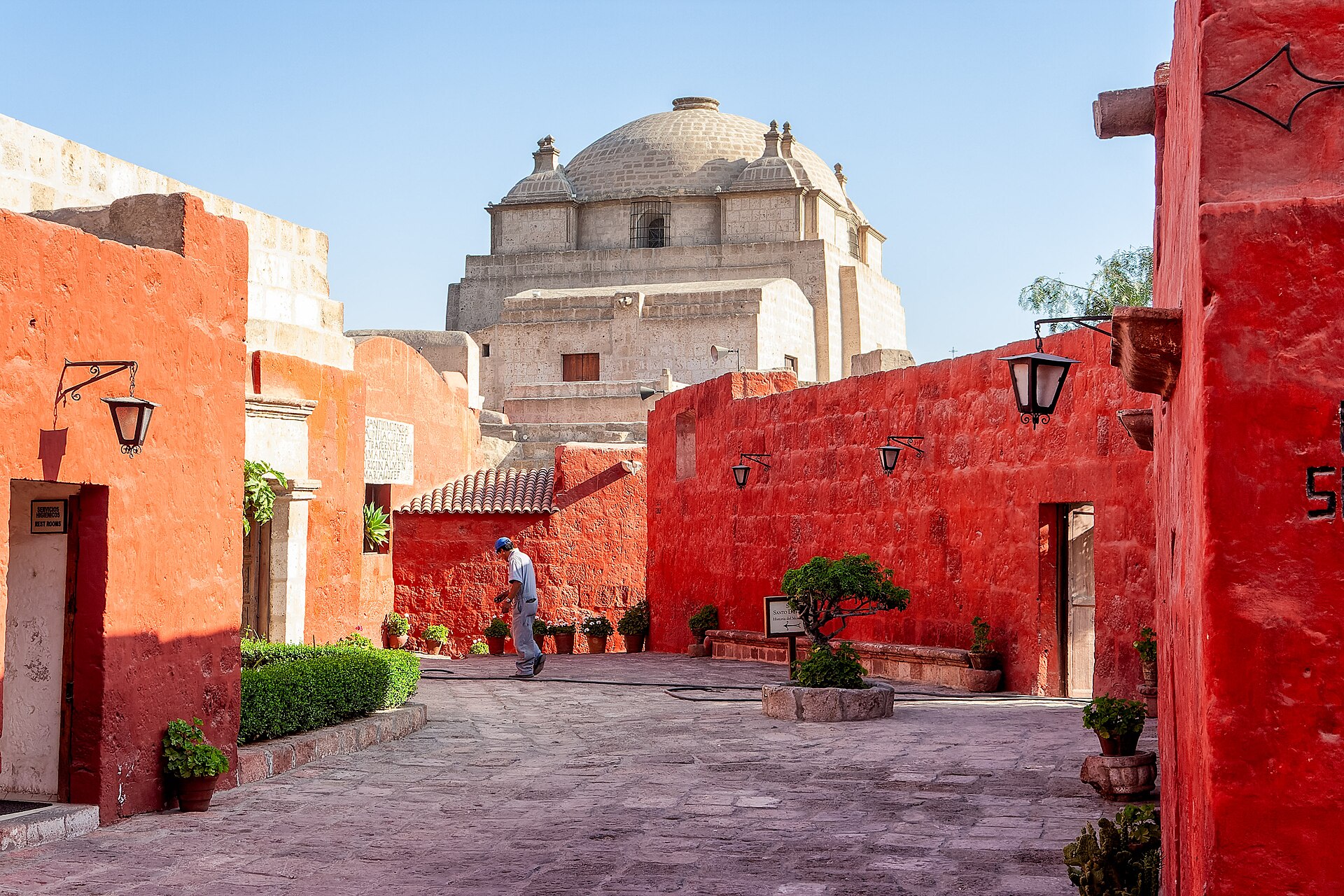
The Monasterio de Santa Catalina is Arequipa's most extraordinary surprise: a 20,000-square-metre walled compound of cobbled streets, plazas, cloisters, and vividly painted buildings that functioned as a virtually autonomous city-within-a-city for nearly 400 years. Founded in 1579 by a wealthy widow, the monastery accepted daughters of the colonial elite, who brought servants and furnishings into cells that gradually expanded into private apartments — some with their own kitchens, gardens, and receiving rooms. At its peak, over 450 women lived here in a rarefied world of prayer, art, and surprising luxury, completely hidden from the public until 1970 when the order opened most of the complex to visitors. Walking through Santa Catalina is unlike any other heritage experience in Peru. The walls are painted in saturated earth tones — deep terracotta, cobalt blue, burnt orange, and sun-bleached white — that photograph beautifully in the sharp Arequipa light. Streets have names, there are plazas with fountains, and the kitchen cloisters still contain the original stone ovens and clay pots. A small community of nuns continues to live in a private section of the compound, maintaining a thread of continuity back to the 16th century. Without a guide, you wander a maze of beautiful but contextless rooms; with one, the monastery's stories emerge — rivalries between wealthy nuns, the devastating earthquake of 1868, the reforms that stripped the cells of luxury, and the decision to open the doors after four centuries of enclosure.
Spiritual Significance
The monastery's spiritual heritage spans nearly five centuries of Dominican contemplative life, and several spaces within the complex illuminate this tradition. The main cloister features 17th-century frescoes depicting scenes from the life of the Virgin Mary, recently restored to reveal their original vivid colours. The communal kitchen, with its soot-blackened stone ovens and original clay pots, shows where nuns prepared meals communally after 19th-century reforms ended the practice of private cooking in individual cells. The art collection — religious paintings, polychrome sculptures, and embroidered vestments — documents four centuries of monastic devotion expressed through the Cusco School and Arequipa School of colonial painting. The active convent section, where a small community of nuns still lives in enclosure, maintains an unbroken thread of prayer that connects the present to the 1579 founding. On Tuesday and Friday evenings, the candlelit night tours transform the monastery into a moody, atmospheric experience entirely different from the sun-drenched daytime visit — shadows fill the corridors and the coloured walls glow under soft lamplight.
Visitor Etiquette
Colour-drenched walls: The terracotta, blue, and white painted corridors create some of the most photographed scenes in Peru — morning light between 9-11 AM is ideal. Named streets and plazas: Calle Córdoba, Calle Sevilla, Plaza Zocodover — the monastery replicates a miniature Andalusian town behind its walls. Communal kitchen: Soot-blackened stone ovens and original clay pots show where nuns prepared meals after the reforms. The active convent section is off-limits to visitors — the boundary is clearly marked and should be respected. Photography is allowed throughout the open areas but flash should be avoided in the darker chapel spaces to protect the 17th-century frescoes. Silence is appreciated in the cloister gardens, where the contemplative atmosphere of the monastery's living spiritual tradition can still be felt. Combine with the Museo Santuarios Andinos for a morning that moves from Inca mountain worship to Catholic contemplative life — two radically different spiritual traditions shaped by the same volcanic landscape.
When to Visit
Daily: 9 AM - 5 PM (last entry 4 PM). Night visits: Tuesday and Friday 7 PM - 9 PM (candlelit tours available seasonally). Best: First thing in the morning (9 AM) for empty corridors and the best light on the coloured walls. Duration: 1.5-2.5 hours — the complex is large enough to lose yourself in.
Admission and Costs
General admission: S/40 ($11) adults, S/20 students. Included guide: Spanish-language guides are available at the entrance — tip-based. Private English-speaking guide: S/60-120 ($16-32) on top of entry. Night visit: S/40 (~$11) — candlelit atmosphere with fewer visitors.
Tips for Visitors
Arrive at opening: Tour groups begin arriving around 10:30 AM — the first 90 minutes are blissfully quiet. Bring a camera: The coloured walls and sharp Arequipa light make this one of the most photogenic sites in South America. Wear comfortable shoes: The cobbled streets and uneven stone floors cover a large area — sandals are impractical. Combine with the Historic Centre: The monastery entrance is just two blocks from the Plaza de Armas — do both in a morning. Try a night visit: If you're in Arequipa on a Tuesday or Friday, the candlelit evening tour offers an entirely different atmosphere. Allow time to get lost: The complex is deliberately labyrinthine — part of the pleasure is turning corners into unexpected courtyards.