
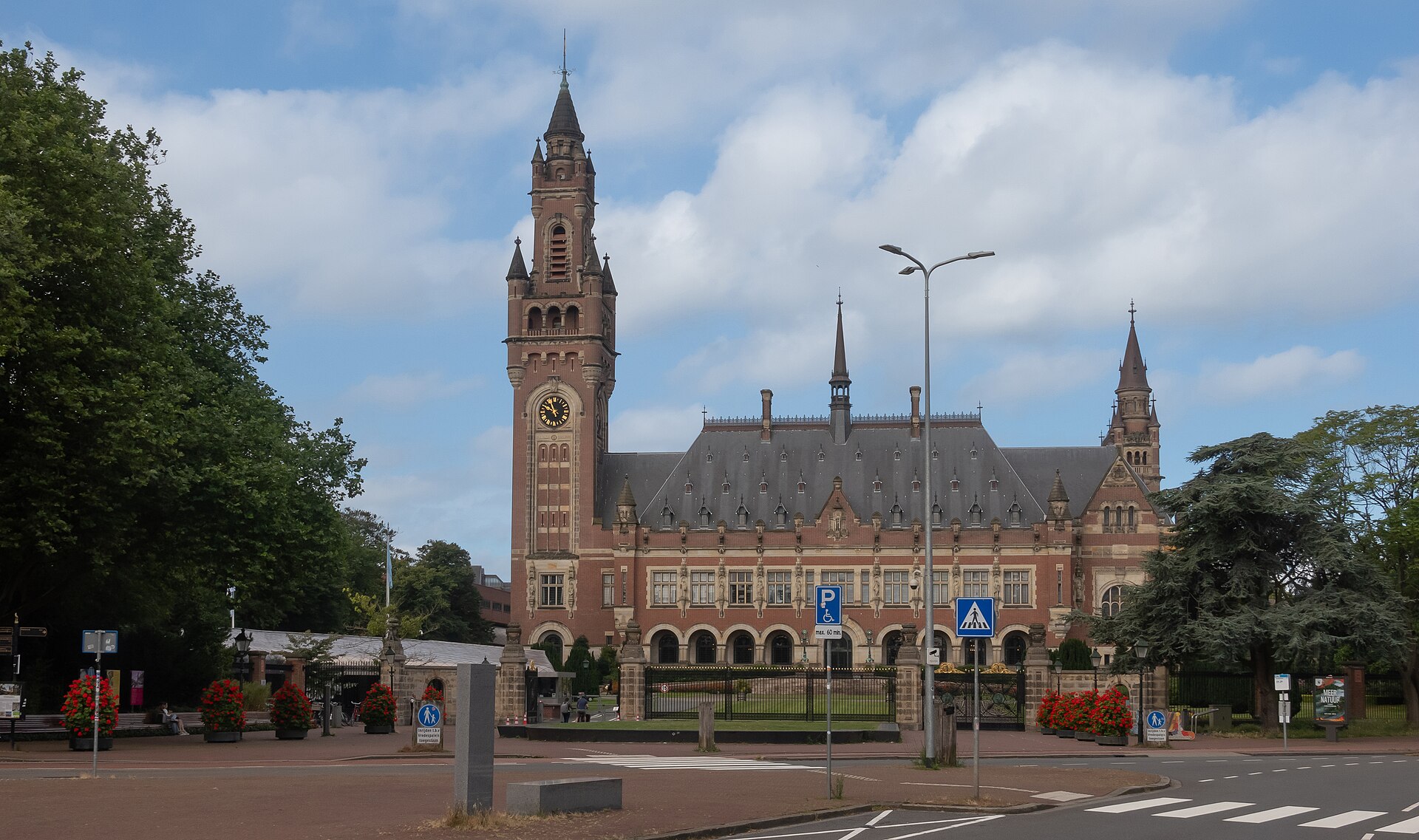

Overview
The Peace Palace (Vredespaleis) exists because Andrew Carnegie, the Scottish-American steel magnate, donated $1.5 million in 1903 to build a "temple of peace" where international disputes could be resolved through law. The building opened in 1913 — one year before World War I rendered its idealism temporarily naive — and has since housed the International Court of Justice (the principal judicial organ of the United Nations), the Permanent Court of Arbitration, and the Hague Academy of International Law. Architect Louis Cordonnier designed it in a French-Flemish Renaissance style, and countries worldwide contributed furnishings: Italian marble, Japanese silk tapestries, a Swiss clock, German ironwork, and American stained glass. The building is literally constructed from international goodwill.
The Peace Palace isn't just a museum piece — it remains an active courthouse where international territorial disputes, treaty interpretations, and genocide cases are argued and decided. The visitor center, opened in 2012, tells the story of international law's evolution from idealistic aspiration to functioning (if imperfect) system, using interactive exhibits that make complex legal concepts accessible. Guided tours of the palace interior reveal the courtroom where judges from 15 countries hear cases, the ornate Great Hall of Justice, and the library containing one of the world's largest collections of international law texts. A guide who understands international law explains how The Hague became the world capital of justice, what the various courts actually do (they're often confused), and why Carnegie's pre-WWI optimism about peaceful dispute resolution turned out to be simultaneously naive and prophetic.
Architecture
Great Hall of Justice: The courtroom where ICJ judges hear cases — 15 judges representing the world's major legal systems sit beneath stained glass windows donated by Britain depicting allegorical scenes of justice. International Donations: Every room contains gifts from nations worldwide — a Japanese room with silk panels, marble from Italy, a Swiss clock that has kept time for over a century, iron gates from Germany. Peace Palace Library: One of the world's most important international law collections, housed in an ornate reading room. Scholars come from around the world to research here. Visitor Center: Interactive exhibits trace the history of international dispute resolution from The Hague Peace Conferences of 1899 and 1907 through the establishment of the UN system. Eternal Flame of Peace: A monument in the palace gardens, visible from outside the fence, commemorating the ongoing pursuit of international peace and justice.
Historical Significance
The Peace Palace embodies over a century of the international community's attempt to replace warfare with law. Carnegie's 1903 donation was inspired by the First Hague Peace Conference of 1899, which established the Permanent Court of Arbitration — the first global institution for peaceful dispute resolution. The building's 1913 opening, one year before the catastrophe of World War I, marked both the high point and the first crisis of the ideal. Yet the institution survived: the Permanent Court of International Justice operated here between the wars, and its successor — the International Court of Justice — continues to adjudicate disputes between nations. The Hague's concentration of international legal institutions (ICJ, ICC, ICTY, OPCW) traces directly back to the Peace Palace's founding vision. Combine with the Binnenhof for a day exploring both Dutch national governance and international justice, or visit Madurodam to see a miniature replica of the Peace Palace alongside other Dutch landmarks.
When to Visit
Visitor Center: Tuesday-Sunday 10:00-17:00 (closed Mondays). Guided palace tours: Available on select days — advance booking required through the visitor center website. Gardens: Visible from the perimeter fence; the Flame of Peace monument is always visible. Best: Weekday mornings for the visitor center; book palace tours as far ahead as possible.
Admission and Costs
Visitor center: €11 adults; €6 children 6-12; free under 6. Guided palace tours: Additional cost; check availability and pricing on the visitor center website. External viewing and gardens: Free — the building is visible from the surrounding streets and park.
Tips for Visitors
Book palace tours early: Interior tours are limited and popular. Book online through the visitor center website as soon as your travel dates are confirmed. Visitor center first: Even without an interior tour, the visitor center provides essential context about international law that makes the exterior architecture more meaningful. Photo opportunities: The palace is best photographed from Carnegieplein, the square in front of the main entrance. The rose garden along the side provides additional angles. Carnegie connection: Visitors interested in Carnegie's philanthropic legacy can see how his vision materialized — the building embodies his belief that institutions, not weapons, should resolve disputes. Combine with city center: The Peace Palace is a 20-minute walk from the Binnenhof — combine both for a day exploring Dutch and international governance.