
Architecture
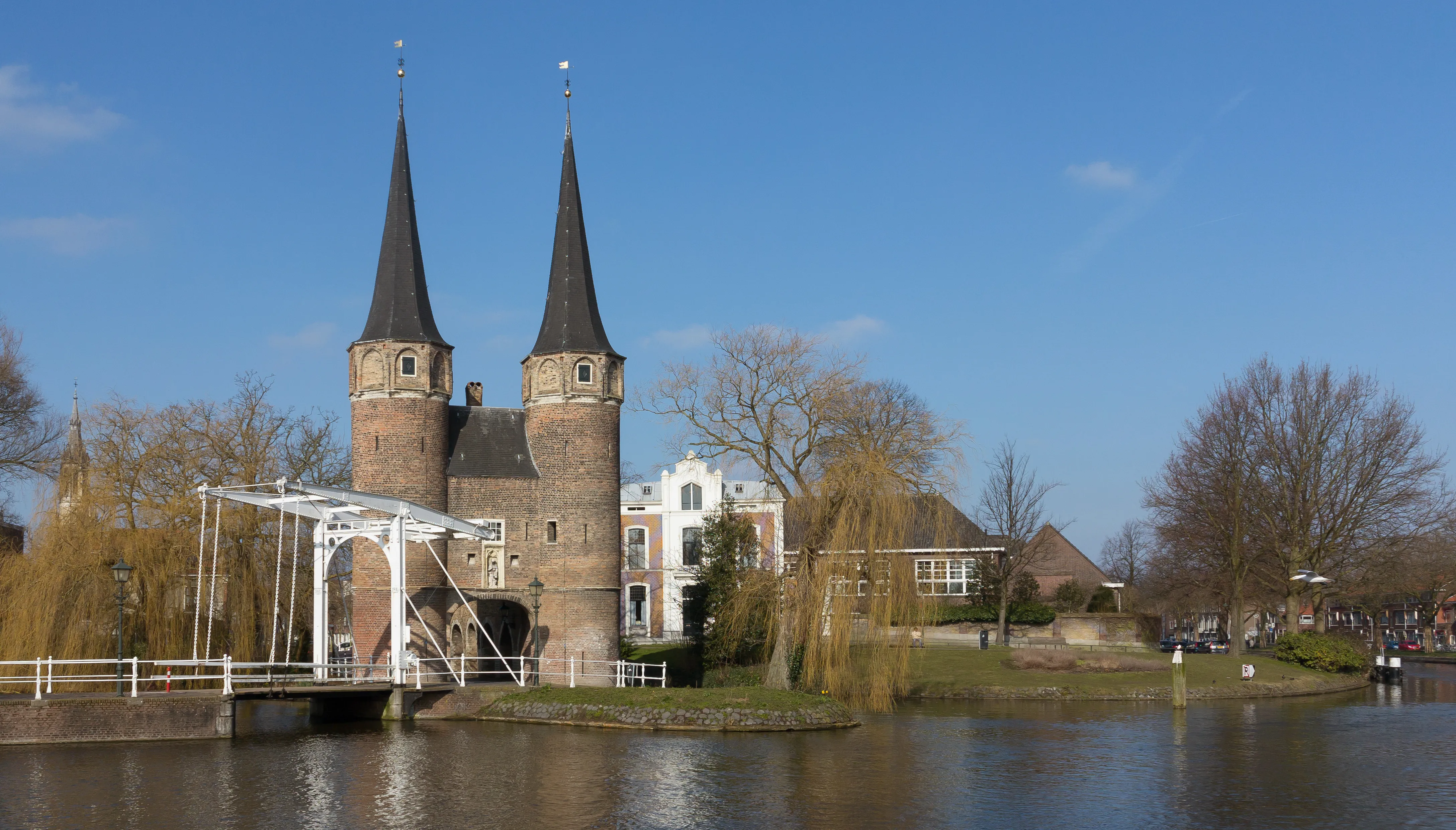
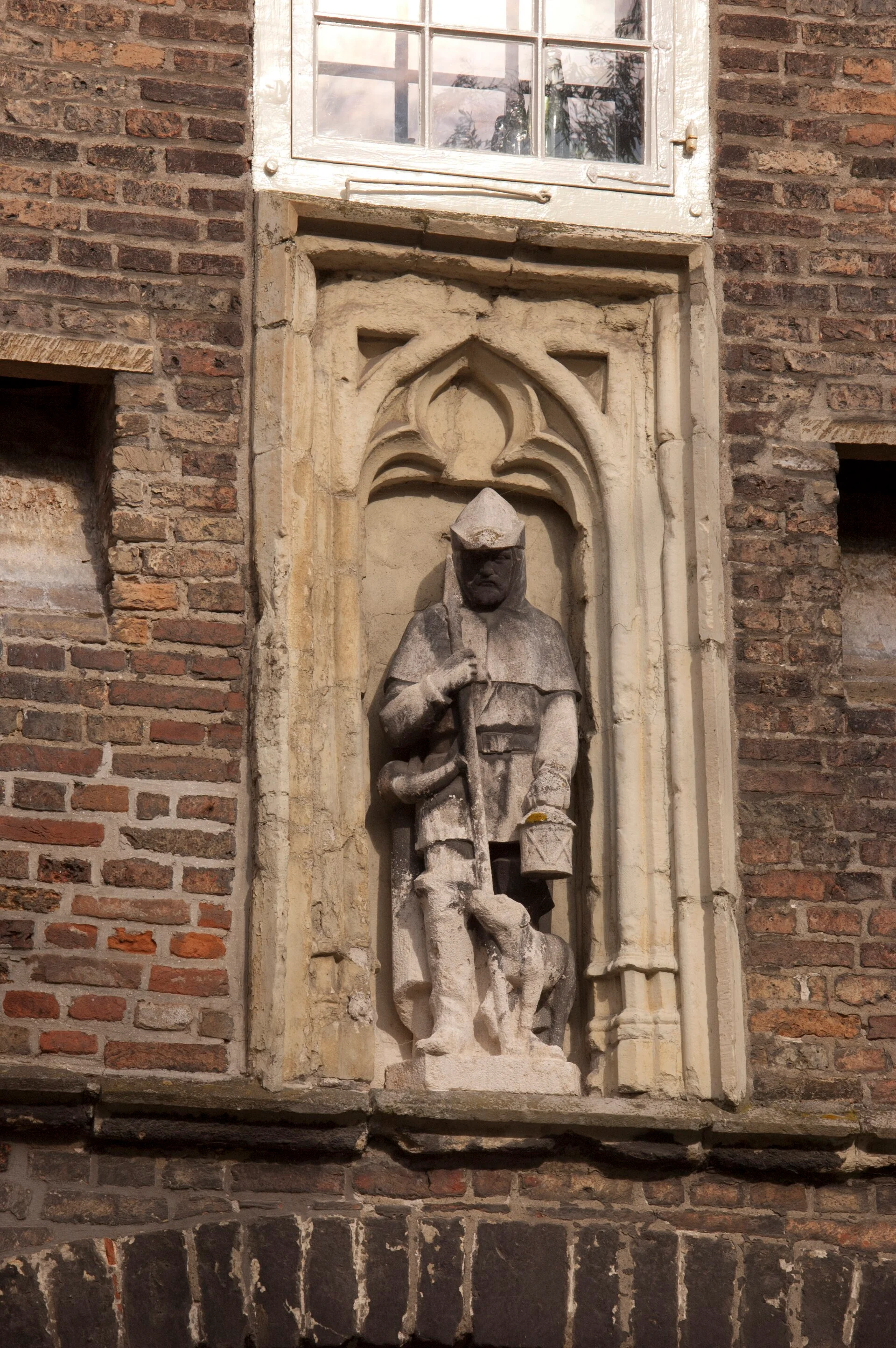
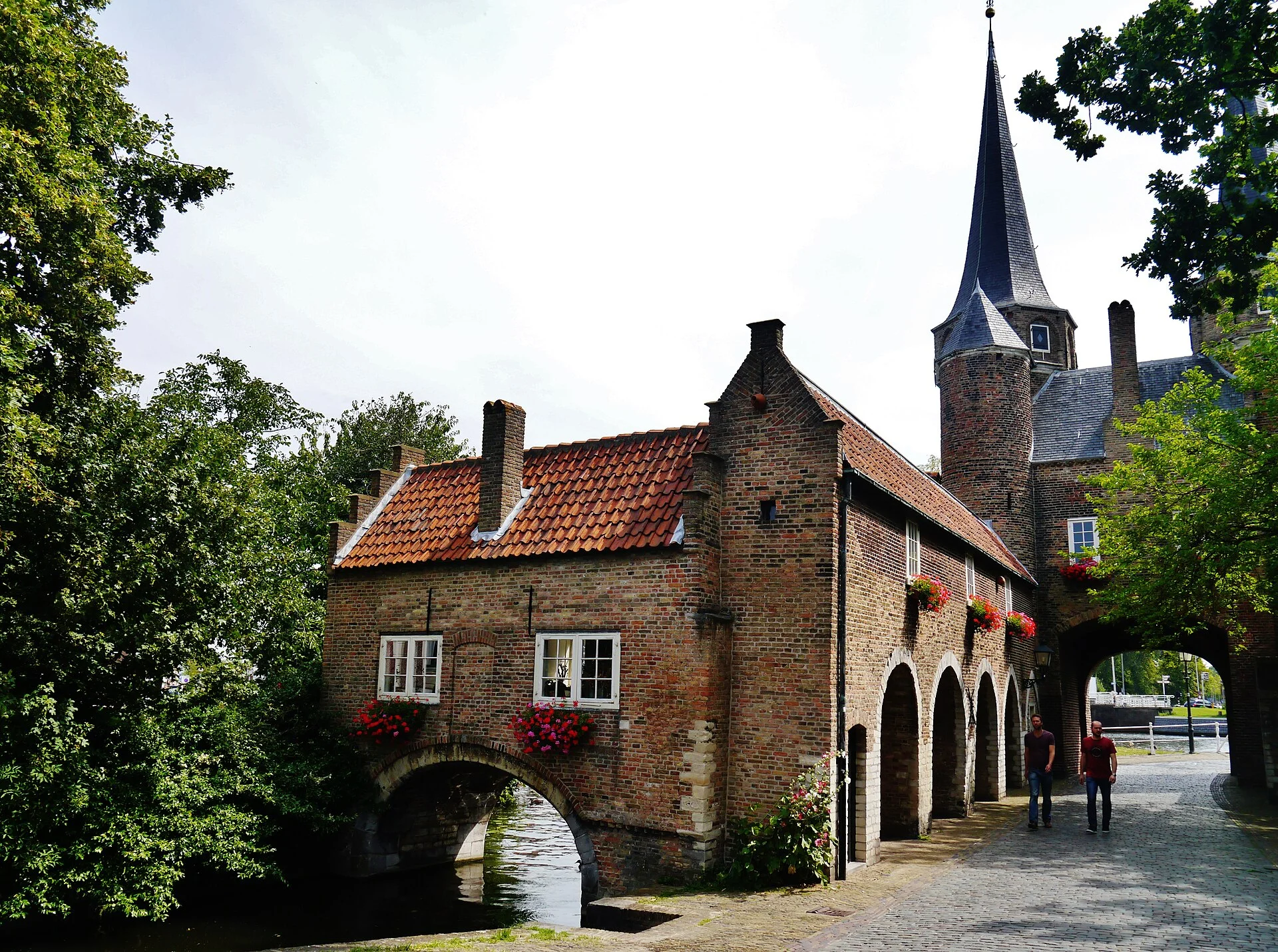
Brick Gothic core: The gate is a textbook example of northern Brick Gothic, built around 1400 from the red brick that defines Delft's older buildings. Twin land towers: Two round towers flank the roadway, raised around 1510 with an extra octagonal storey and steep slate spires that give the gate its fairy-tale outline. Separate water gate: A second, lower gate spans the canal behind the towers, so the defences controlled both the road and the waterway — a rare double-gate survival. Defensive details: Arrow slits, the heavy arched passage, and the thick brick mass speak to the gate's original military purpose. 1964 restoration: A careful 20th-century restoration stabilised the structure and returned its medieval character, allowing it to serve today as a private residence and gallery. Canal setting: The gate's drama comes as much from its mirrored reflection in the surrounding water as from the masonry itself.
Historical Significance
Last of eight: The Oostpoort is the sole survivor of Delft's eight medieval city gates, the only physical trace of the walls that once enclosed the town. Edge of the old city: It marks the historic eastern boundary, where road and canal traffic was funnelled and watched — a tangible map of how compact the walled city was. A common loss avoided: Most Dutch towns tore down their gates and ramparts as they modernised; the Oostpoort's survival makes it a regional rarity, now protected as a national monument. Continuity of use: From defensive gateway to restored landmark to lived-in home and gallery, the building shows how a medieval structure can keep earning its place in a living city. Painterly Delft: The gate and its watery reflection embody the canal-and-brick townscape that made Delft a subject for Golden Age artists — the same light and water that drew Vermeer.
Oostpoort in Pictures
When to Visit
Open: The exterior is always accessible — the bridges, quays, and towpaths around the gate are public, day and night. Interior: Closed to the public (private residence and gallery). Best: A calm, clear morning for the cleanest reflection in the canal, or golden hour when low light warms the brick and slate. Allow: 15-20 minutes to walk around the gate and shoot it from both the land and water sides. Combine it with a riverside stroll back toward the centre — the route is part of the one-day Delft itinerary.
Admission and Costs
Viewing the Oostpoort is completely free — there is no admission because the gate cannot be entered. You only spend if you choose to: a canal boat tour (about €10-14 / $11-15) often glides past the water gate for a different angle, and the cafés on the way from the Markt offer a place to pause. Guided walking tours of Delft that include the eastern canals typically pass the Oostpoort as part of a group walk costing roughly €0-12 ($0-13). For most visitors the gate is simply a free, scenic detour on foot.
The Case for a Guide
On its own the Oostpoort is a pretty gate; with a guide it becomes the key to understanding the shape of medieval Delft. A guide explains that this lone survivor once had seven siblings, traces where the vanished walls ran, and shows how the double land-and-water gate reflects a city built around its canals as much as its streets. The architecture rewards explanation too — why the spires were added a century after the towers, how Brick Gothic differs from the stone Gothic of southern Europe, and what the 1964 restoration changed. Guides also fold the gate into the bigger Delft narrative, linking the defensive past to the trade and Golden Age prosperity that eventually made the walls obsolete. As the scenic far point of a canal walk from the Markt, it gives a tour both a destination and a story.
Tips for Visitors
Chase the reflection: The signature shot is the twin towers mirrored in the canal — come on a windless morning before boats stir the water. Two sides to see: Walk around to view both the land gate (twin towers) and the separate water gate over the canal; they read very differently. Interior is private: Do not expect to go inside — it is a home and gallery, so admire the architecture from the public quays. By boat: A canal cruise from the centre passes beneath or beside the water gate, giving an angle you cannot get on foot. Make a loop: Walk out along one canal and back along another to fold the Oostpoort into a scenic circuit from the Markt rather than an out-and-back.
Frequently Asked Questions
Can you go inside the Oostpoort in Delft?
No — the Oostpoort is a private residence and an art gallery, so the interior is not generally open to the public. The gate is admired from the outside, where its twin spired towers reflect in the canal. The surrounding bridges and quays are freely accessible and offer the best views, making it a short but rewarding stop on a walk.
How old is the Oostpoort gate in Delft?
The Oostpoort (Eastern Gate) was built around 1400 in the Brick Gothic style. Around 1510 the towers gained an extra octagonal storey topped with tall spires, giving the gate its distinctive silhouette. It was restored in 1964 and is the only one of Delft's original eight city gates still standing.
Why is the Oostpoort the only city gate left in Delft?
Delft was once ringed by walls with eight gates. As the city outgrew its medieval defences, the walls and gates were demolished over the centuries to ease traffic and expansion — a common fate across the Netherlands. The Oostpoort survived as a picturesque relic on the eastern edge of the old town, and is now a protected national monument.
Is the Oostpoort worth visiting in Delft?
For its setting, yes. The gate is one of Delft's most photographed spots, especially when the twin towers mirror in the still canal water. It is a 10-15 minute walk southeast of the Markt, so it pairs well with a canal-side stroll. You only need 15-20 minutes there, but the reflection and the medieval brickwork reward the detour.