

Overview
Fes el Bali (Old Fez) holds the remarkable distinction of being the planet's largest contiguous car-free urban area. Founded in the 9th century and enclosed within its current walls by the 13th century, this UNESCO World Heritage Site packs 11,000 historic buildings, 9,400 winding alleys, over 170 mosques, and roughly 156,000 residents into an area of just 2.8 square kilometers. Donkeys and handcarts remain the only transport options, the same logistics system used since the Marinid dynasty ruled Morocco seven centuries ago.
This is the undisputed heart of Fez, and a guide is not optional — it is essential. Google Maps fails inside the medina; streets have multiple names and dead ends are unmarked. A licensed guide navigates the labyrinth while leading you to artisan workshops for zellige tiles, brass engraving, silk weaving, and leather tooling that have no signage. Visit the Bou Inania Madrasa and Al-Qarawiyyin university as part of your medina exploration.
Local Life
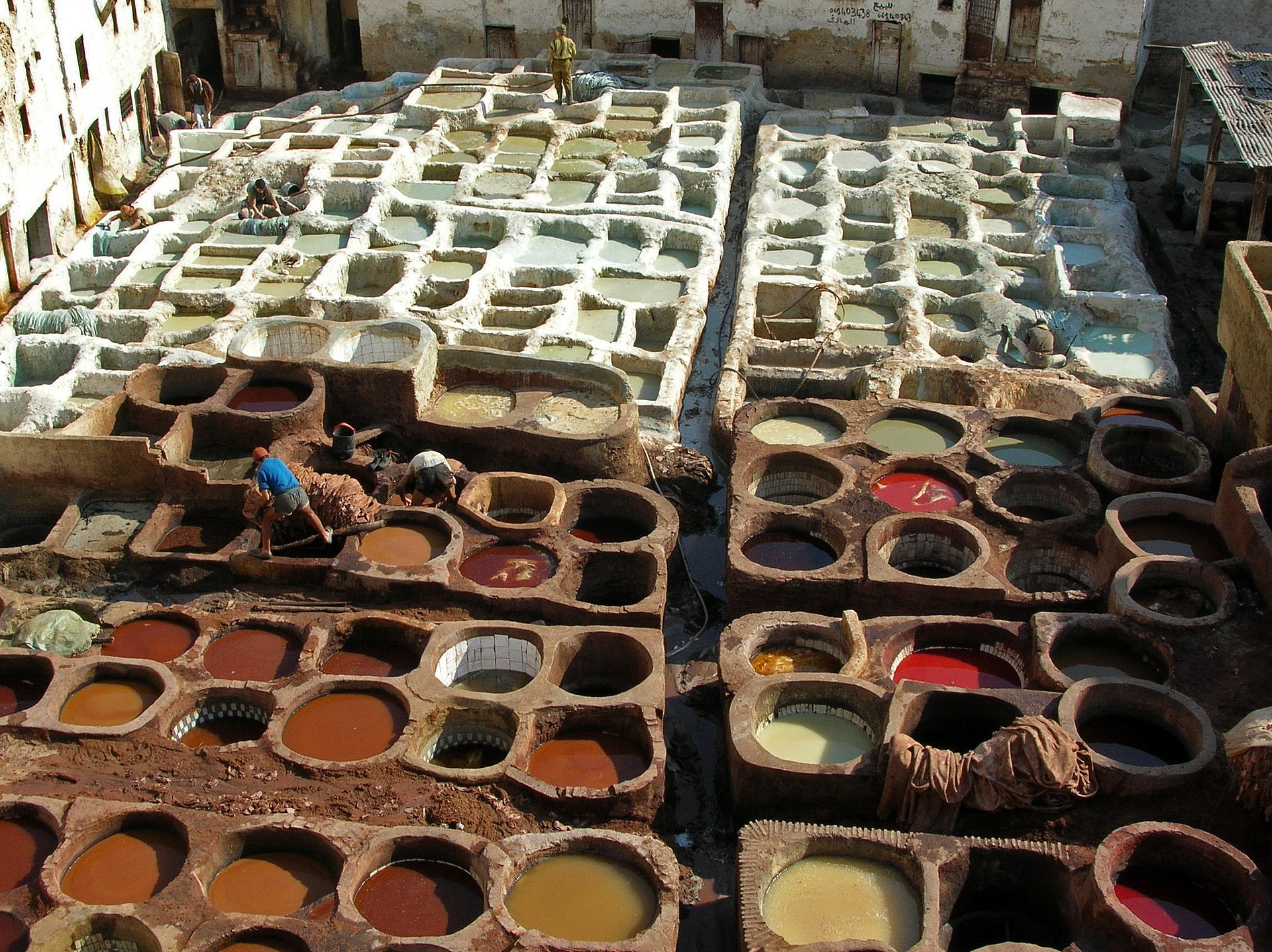
Navigation is the primary reason a guide is indispensable — the 9,400 alleys form a labyrinth where even long-term residents occasionally get turned around. Hidden workshop access is the second reason: guides lead you to artisan workshops for zellige tiles, brass engraving, silk weaving, and leather tooling that operate behind unmarked doors. The Chouara Tannery terrace access requires passing through a leather shop; a guide negotiates the arrangement and provides mint to mask the pungent smell of the pigeon-dung solution used to soften hides. Historical layering is visible everywhere — guides distinguish Idrisid (9th century), Almohad (12th century), and Marinid (13th-14th century) architecture as you walk. A good guide covers the key highlights without backtracking through the labyrinth, saving hours of wandering.
Walking Routes
Bab Boujloud (Blue Gate) is the ornate main entrance — blue zellige on the outside (Fez's color) and green on the inside (Islam's color). The Chouara Tannery, where leather workers stand waist-deep in stone vats of natural dyes as they have since the 11th century, is the medina's most visceral experience. Al-Qarawiyyin — the world's oldest operational university — is partially viewable by non-Muslims through courtyard doorways. Bou Inania Madrasa, the finest surviving Marinid-era theological school, is fully open to all visitors. The Fondouk Nejjarine, a restored 18th-century caravanserai, now houses a woodworking museum in one of the medina's most elegant buildings. Souk Attarine — the spice and perfume market — fills the air with cumin, saffron, and cedar. The Bou Inania water clock, a 14th-century hydraulic timepiece on the madrasa's exterior, continues to puzzle historians who have never fully reconstructed its mechanism.
When to Visit
Access: The medina is a living neighborhood, open 24 hours through multiple gates (babs). Main gates: Bab Boujloud (Blue Gate) is the most popular entrance; Bab Rcif and Bab Guissa are less crowded alternatives. Morning (8-10 AM): Shops opening, bakers at work, manageable pedestrian traffic. Midday (12-3 PM): Many shops close; the medina empties during Friday prayers. Best time: Start at 9 AM from Bab Boujloud and work downhill toward the tanneries.
Admission and Costs
Entering the medina: Free (it is a public neighborhood). Licensed guide (half-day): 600-1,000 MAD (€55-92) for up to 6 people. Licensed guide (full-day): 1,000-1,800 MAD (€92-165) for up to 6 people. Group medina walking tour: 150-300 MAD (€14-28) per person, 3-4 hours. Monuments inside: Bou Inania Madrasa 30 MAD, Fondouk Nejjarine museum 20 MAD.
Tips for Visitors
Wear closed shoes: Cobblestones are uneven and donkey traffic leaves the streets messy. "Balek!": When you hear this shout, press against the wall immediately — a loaded donkey is coming through. Mint for the tanneries: Your guide will provide mint sprigs to mask the pungent smell at Chouara. Carry small bills: 10 and 20 MAD notes are essential for small purchases and tips to artisans. Stay with your guide: Straying into side alleys without your guide can result in 30+ minutes of being lost. Friday mornings: Many shops close for Friday prayers between 12-2 PM; plan accordingly. Downhill strategy: The medina slopes from Bab Boujloud down to the tanneries; walking downhill is easier. Beware faux guides: Young men near Bab Boujloud may offer to "help" navigate; politely decline and stick with your licensed guide.