
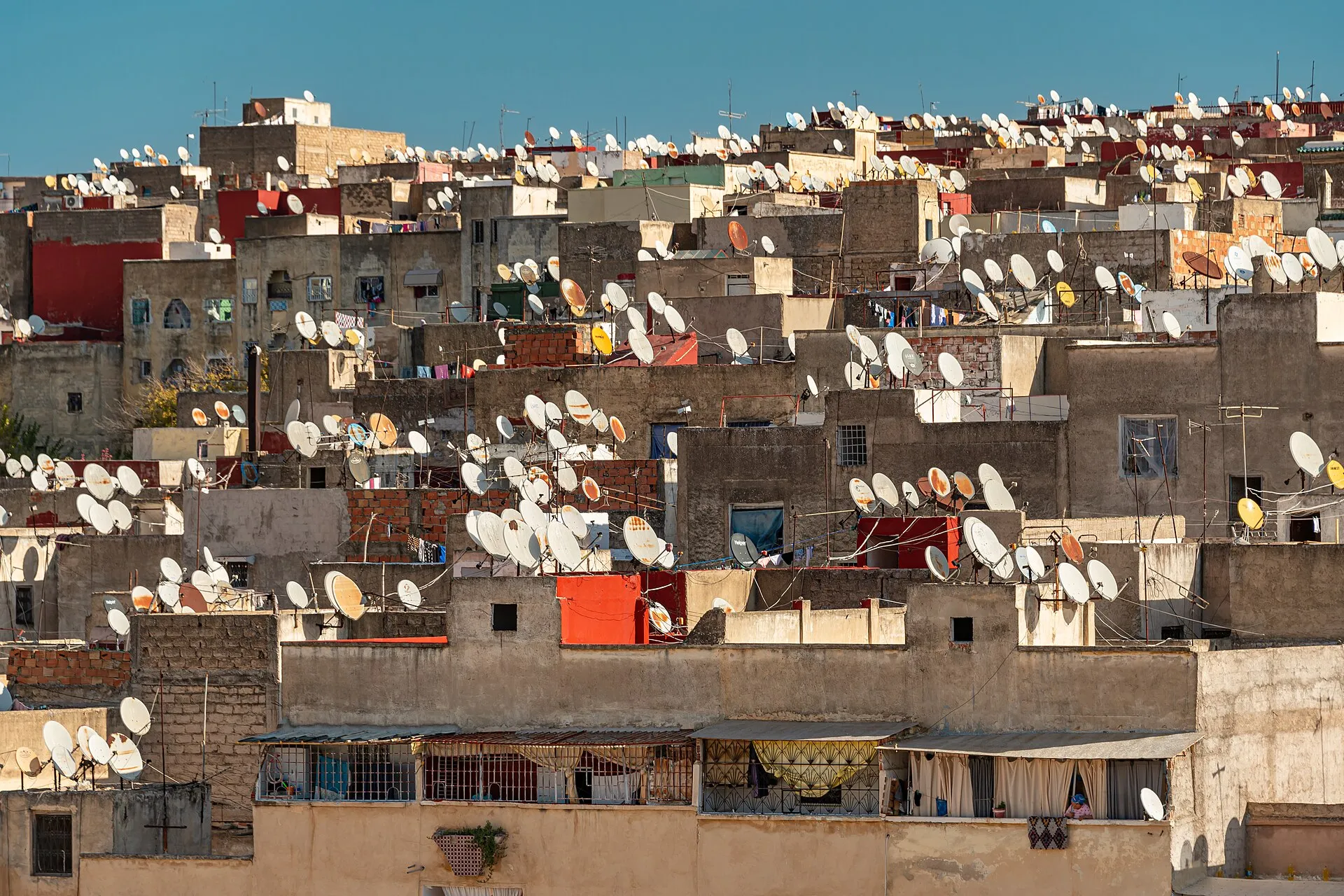
Fez timeline
-
Fez begins
Fez is Morocco's spiritual and intellectual capital, founded in 789 CE by Idris I and expanded a generation later by his son Idris II, who made it the seat of the.
-
Settlement begins
Two waves of refugees gave the young city its enduring character: families fleeing Córdoba settled the Adwa al-Andalus (Andalusian) quarter on the river's east bank.
-
Al-Qarawiyyin
Al-Qarawiyyin — The world's oldest continually operating university, founded by a woman in 859 CE.
-
Palace begins
Capital under the Idrisid and Marinid dynasties, Fez ceded the role of national capital to Rabat only in 1912; the Marinids founded the adjoining royal city of Fes.
-
UNESCO World Heritage listing
The living result is Fes el Bali, the world's largest contiguous car-free urban area: 9,400 lanes and alleys, 11,000 historic buildings, and roughly 156,000 people.
Cited city facts
Key facts for visiting Fez
Fes el Bali contains 9,400 lanes and alleys
The world's largest contiguous car-free urban zone, designated a UNESCO World Heritage Site in 1981, houses roughly 156,000 residents and 11,000 historic buildings within its medieval walls
Al-Qarawiyyin University founded in 859 CE
Established by Fatima al-Fihri, it is recognized by UNESCO and the Guinness Book of World Records as the oldest continuously operating degree-granting university in the world, predating both Oxford and Bologna
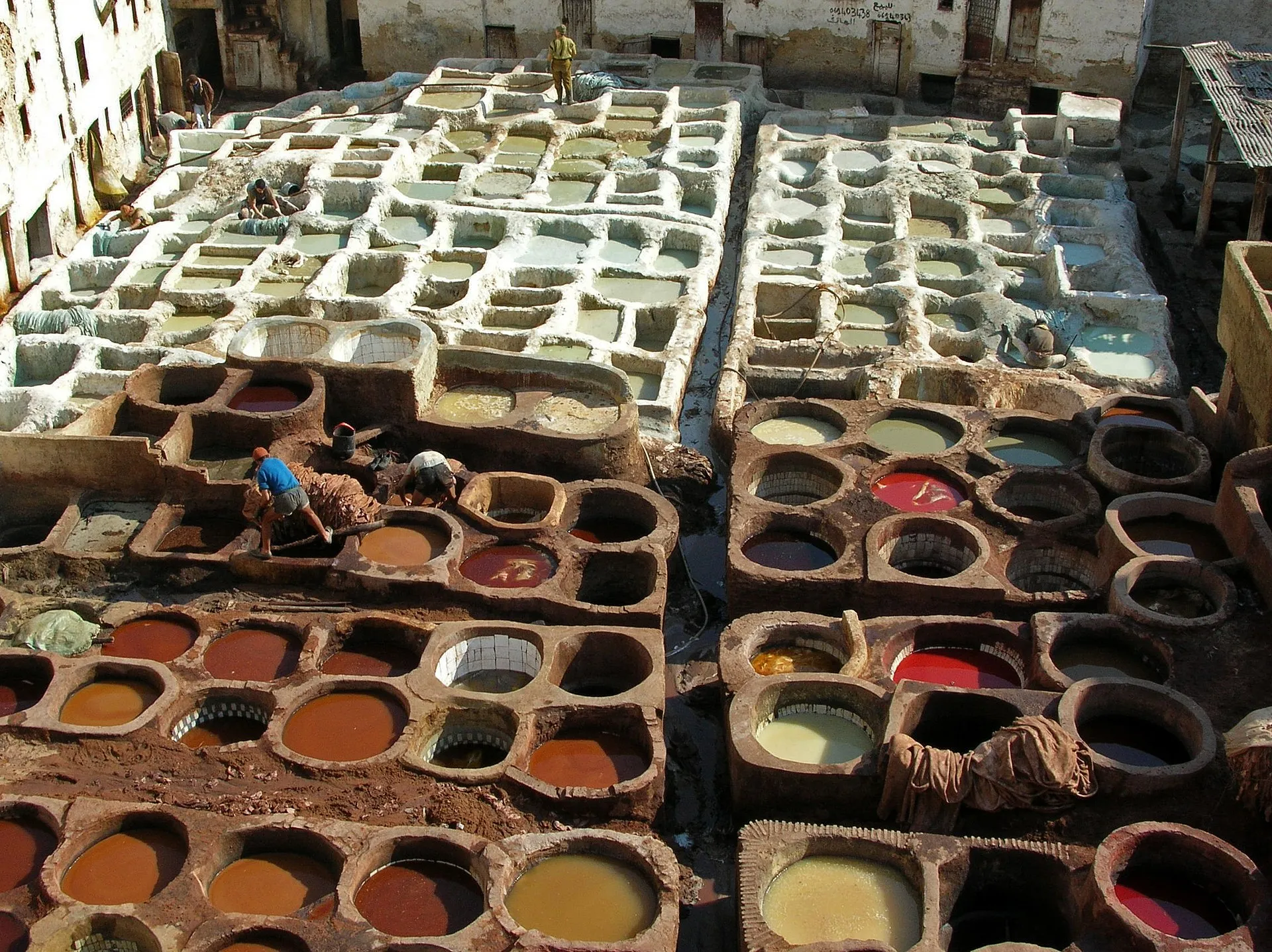
Chouara Tannery has operated since the 11th century
The tannery's stone vats use the same natural dyeing process for nearly a thousand years: pigeon excrement to soften hides, then saffron, indigo, henna, and cedar for coloring, all without modern chemicals
Over 9,000 commercial establishments inside the medina
Fes el Bali functions as a living medieval economy with artisans organized by guild — coppersmiths, weavers, tanners, and zellige tile cutters each occupy their own dedicated quarters, a structure unchanged for centuries
One of Morocco's four imperial cities
Capital under the Idrisid and Marinid dynasties, Fez ceded the role of national capital to Rabat only in 1912; the Marinids founded the adjoining royal city of Fes el-Jdid in 1276, complete with a sultan's palace and one of North Africa's oldest mellahs
Source: tour-guide.com — Free to cite with attribution
Things to see
What are the top attractions in Fez?
- Fes el Bali — The medieval walled medina itself, a UNESCO World Heritage labyrinth of 9,400 lanes that anchors every other sight below
- Chouara Tannery — Leather-dyeing pits inside Fes el Bali that have operated since the 11th century, best seen from the surrounding leather-shop terraces
- Al-Qarawiyyin — The world's oldest continually operating university, founded by a woman in 859 CE
- Bou Inania Madrasa — Intricate Marinid-era carved stucco and cedar that rivals the Alhambra
- Souk Attarine — The spice and perfume souk where fragrant pyramids of cumin, saffron, and ras el hanout line the lane
- Fes el-Jdid & the Mellah — The 13th-century royal city, its restored Jewish quarter, and the golden gates of the Royal Palace (exterior only)
- Merenid Tombs — Ruined hilltop mausoleums that frame the classic panorama over the entire medina, unbeatable at sunset
- Water clocks — Medieval hydraulic timepieces on Talaa Kebira street that still baffle engineers today
- Pottery district — Watch artisans hand-paint the distinctive blue-and-white Fassi ceramics
- Street food trail — Fried sardines, msemen flatbread, and fresh pomegranate juice inside the medina
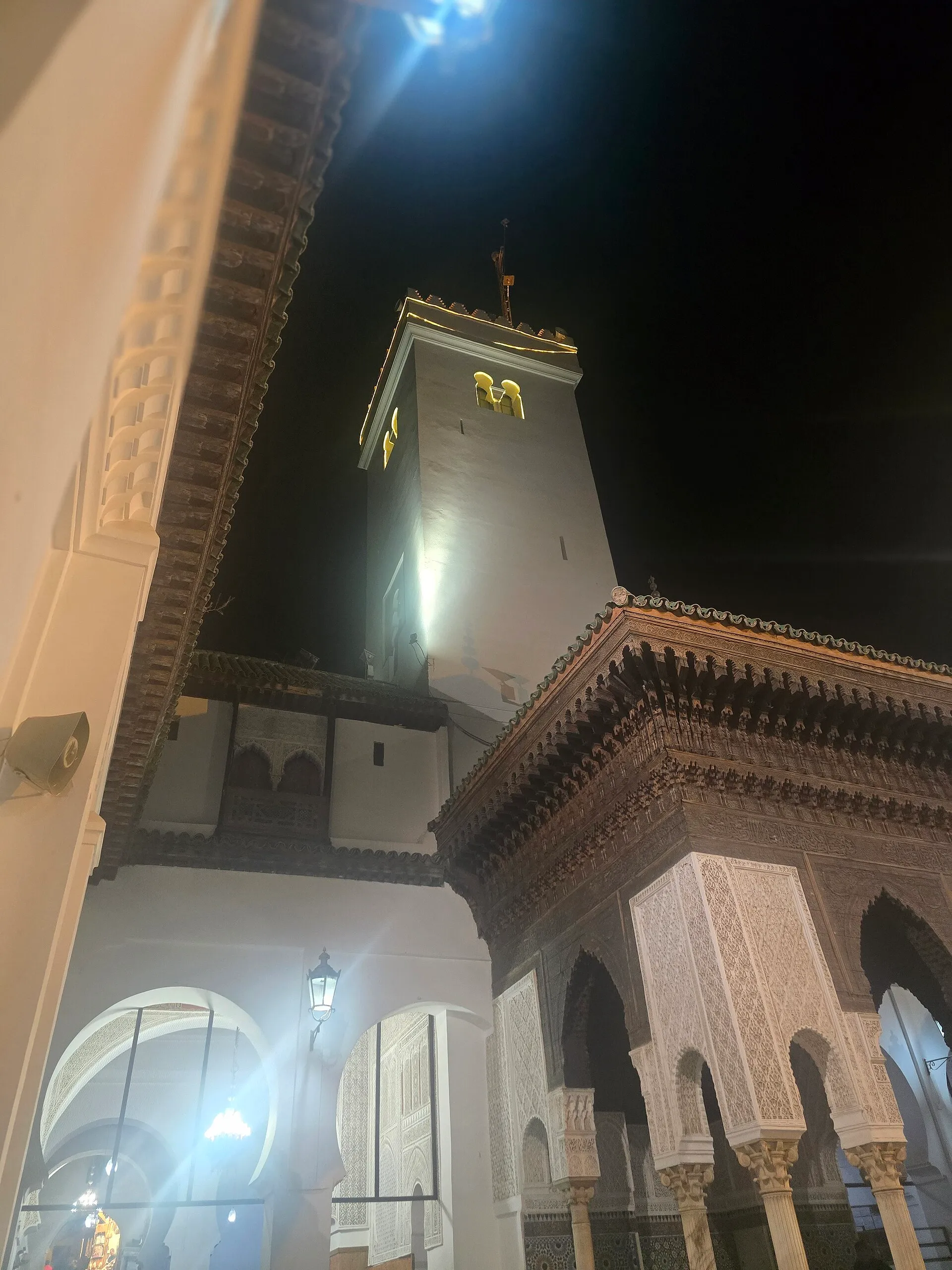
Al-Qarawiyyin
The world's oldest operating university - Founded by a woman in 859 CE
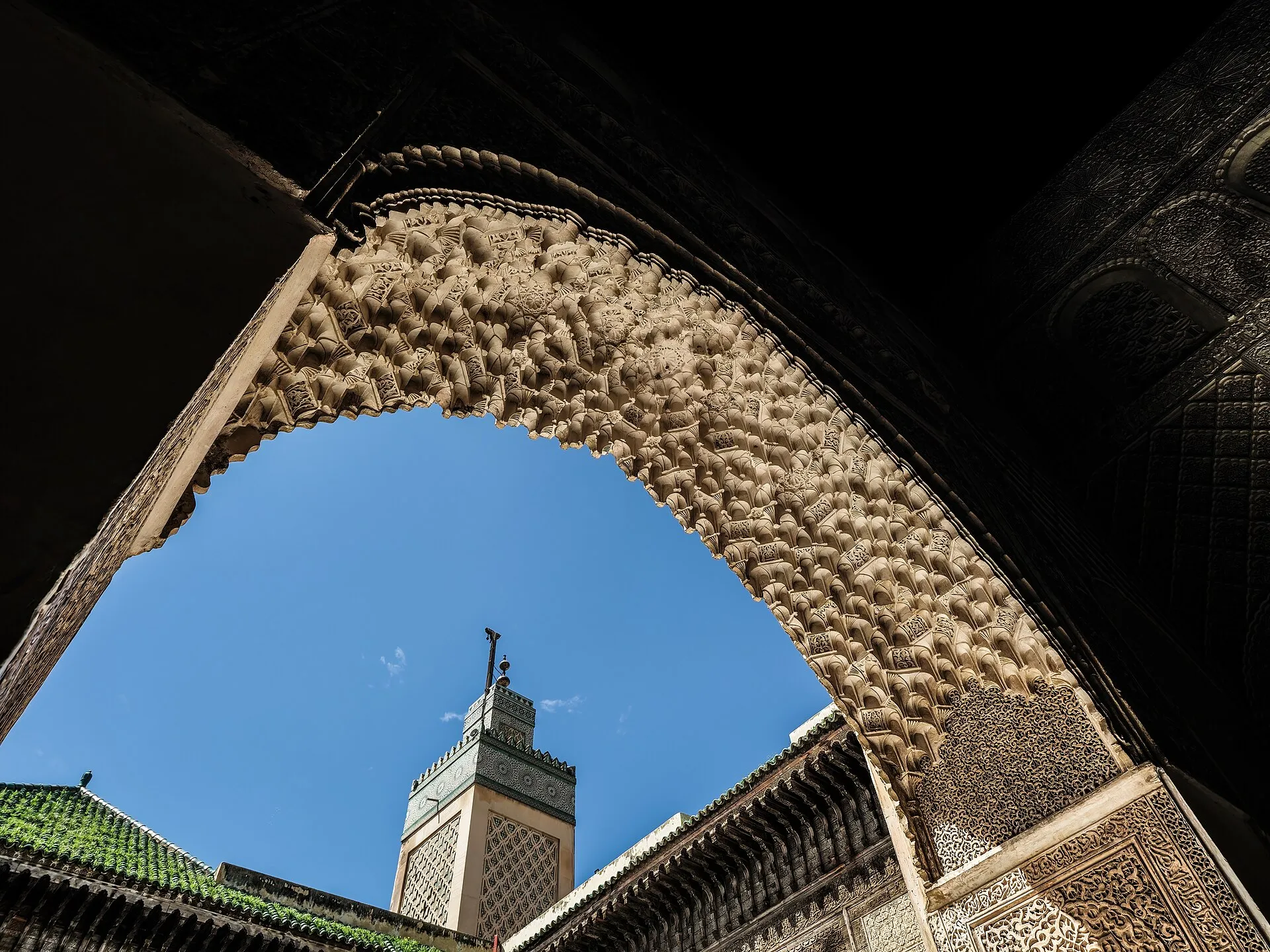
Bou Inania Madrasa
Marinid masterwork - Where carved stucco, cedarwood, and zellige reach perfection
Fes el Bali
The world's largest car-free urban zone - 9,400 alleys spanning 1,200 years
Guide planning
How much does a tour guide cost in Fez?
A guide in Fez is not a luxury — it is practically a necessity, and the cost is modest for what it unlocks:
- Typical rates — A licensed half-day medina guide runs about €25-45 (300-500 MAD), a full-day tour €70-120 (750-1,300 MAD) for up to six people, and shared group walking tours start near €10-20 (100-200 MAD) per person
- Licensed Fez guides are mandatory — The medina legally requires a badged guide touristique for organized tours, and practically demands one for independent visitors; check for the brass licence badge before setting off
- Artisan workshop access — Guides open doors to tanneries (Chouara viewing terraces), zellige workshops, and brass foundries that don't advertise publicly
- Multilingual expertise — Fez guides typically speak Arabic, French, and English, and often Spanish or German
- Navigation is impossible alone — Even long-term residents sometimes get lost in Fes el Bali's 9,400 alleys
- Cultural interpretation — A guide distinguishes between similar-looking mosques, madrasas, and fondouks, reading the Idrisid, Almoravid, Almohad, and Marinid architectural layers as you walk
- Beware faux guides — Unlicensed touts near Bou Inania Madrasa and Bab Boujloud offer to "help"; a pre-booked licensed guide makes them easy to wave off
Season planner
When is the best time to visit Fez?
- April-May — Spring temperatures (20-26°C) with wildflowers on the surrounding hills; the most comfortable window for long medina days
- September-October — Warm but manageable, and the olive and pomegranate harvests bring fresh produce into the souks
- Fes Festival of World Sacred Music — Held in early summer (usually June), this internationally renowned festival fills palace courtyards and Bab Makina with musicians from across the globe; reserve a riad months ahead
- Festival of Sufi Culture — A spring event (April) of concerts, sama performances, and lectures rooted in Fez's mystical traditions
- Ramadan — Daytime hush and reduced workshop hours, but a magical after-iftar buzz; the dates shift each year, so confirm before booking
- Early mornings — The medina wakes slowly; 8-9 AM is peaceful and photogenic, with bakers firing the communal farran ovens
- Avoid — July-August, when 35°C+ in the medina's narrow, windless alleys is oppressive and the tanneries smell strongest
Spring
Mar-May
Summer
Jun-Aug
Autumn
Sep-Nov
Winter
Dec-Feb
Each score averages that season’s monthly ratings out of 5. The top-rated window is usually the peak season too, so read the guidance above for its trade-offs before you book.
On the ground
How do you get around Fez?
- Getting there — Fès–Saïss International Airport (FEZ) sits about 15 km south of the city; a petit taxi to the medina gates costs roughly 120-150 MAD (€11-14). The ONCF train station in the Ville Nouvelle links Fez to Rabat (
3 hrs), Casablanca (4 hrs), Tangier, Meknes, and Marrakech (~7 hrs), while CTM and Supratours run intercity coaches - Inside the medina, you walk — No vehicle can enter Fes el Bali; donkeys and handcarts carry the freight and you follow on foot
- Petit taxis — Metered red taxis are cheap for hops between the medina gates, the Ville Nouvelle, Fes el-Jdid, and the train station; beige grand taxis handle longer runs
- A guide is essential inside — Fez's medina is the most disorienting in Morocco; solo navigation often ends in frustration
- Wear closed-toe shoes — Donkey droppings, puddles, and uneven cobblestones are constants, and the medina slopes steeply from Bab Boujloud down toward the tanneries
- Carry cash — Most medina shops and food stalls are cash-only; keep small 10 and 20 MAD notes for artisans and tips
- Tipping — 50-100 MAD (€5-9) for a private half-day guide is customary
- Tannery smell — Guides provide mint sprigs to hold under your nose at the Chouara Tannery
- Donkey right-of-way — Step aside quickly when you hear "balek!" (watch out) — loaded donkeys have priority
- Dress modestly — Fez is more conservative than Marrakech; cover shoulders and knees
- Stay hydrated — Few shops sell water deep inside the medina; carry a bottle from your riad
Frequently Asked Questions
What is the best time to visit Fez?
April-May: Spring temperatures (20-26°C), wildflowers on surrounding hills. September-October: Warm but manageable, olive harvest begins.
How much does a tour guide cost in Fez?
A licensed half-day guide in Fez typically costs €25-45, while a full-day medina tour runs €70-120. Group walking tours start around €10-20 per person, and specialized artisan or culinary tours may charge slightly more for workshop access.
How do you get around Fez?
Inside Fes el Bali, the only option is walking since no vehicles can enter the car-free medina. Petit taxis (red) are affordable for travel between the medina gates, Ville Nouvelle, and the train station. City bus routes connect the major districts, and the CTM bus station links Fez to other Moroccan cities.
How many days do you need in Fez?
Two full days is the sweet spot. Day one covers the Fes el Bali highlights — the Bou Inania Madrasa, Al-Qarawiyyin, the Chouara Tannery, and Souk Attarine — while day two allows time for the craft workshops, Fes el-Jdid and the mellah, and the Merenid Tombs viewpoint at sunset. A third day opens up day trips to Meknes and the Roman ruins of Volubilis, or north to Chefchaouen.
What is Fez famous for?
Fez is Morocco's spiritual and intellectual capital, home to Al-Qarawiyyin — the world's oldest continuously operating university (859 CE) — and to Fes el Bali, the largest car-free urban area on the planet. It is renowned for its craft guilds: the Chouara leather tanneries, blue-and-white Fassi pottery, zellige tilework, and brass work, many still practiced in workshops unchanged for centuries.