

Overview
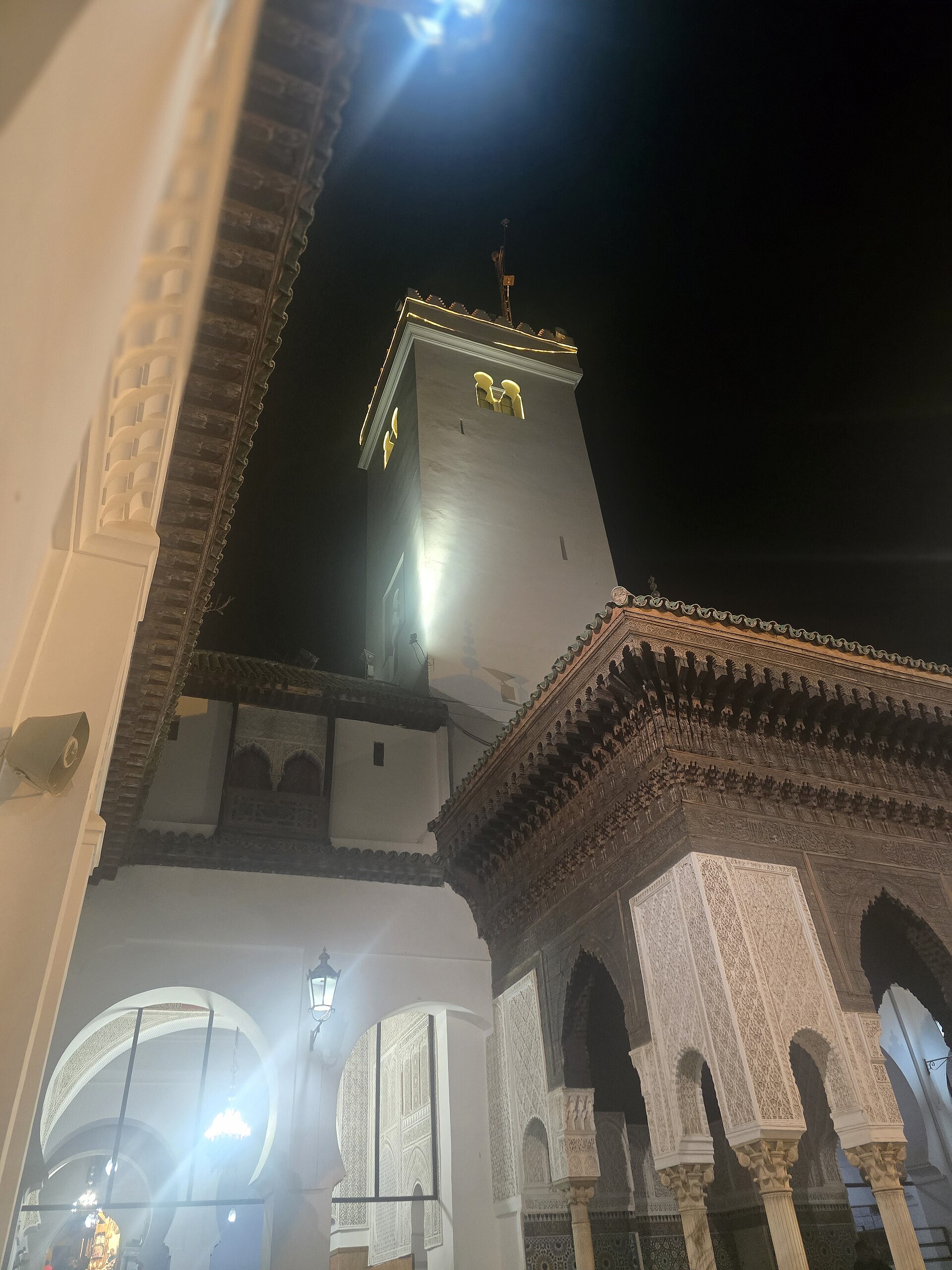
Fatima al-Fihri, a wealthy Tunisian immigrant, founded Al-Qarawiyyin as a mosque in 859 CE. Over the following centuries it evolved into a madrasa and eventually a fully recognized university, holding the Guinness World Record as the oldest continuously operating educational institution on Earth. Scholars including the geographer al-Idrisi, the philosopher Ibn Rushd (Averroes), and the Jewish thinker Maimonides studied or taught within its walls. The university's library, restored between 2012 and 2016 by architect Aziza Chaouni, preserves 4,000 manuscripts including a 9th-century Quran written on camel skin.
Non-Muslims cannot enter the prayer hall, but guides know which doors are open at which times and the best angles for viewing the white marble courtyard with its central fountain surrounded by green and white zellige tilework. Combine with Bou Inania Madrasa (which you can fully enter) and explore the surrounding Fes el Bali medina for a complete picture of Fez's intellectual and architectural heritage.
Visitor Etiquette
Guides optimize access by knowing which doors are open at which times and positioning you at the best angles to see the courtyard without entering. The scholarly history is extraordinary — Al-Qarawiyyin played a critical role in transmitting Greek philosophy to medieval Europe through Arab scholarship, at a time when European universities did not yet exist. Fatima al-Fihri's story is remarkable: a woman founding an institution that shaped global intellectual history in the 9th century. The building itself spans Almohad, Marinid, and Saadian renovations, and guides identify each era's architectural contributions. The library restoration, led by architect Aziza Chaouni, brought the 4,000 manuscripts including a 9th-century Quran on camel skin back to climate-controlled preservation. Surrounding landmarks — the Attarine Madrasa, Place Seffarine (where coppersmiths still hammer cauldrons), and the Fondouk Nejjarine — form a natural circuit around the university.
Spiritual Significance
The main courtyard features white marble with a central ablution fountain surrounded by green and white zellige tilework — both functional for worshippers and architecturally stunning. The restored 2016 library entrance preserves one of the oldest Qurans in existence, written on camel skin in the 9th century. The green-tiled minaret, one of the oldest in Morocco, is visible above the medina rooftops and serves as a navigational landmark within Fes el Bali. Intricate Marinid-era carved stucco arches are visible through courtyard doorways. Just outside, Place Seffarine — the metalworkers' square — preserves a tradition of coppersmiths hammering cauldrons and trays as they have for centuries, the rhythmic sound forming part of the acoustic landscape around the university.
When to Visit
Mosque interior: Open only to Muslims for prayer. Library: Open to researchers by appointment; general visitors can view the courtyard and entrance areas. Courtyard viewing: Peek through open doors during non-prayer times (typically 9 AM - 12 PM, 2 PM - 5 PM). Best time: Mid-morning on weekdays when doors are most likely to be open. Exterior and surrounding area: Always accessible within the medina.
Admission and Costs
Viewing the exterior and courtyard glimpses: Free. Guided medina tour including Al-Qarawiyyin: 600-1,000 MAD (€55-92) for half-day private tour. Specialist Islamic history tour: 800-1,400 MAD (€74-130) for dedicated scholarly guide. Group walking tour passing Al-Qarawiyyin: 150-300 MAD (€14-28) per person.
Tips for Visitors
Respect prayer times: Doors may close during the five daily prayers; guides plan your route around these. Photography: Exterior and courtyard photography through doorways is acceptable; never point cameras inside the prayer hall. Combine with nearby sites: Bou Inania Madrasa (15-minute walk) and Attarine Madrasa (2-minute walk) complete the picture. Dress modestly: You are at an active mosque; cover shoulders and knees as a sign of respect. Finding it: The mosque has no prominent exterior entrance; a guide navigates the unmarked alleys to the right vantage point. Historical context first: Visit the Bou Inania Madrasa (which you can enter) before Al-Qarawiyyin to understand the architectural traditions.