
Tips for Visitors
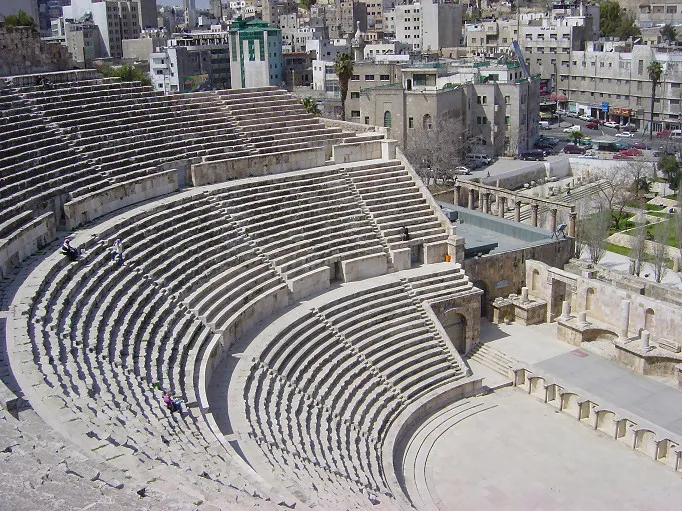
Stand at the very top of the upper colonnade for the best view over the theatre, the downtown plaza below, and the Amman Citadel on the hill above — the three-level urban archaeology of this view is one of Amman's most compelling visual moments. Test the acoustic sweet spot at the centre of the orchestra floor — even speaking at normal conversational volume projects clearly to the upper tiers. The Folklore Museum inside the complex contains one of the most complete displays of traditional Bedouin tent furnishings in Jordan, including the elaborate dividing curtains that separated men's and women's quarters in nomadic camps. Combine with a walk into Al-Balad immediately after — the theatre's main exit deposits you directly into the market streets.
When to Visit
The Roman Theatre is open daily from 8 AM to 7 PM (summer) and 8 AM to 4 PM (winter). The site is at its most atmospheric early in the morning before the tour groups arrive, and again in the late afternoon when the stone catches warm western light. Visiting at midday in summer is uncomfortable — the stage area has no shade and the limestone radiates heat. The theatre hosts evening performances in spring and autumn; check Amman's cultural calendar if an outdoor concert under the stars interests you. The adjacent museums have the same opening hours as the main site.
Admission and Costs
Entry: JOD 2 per person (approximately $2.80 USD), including access to both the Folklore Museum and the Museum of Popular Traditions flanking the stage. The Jordan Pass covers this entry along with the Amman Citadel and 40+ other sites. A combined Citadel and Roman Theatre guided tour with a licensed guide costs $80–150 for a private half-day including transport; guides are also available at the theatre entrance for $20–40 per group for a 45-minute site explanation.
The Case for a Guide
- Engineering details — a guide explains the deliberate north-facing orientation, the original roof structure over the stage building, and the acoustic properties of the curved cavea that allowed 6,000 people to hear unamplified performance
- Urban context — the theatre's relationship to the Roman forum just in front of it (now the outdoor plaza of downtown Amman) reveals how Philadelphia organized its public life around performance, commerce, and civic ceremony in a sequence that Roman urban planners replicated across dozens of cities
- Restoration debate — a knowledgeable guide distinguishes original 2nd-century stone from 20th-century restoration work, a distinction that affects how the theatre should be read as historical evidence
- Living use — guides connect the ancient programming (gladiatorial contests, dramatic performances, public executions) to the contemporary concerts and events still filling the same cavea
Frequently Asked Questions
Is the Roman Theatre still used for performances?
Yes — the theatre hosts concerts, cultural events, and performing arts productions throughout the year, particularly in spring and autumn when the outdoor evening temperatures are comfortable. The Jordan Festival and various international productions have used the venue. Check the Jordan Tourism Board website for the current events calendar; attending a performance here is a memorable experience that connects the ancient and contemporary in a uniquely Jordanian way.
How do you combine the Roman Theatre with the Amman Citadel?
The two sites are natural companions — the Citadel rises on the hill directly above the Roman Theatre and the two can be combined in a single morning. Most visitors start at the Citadel (higher ground, cooler in the early morning) and descend to the theatre afterward, exiting directly into Al-Balad downtown for lunch. With a guide, this sequence can be done comfortably in 3 to 4 hours.
How large is Amman's Roman Theatre?
The theatre seats approximately 6,000 spectators across three seating tiers (orchestra, cavea, and upper gallery). It was built during the reign of Antoninus Pius (138–161 CE) and oriented north to keep the audience in shade during afternoon performances — a practical acoustic and comfort decision that also happens to frame the cavea against the city and sky behind the stage in a particularly dramatic way.