
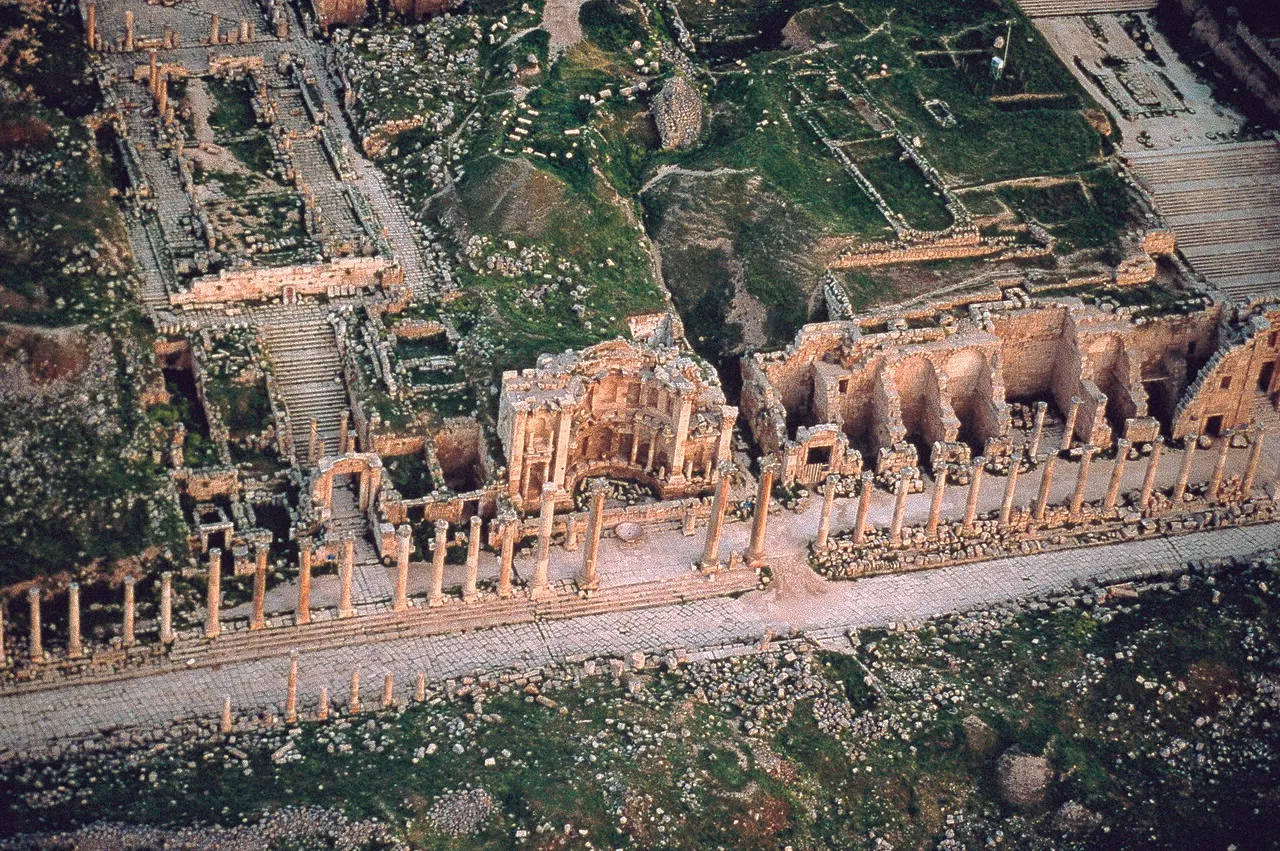
Excavation History
Although Jerash's own inhabitants never entirely lost sight of the ruins, Gerasa was effectively unknown to the wider world until the German explorer Ulrich Jasper Seetzen reached the site in 1806 and identified the overgrown colonnades as the lost Decapolis city. His account, followed by visits from British travellers a decade later, drew a steady trickle of 19th-century antiquarians. Their work was opportunistic — travellers and Ottoman administrators removed portable objects — and it was not until the following century that Gerasa was approached as an intact urban archive rather than a quarry for curiosities.
Systematic excavation began only in 1925, when a joint British and American team from the British School of Archaeology in Jerusalem and Yale University initiated a coordinated dig across the ancient core. The 1925–1934 campaign was the first to treat Gerasa as a city requiring stratigraphic documentation rather than treasure hunting, and it produced the foundational plan that every later visitor's map still descends from.
The German Evangelical Institute for Archaeology of the Holy Land conducted major campaigns from the 1970s onwards, revealing the Byzantine church district on the eastern slope and recovering hundreds of mosaic floor panels. The Department of Antiquities of Jordan has run continuous excavations since 1975, with notable findings including a warehouse district south of the Oval Plaza containing intact amphorae and trade goods, and a Byzantine-period workshop quarter that produced fine glassware for export across the eastern Mediterranean.
Active excavation continues in the northern part of the city, where a second macellum (covered market) and an extensive bathhouse complex — separate from the known Central Baths — were partially uncovered between 2010 and 2019. The Hippodrome, excavated intensively between 1982 and 2002, yielded charioteering equipment, animal bones from the staged hunts (venationes), and a sequence of structural modifications that document how the venue was expanded across three centuries. The enduring frustration for archaeologists is that roughly half of ancient Gerasa — the western districts across the Chrysorhoas stream — still lies buried beneath the streets of the modern town of Jerash, so any complete plan of the Roman city remains partly conjectural. Unlike sites where excavation has concluded, Jerash is still actively yielding new complexes beneath the surface.
Key Artifacts
Most movable finds from Jerash are split between two museums: the Jordan Archaeological Museum, on the hilltop of the Amman Citadel in the capital, and the smaller Jerash Archaeological Museum inside the visitor compound at the site itself. But much of Gerasa's most evocative material has never moved at all:
- In situ architecture — the 56 columns of the Oval Plaza, the standing columns of the Temple of Artemis (the tallest reaching 13 metres), the tetrakionion (four-column monument) at the junction of the Cardo and South Decumanus, and the decorative friezes of the Nympheum are all original stonework still occupying their Roman positions. The wheel-ruts worn several centimetres deep into the Forum paving are among the most viscerally direct traces of daily life anywhere in the Roman world.
- Mosaics — the Byzantine church district contains floor mosaics reburied after excavation and now selectively displayed under protective shelters. The most complete surviving example is a calendar frieze naming the agricultural seasons with a precision that documents the liturgical and farming year as observed in 6th-century Gerasa.
- The Hadrianic coin series — excavations consistently recover bronze sestertii and silver denarii minted for Hadrian's 129–130 CE eastern tour, giving a precise terminus post quem for the arch, the south tetrapylon, and several building inscriptions. The Jerash Archaeological Museum displays the fullest local collection alongside bilingual Greek–Nabataean inscriptions that record the city's commercial ties with the Nabataean kingdom before the Roman annexation of Arabia in 106 CE.
Because the finest small finds are divided between site and capital, pairing Jerash with the Amman Citadel museum on the same trip completes the picture that neither collection tells alone.
When to Visit
Jerash keeps daily hours year-round, but the gate time shifts sharply with the season — the difference between summer and winter closing is two full hours, so plan around the table rather than a single remembered figure:
| Season | Approx. months | Opening hours | Best arrival |
|---|---|---|---|
| Summer | April–September | 8 AM – 6 PM | at opening, 8 AM |
| Winter | October–March | 8 AM – 4 PM | 8–9 AM |
The Jordan Cavalry show — a re-enactment of Roman chariot racing, legionary drills, and gladiatorial combat — runs in the Hippodrome at roughly 11 AM and 2 PM depending on season; confirm current show times at the visitor centre or with the Jordan Tourism Board before you set out, as it does not run every day. For the emptiest conditions and the best morning light on the colonnaded street, arrive at opening (8 AM) and aim to exit by noon, before the tour buses arrive from Petra and Amman. Spring (March–April) brings wildflowers pushing up between the paving stones of the Cardo Maximus — the most photogenic version of the site, and the reason March through May earns the site's top seasonal ratings. In July the ancient theatres may be staging the Jerash Festival, which can extend hours into the evening but crowds the daytime site.
Admission and Costs
Entry is JOD 10 per person (about $14 USD), covering all temples, theatres, the Oval Plaza, and the Byzantine churches. The costs stack up as follows:
| Item | Price (JOD) | Price (USD) | Notes |
|---|---|---|---|
| Site entry | JOD 10 | ~$14 | All ruins; not the cavalry show |
| Jordan Cavalry show | JOD 8 | ~$11 | Hippodrome re-enactment, separate ticket |
| Licensed site guide | JOD 21–43 | ~$30–60 | Per group, ~2-hour tour |
| Jordan Pass | JOD 70–80 | ~$99–113 | Covers Jerash entry (not the show) + 40 sites |
The Jordan Pass, bought online before arrival, is the standout value for anyone touring the country: it folds Jerash entry together with the Amman Citadel, the Roman Theatre, Petra, and 40-plus other sites, and waives the tourist visa fee for stays of three nights or more. For a Jerash-only day trip, simply pay the JOD 10 at the gate. Licensed guides wait at the visitor centre entrance; a full-day Amman-plus-Jerash tour with a private guide and transport runs $150–250 per group.
The Case for a Guide
- Urban plan reading — a guide reconstructs the lived experience of a Roman provincial city by moving between market, temple, public baths, and forum in the social sequence that actual Gerasans would have followed, then contrasts it with the fragmentary Roman core beneath Amman
- Temple of Artemis trembling columns — the engineering reason the enormous temple columns visibly flex in the wind without falling is a subtle structural explanation that no signage conveys
- Mosaic identification — the Byzantine churches hold figurative and geometric mosaics of exceptional quality; a guide identifies the iconographic programmes and explains how the church's theology shaped the floor designs
- Inscriptions decoded — Greek and Latin inscriptions carved into column bases and pedestals name donors, dedications, and dates that connect anonymous ruins to specific historical individuals, including the Nabataean traders who worked here before 106 CE
Tips for Visitors
Wear solid walking shoes — the Cardo Maximus paving is ancient, uneven, and slippery in wet weather — and bring at least two litres of water per person, as the site has limited shade and covers a considerable distance. A sun hat is essential from April through October. The Temple of Artemis columns are the best place on the whole site to demonstrate the trembling effect: hold a sheet of paper between a column drum and the next stone and the column's movement in the breeze becomes visible. The Jordan Cavalry show in the Hippodrome is genuinely spectacular and worth the extra ticket for anyone who enjoys living history. Visitors with limited mobility should note the uneven ground and unrailed ancient steps and plan a flatter route (see the accessibility note in the FAQ below). After Jerash, the nearby Ajloun Castle adds a crusader and Ayyubid dimension to the same day trip, only 25 minutes further north; alternatively, return to Amman to walk the Roman Theatre and the souqs of Al-Balad in the late afternoon.
Frequently Asked Questions
How far is Jerash from Amman and how do you get there?
Jerash lies approximately 48 kilometres north of Amman — a 45-minute drive via the northern highway. There are three practical options:
- Private taxi or hired driver — JOD 25–35 for the round trip including waiting time (2–3 hours at the site), usually negotiated through your hotel; the most flexible choice for combining Jerash with Ajloun in one day.
- JETT coach — the state tourism operator JETT runs scheduled departures from Amman's Abdali terminal several times a day, the cheapest fixed-timetable option.
- Rental car — the drive is straightforward on a well-signposted highway, with a large car park at the southern visitor centre.
Many travellers pair Jerash with the Ottoman-era town of Ajloun and its 12th-century crusader castle, both reachable on the same day trip from the capital.
How long should I spend at Jerash?
Allow a minimum of 2 hours for a brisk self-guided walk covering the main Oval Plaza, Cardo Maximus, Hadrian's Arch, the South Theatre, and the Temple of Artemis. A thorough visit with a guide takes 3 to 4 hours and adds the North Theatre, the Nympheum, the Byzantine churches, and the Hippodrome where the daily chariot racing and gladiator show runs. Arriving at opening time (8 AM) secures the best light on the colonnaded street and near-empty conditions before tour buses arrive from Petra.
Is Jerash better than Petra?
They serve completely different experiences. Petra is more dramatic in raw landscape terms, and the Treasury facade is one of the iconic images of the ancient world. Jerash is arguably more complete as a city — it preserves entire streets, markets, public baths, a forum, and two theatres in a form that lets visitors genuinely imagine daily life in a Roman provincial centre. Many who have seen both consider Jerash the more intellectually rewarding precisely because its urban completeness is so unusual; it also pairs naturally with a day exploring Roman Amman, whose Citadel and Roman Theatre belonged to the same Decapolis world.
What is the Jerash Festival and when does it run?
The Jerash Festival of Culture and Arts has filled the ancient theatres and Hippodrome each summer since 1981, typically over two to three weeks in July. Concerts, poetry, folk dance, and theatre are staged in the 2nd-century South Theatre and the open ground of the site — an extraordinary setting that connects living Jordanian culture to the Roman stones. If you visit during the festival, expect evening access and larger crowds; confirm the year's programme and any affected daytime hours with the Jordan Tourism Board before travelling.
How accessible is Jerash for visitors with limited mobility?
Jerash is a demanding site for anyone with restricted mobility. The ground is original Roman paving — uneven, sloping, and slippery after rain — and the most rewarding areas (the Temple of Artemis stairway, both theatres, and the Byzantine church terraces) involve ancient steps without handrails. Wheelchair users can still appreciate Hadrian's Arch, the Hippodrome forecourt, and the level southern stretch of the Oval Plaza, but the Cardo's colonnade and the temple precincts are difficult to reach. A licensed guide can plan a flatter route and arrange a vehicle drop closer to the main entrance; allow extra time and visit in the cooler morning hours.