

Overview
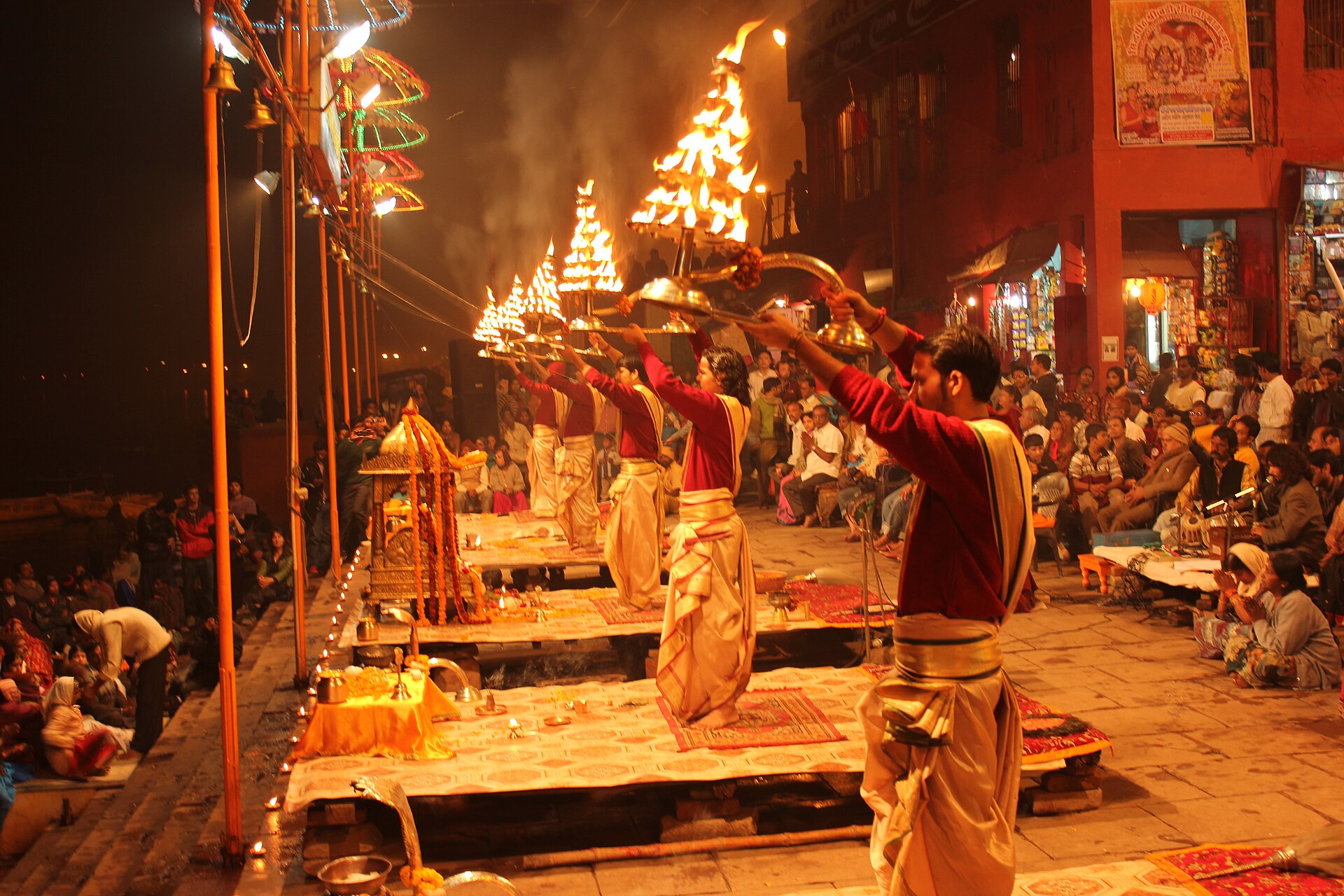
Dashashwamedh Ghat is the main ghat in Varanasi and the most spectacular on the Ganges. According to Hindu mythology, Lord Brahma created this ghat to welcome Lord Shiva, and it has served as the city's primary bathing and worship site for centuries. The defining experience is the nightly Ganga Aarti ceremony: priests in saffron robes stand on raised platforms at the water's edge, wielding multi-tiered brass lamps ablaze with oil-soaked wicks, swinging the flames in choreographed arcs while Sanskrit hymns echo across the river and thousands of spectators watch from the stone steps and boats. At dawn, the ghat transforms into a quieter scene of pilgrims performing morning ablutions, sadhus meditating, and incense smoke mingling with river mist. A guide navigates the chaotic ghat environment, secures prime viewing positions for the aarti before the crowds fill in, explains each stage of the ritual and its spiritual significance, and provides cultural context for the cremation ceremonies visible from nearby ghats. Walk through the Vishwanath Corridor to Kashi Vishwanath Temple, or take a day trip to Sarnath for the Buddhist counterpart to Varanasi's Hindu spirituality.
Spiritual Significance
Dashashwamedh Ghat is the main ghat (riverbank steps) on the Ganges in Varanasi, and it has been the city's primary bathing and worship site for centuries. Hindu mythology holds that Lord Brahma performed the Dashashwamedh -- a ritual involving ten horse sacrifices -- at this very spot to welcome Lord Shiva back to Varanasi. Whether or not the legend is literal, the ghat's spiritual significance is undeniable: every morning, hundreds of pilgrims descend the stone steps to bathe in the Ganges at sunrise, performing rituals their families have repeated for generations. The defining experience is the Ganga Aarti, a coordinated fire ceremony held every evening without exception. Seven priests dressed in saffron robes stand on raised platforms at the water's edge, each wielding multi-tiered brass lamps ablaze with oil-soaked wicks. They swing the flames in choreographed arcs while Sanskrit hymns resound from loudspeakers, conch shells blow, and thousands of spectators watch from the ghat steps and boats on the river. A guide secures a good viewing position (they fill quickly), explains each stage of the ritual, translates the chants, and provides the mythological context that transforms a visual spectacle into a spiritual one.
Visitor Etiquette
Dawn boat ride: Glide past 84 ghats as pilgrims perform morning ablutions, sadhus meditate on the steps, and incense smoke mingles with river mist. Ganga Aarti ceremony: Seven priests perform synchronized movements with brass lamps weighing several kilograms each, flanked by incense, flowers, and conch shells. Flower lamp release: Place a small oil lamp on a leaf boat and set it adrift on the Ganges -- a deeply personal moment amid the spectacle. Morning rituals: Watch Brahmin priests conduct personal pujas for families, astrologers read palms under bamboo umbrellas, and yoga practitioners greet the sun. Sound landscape: Temple bells, Sanskrit chants, boat oars, and street vendors create an immersive audio environment unlike anywhere else. Respectful photography: bathing pilgrims are performing religious rituals -- always ask before photographing individuals up close. Watch your belongings during the crowded Aarti ceremony.
When to Visit
Ghat accessible: 24 hours -- pilgrims bathe at all hours. Dawn boat ride: 5:00-6:30 AM (varies by season) -- the most atmospheric time to see the ghat from the water. Ganga Aarti: every evening at 6:45 PM (winter) or 7:00 PM (summer), lasting approximately 45 minutes. Arrive early: claim a spot on the steps at least 30 minutes before the ceremony begins.
Admission and Costs
Ghat access: free. Ganga Aarti: free to watch from the steps. Boat viewing during Aarti: ₹300-500 per hour for a private rowboat. Reserved platform seats: some tour operators offer reserved spots for ₹500-1,000. Floating flower lamp offering: ₹20-50 to release a diya (oil lamp on leaf) onto the Ganges.
Tips for Visitors
Two visits recommended: dawn and dusk are completely different experiences -- try to see both during your Varanasi stay. Boat from the river: watching the Aarti from a boat gives you a panoramic view and avoids the dense crowds on the steps. Navigate with a guide: the lanes leading to Dashashwamedh from the main road are a maze. Exit through the Vishwanath Corridor to Kashi Vishwanath Temple for a seamless transition. Combine with Sarnath for a half-day Buddhist pilgrimage that contrasts powerfully with the Hindu rituals at the ghat.