

Overview
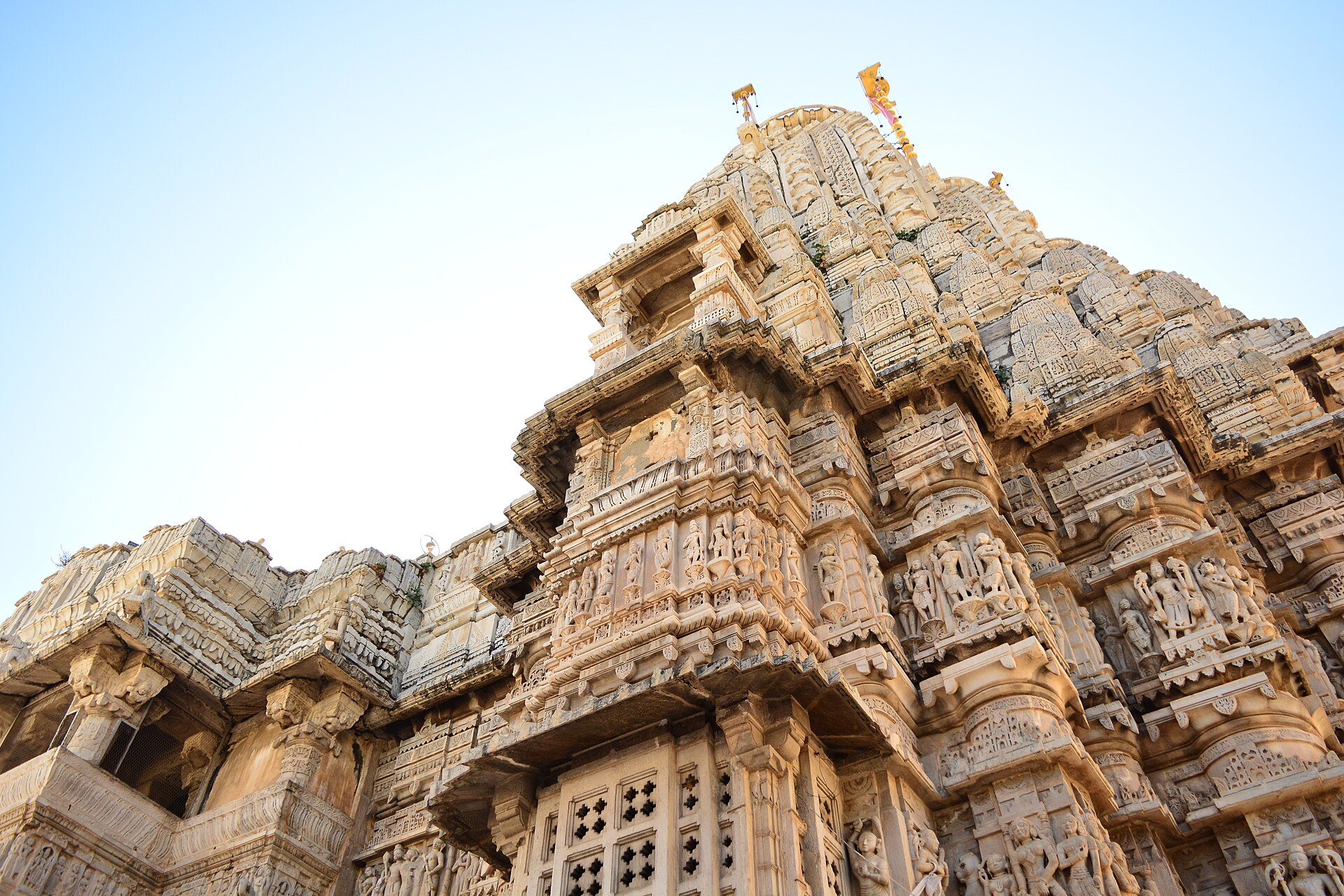
Jagdish Temple is a 17th-century Hindu temple dedicated to Lord Vishnu, built in 1651 by Maharana Jagat Singh I on a raised platform at the heart of Udaipur's old city. Constructed in the Indo-Aryan architectural style, the temple features intricate carvings of dancers, elephants, horsemen, and musicians covering every surface of its 79-foot-high shikhara (tower). A brass Garuda (Vishnu's eagle mount) stands guard on a pillar before the entrance, and four subsidiary shrines at the corners honor Ganesh, Shiva, the Sun God, and the Goddess. The temple remains an active place of worship, with daily aartis performed exactly as they have been for nearly four centuries. A guide decodes the carved mythological scenes panel by panel, explains the temple's ongoing role in daily devotional life, and illuminates the significance of the Garuda pillar and its place in Vaishnavite tradition. City Palace is steps away, and Lake Pichola lies just below.
Spiritual Significance
Jagdish Temple stands at the geographic and spiritual center of Udaipur's old city, built in 1651 by Maharana Jagat Singh I on a raised platform accessible by a steep flight of 32 steps flanked by carved elephants. Dedicated to Lord Vishnu in his form as Jagannath (Lord of the Universe), the temple is the largest and most ornate in Udaipur, built in the Maru-Gurjara architectural style that reached its peak in medieval Rajasthan. Every surface is covered in relief carvings depicting dancers, musicians, elephants, horsemen, and scenes from Hindu mythology. A guide decodes the temple's visual language, reading the stone narratives panel by panel. They point out the four subsidiary shrines at the corners dedicated to Ganesh, Shiva's family, the Sun God, and the Goddess -- each carved with its own iconographic program. The brass image of Garuda (Vishnu's eagle mount) that guards the entrance is a gathering point for local devotees, and guides explain how the temple functions as a living place of worship where morning and evening aartis are performed daily, exactly as they have been for nearly four centuries. The inner sanctum houses a black stone image of Jagannath decorated daily with fresh flowers, silk garments, and gold jewelry. The temple is steps from the City Palace and the old city market.
Visitor Etiquette
Main shikhara: The 24-meter pyramidal tower carved with row upon row of deities, celestial beings, and mythological scenes. Garuda statue: A large brass eagle mounted on a pillar facing the temple -- Vishnu's divine vehicle and the temple's guardian. Elephant guardians: Life-sized stone elephants flank the staircase, symbols of royal power and auspiciousness. Relief carvings: Apsaras (celestial dancers), musicians, battle scenes, and decorative motifs covering every external surface. Inner sanctum: The black stone image of Jagannath (Vishnu) decorated daily with fresh flowers, silk garments, and gold jewelry. Subsidiary shrines: Four corner temples dedicated to Ganesh, Surya (Sun), Shiva, and Shakti (the Goddess). Remove shoes at the bottom of the steps -- the stone stairs can be hot in summer, so bring socks. Dress modestly: cover shoulders and knees as this is an active place of worship.
When to Visit
Morning session: 5:00 AM - 2:00 PM. Evening session: 4:00 PM - 10:00 PM. Aarti times: 5:30 AM, 12:00 PM, 5:30 PM, and 8:00 PM. Best time: evening aarti (5:30 PM) when bells ring and devotees gather on the steps.
Admission and Costs
Temple entry: free. Guide: ₹200-500 for a 30-45-minute tour (compact site). Flower offerings: ₹10-20 from vendors on the steps.
Tips for Visitors
Quick visit: 20-30 minutes is sufficient, making it easy to combine with City Palace next door. Evening atmosphere: the 5:30 PM aarti fills the temple with bells, incense, and chanting -- the most atmospheric time to visit. Old city market: the surrounding lanes contain shops selling Pichwai paintings, miniatures, silver jewelry, and lac bangles. The main shikhara is carved with row upon row of deities, celestial beings, and mythological scenes -- look for the apsaras (celestial dancers) and battle scenes on the exterior panels. From here, walk to City Palace and then down to the Lake Pichola jetty for a sunset boat ride.