

Overview
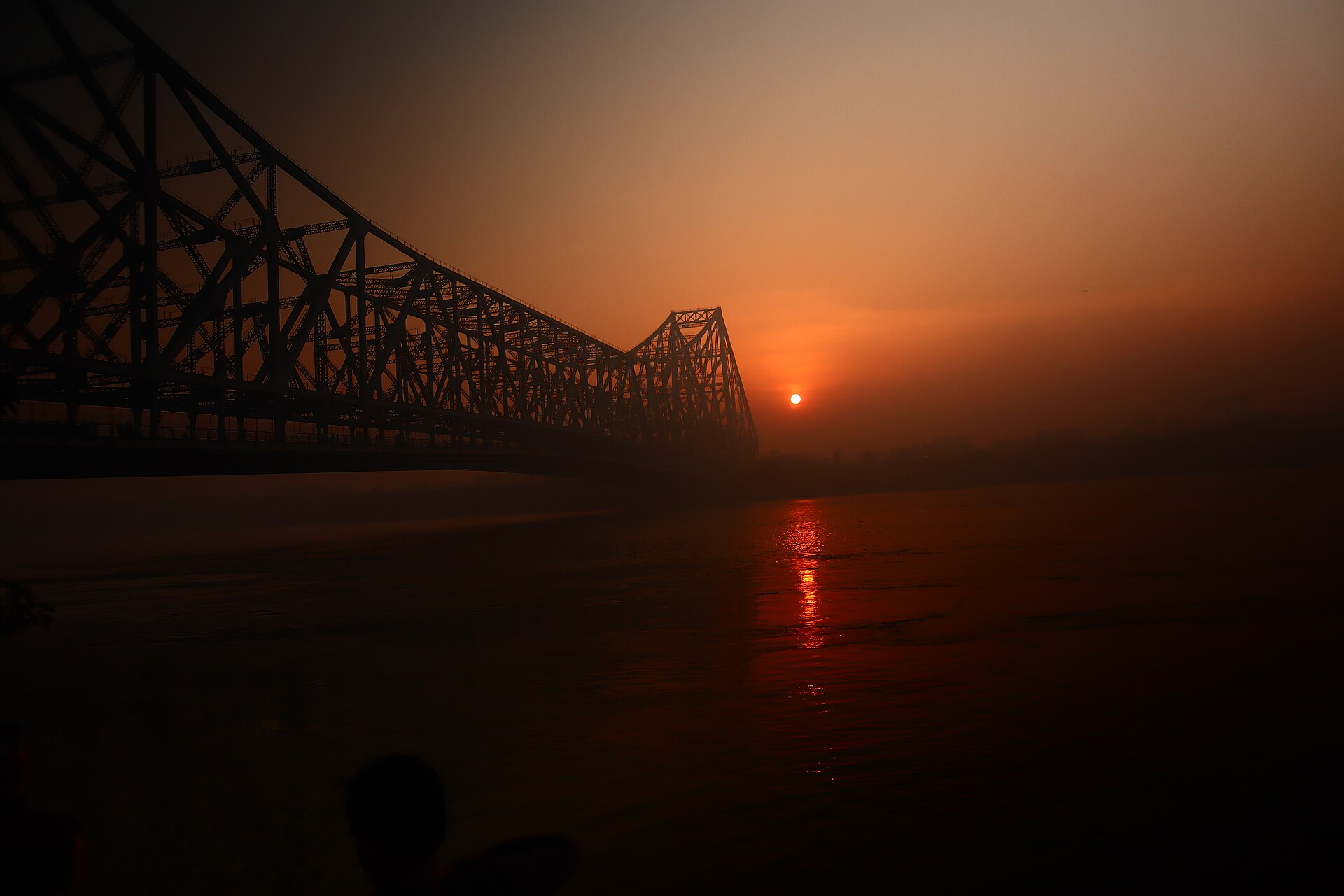
Howrah Bridge (officially Rabindra Setu) is one of the busiest cantilever bridges in the world, carrying over 100,000 vehicles and countless pedestrians daily across the Hooghly River between Kolkata and Howrah Station. Opened in 1943 during World War II, the 705-meter span was assembled using 26,500 tonnes of steel joined entirely by rivets -- not a single nut or bolt was used -- making it an engineering marvel that has endured over 80 years of relentless traffic without structural weakening. The bridge is an enduring icon of Kolkata, featured in countless Bollywood films and recognized worldwide as a symbol of the city. Beneath its western approach lies the Mullick Ghat flower market, where mountains of marigolds and jasmine are traded at dawn. A guide explains the wartime engineering achievement, leads visitors through the flower market beneath the bridge at first light, and illuminates its role as the gateway connecting Kolkata's commercial heart to India's busiest railway terminus. Walk from here to Dakshineswar Kali Temple in north Kolkata, and visit the Victoria Memorial to the south.
Engineering Facts
Howrah Bridge (officially Rabindra Setu) is one of the busiest cantilever bridges on the planet, spanning 705 meters across the Hooghly River to connect Kolkata with Howrah Station -- the busiest railway terminus in India. Completed in 1943 during World War II (with steel that had been destined for the war effort), the bridge was assembled using 26,500 tonnes of high-tensile steel joined entirely by rivets -- not a single nut or bolt was used. It was designed to withstand constant vibration from traffic, and 80 years later, it carries over 100,000 vehicles and countless pedestrians daily with no structural weakening. A guide transforms a bridge crossing from a transit experience into a story of colonial engineering, urban survival, and Bengali daily life. They explain how the bridge was built without disrupting river traffic, why its unique suspended-span design was chosen over alternatives, and how the flower market beneath the western approach (Mullick Ghat) has operated since before the bridge existed. The walk across at dawn -- when porters carry headloads of marigolds, roses, and jasmine to the market as the Hooghly catches morning light -- is one of the most memorable moments in all of India.
Observation Points
The crossing itself: walk the 705-meter span alongside pedestrians, rickshaws, buses, and hand-pulled carts in a quintessential Kolkata experience. Mullick Ghat flower market: mountains of marigolds, roses, jasmine, and tuberoses traded at frantic pace in the shadow of the bridge. Rivet construction: look closely at the steel structure -- every connection is a rivet, not a bolt, making maintenance simpler and the structure more resilient. Hooghly River views: from the bridge, watch ferries, fishing boats, and ritual bathers on the ghats below. Howrah Station: the bridge leads directly to India's busiest railway station -- an experience in itself. For an alternative perspective, view Howrah Bridge illuminated at night from the Vidyasagar Setu downstream.
When to Visit
Bridge: open 24/7 (it is a public road and pedestrian crossing). Dawn walk: 5:30-7:00 AM for the flower market and morning light. Mullick Ghat flower market: active from 4:00 AM, peaks at 6:00 AM. Night illumination: the bridge is lit with colored lights after dark.
Admission and Costs
Walking across: free. Flower market: free to visit. Guided dawn walk (bridge plus market): ₹1,000-2,500 ($12-30) per person. Boat ride underneath: ₹100-200 for a river view of the bridge.
Tips for Visitors
Photography on the bridge is officially prohibited, though enforcement is inconsistent -- guides advise on current practice. Dawn is the definitive time to visit: the combination of flower market, morning light, and lighter traffic makes early morning the best time. Stay on the pedestrian walkways: the road is narrow and traffic moves aggressively. Mind the traffic at all times. Cross the bridge to explore the Kumartuli potter's quarter, then walk south to Dakshineswar Kali Temple. Second Hooghly Bridge at night: for an alternative perspective, view Howrah Bridge illuminated from the newer Vidyasagar Setu downstream.