
From Santa Marta: Matching the Tour to Where You're Headed
How to choose the right guided tour from Santa Marta — Tayrona National Park day trips, the multi-day Lost City trek.
Read the full guideUpdated · 14 min read
Choosing a tour from Santa Marta comes down to matching the format to what you came for: a Tayrona National Park day trip for the beaches (COP 150,000–250,000), a Minca day out for coffee and cloud forest (COP 120,000–200,000), or the multi-day Lost City trek (COP 1,200,000–1,800,000) that can only be done with an authorised guide. Factor in the dry season, start early, and lean on a bilingual guide in a region where English is scarce.
Santa Marta is Colombia's oldest surviving city, founded in 1525, but few people come for the city itself. They come because it is the launchpad for an extraordinary compression of landscapes — the Sierra Nevada de Santa Marta, the world's highest coastal mountain range, rises from Caribbean beaches to the 5,775-metre snow of Pico Cristóbal Colón in barely 42 kilometres. That geography is exactly why guided tours matter more here than in most Colombian cities: the marquee experiences are jungle treks, national-park beaches and mountain coffee farms, not walkable museums. This guide sorts the region's tour options by what each is genuinely good for, what they cost, when to go, and the coastal logistics that decide whether a day runs smoothly. Read it alongside the Santa Marta city guide and the wider Colombia overview for the bigger picture.
What does a guide actually add in Santa Marta?
A guide earns its fee on access and interpretation — from the mandatory licensing that governs the Lost City trek to the trail knowledge, transport and cultural context that turn a beach or a coffee farm into something you understand.
Plenty of the coast is straightforward to do alone — you can walk Santa Marta's Centro Histórico, boat across to the fishing village of Taganga, or ride a park shuttle to the entrance of Tayrona National Park without any help. Where a guide changes the experience is the layer beneath the surface:
- Mandated access. The Lost City trek runs through the ancestral territory of the Kogi, Wiwa, Arhuaco and Kankuamo peoples, and only a handful of community-authorised operators may lead it. There is no independent option — the guide is the price of admission.
- Interpretation, not just a view. The terraces of Teyuna, built around 800 AD, are striking on their own, but a guide connects them to the living Indigenous cultures of the Sierra — and on a Minca farm, someone who can walk you from bean to cup makes the visit.
- Local navigation. Minca's waterfalls are scattered along mountain tracks reached by moto-taxi, and Tayrona's trails fork without much signage. A guide handles the routing, the Spanish and the timing so the heat doesn't win.
If your trip is short and beach-focused, you can see a lot without a single paid tour. The skill is spending your budget where it genuinely adds meaning or removes friction.
What are the main types of guided tour from Santa Marta?
Santa Marta's tours sort into five broad formats: Tayrona National Park day trips, the multi-day Lost City trek, Minca coffee-and-cloud-forest tours, city and heritage walks, and private day trips along the coast. Matching the format to your interests and fitness matters far more than booking the priciest option.
The region's tour market falls into a handful of distinct experiences, each suiting a different traveller. A well-planned trip usually mixes two or three rather than piling on the same kind.
| Tour type | Best for | Typical length | Rough cost (per person) |
|---|---|---|---|
| Tayrona day trip | Beach lovers, first-timers | Full day | COP 150,000–250,000 (US$37–60) |
| Lost City trek | Fit hikers, culture seekers | 4–5 days | COP 1,200,000–1,800,000 (US$300–450) |
| Minca day trip | Coffee fans, birders | Half to full day | COP 120,000–200,000 (US$30–50) |
| City & heritage walk | History lovers, slow days | 2–3 hours | Guide fee plus entry |
| Private coast day | Families, flexible groups | Full day | COP 350,000–600,000 (US$85–150) group |
Tayrona National Park Day Trips
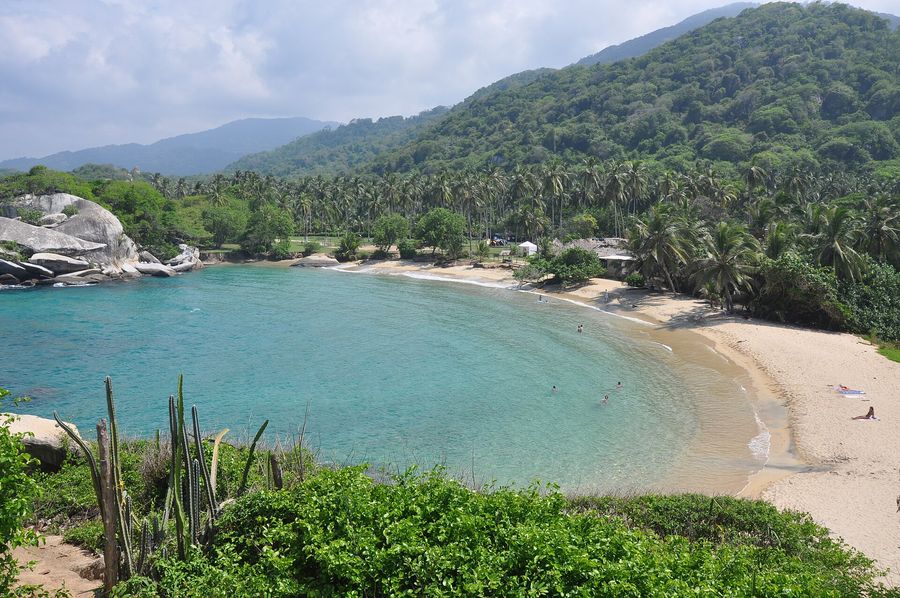
Tayrona is the region's signature outing — a protected stretch where jungle spills onto some of the Caribbean's most photographed coves. Guided day trips handle the shuttle from Santa Marta, the park entry and the walk in to beaches like Cabo San Juan del Guía, with its thatched lookout hut on a rocky headland. You can go alone, but a guide smooths the logistics and points out the wildlife you'd walk straight past.
The Lost City (Ciudad Perdida) Trek
This is the region's defining experience and the one tour that is non-negotiable on guiding. Over four to five days you cover roughly 44–46 km round trip, hiking 8–10 hours a day through humid jungle and across rivers to reach the 1,200-year-old terraces of Teyuna — a site built some 650 years before Machu Picchu and hidden by forest until 1972. Because prices are coordinated across the authorised operators, you choose on style and reviews, not on cost.
Minca Coffee and Cloud-Forest Tours
Just 650 metres up into the Sierra, Minca trades the coast's heat for cool cloud forest, small-batch coffee farms, swimming-hole waterfalls and birding that logs over 300 species. Tours range from a half-day coffee-and-cascade loop to full days of hiking and hummingbird watching, usually reached by the moto-taxis that are Minca's default transport.
City and Heritage Walks
Santa Marta's own centre rewards a short guided walk: the palm-lined Camellón seafront, the colonial cathedral, and the Quinta de San Pedro Alejandrino, the hacienda where liberator Simón Bolívar died in 1830. It's a low-key half-day that anchors the region's history before you head for the mountains.
Private and Coastal Day Trips
A private guide can stitch together a bespoke day — Taganga's diving bay, quieter beaches beyond the park, or a mix of city sights and Sierra foothills — at your own pace. Priced per group rather than per head, these suit families and anyone who wants flexibility over a fixed itinerary.
How do you match Santa Marta's tours to your trip length?
Think in days rather than single bookings. With two days, pair a Tayrona day trip with a day in Minca. With four or five spare and the fitness for it, commit to the Lost City trek. Always leave a slow half-day for the old town and the seafront.
Rather than booking tours one at a time, it helps to plan by the day:
- Two days: Spend one on a guided Tayrona day trip for the jungle-and-beach scenery, and the second up in Minca for coffee, waterfalls and birdlife — the two contrast the coast and the mountains without a car.
- Three to four days: Keep the above, add a city and heritage walk taking in the Quinta de San Pedro Alejandrino, and use the extra day for Taganga or a quieter Tayrona beach reached by boat.
- Five days or more: This is where the Lost City trek fits. Book it with a rest day either side, since you'll arrive back tired and muddy.
Resist over-booking, especially around the trek — the heat and daily distances shorten ambitious plans, and the region rewards a slower pace than its compact map suggests.
When is the best time to take a tour from Santa Marta?
The Caribbean coast is warm year-round, so the season is about rain, not temperature. December through March is the dry, reliable window — January and February are the standouts — while roughly September through November is wettest, muddying trails and swelling the rivers on the Lost City route.
Because Santa Marta sits at sea level just north of the equator, temperatures barely shift across the year — what changes is the rain and the state of the trails:
- Dry season (December–March): The best window for trekking and beaches, with firmer paths and calmer seas. It's also the busiest stretch, so book the Lost City trek and Tayrona camping well ahead, especially around the December–January peak.
- Shoulder months (April–August): Generally workable, with intermittent showers; April in particular still treks well before the heavier rains.
- Wet season (September–November): Heavy rain makes jungle trails muddy and slows the Lost City route; some travellers still go, but expect tougher, wetter conditions.
Two timing habits pay off regardless of season. Start Tayrona and Minca outings early, before the midday heat and afternoon cloud build, and check the Tayrona closure calendar — the park shuts two to three times a year for ecological recovery, and arriving to a locked gate is a real risk. For a fuller month-by-month breakdown, the Santa Marta city guide covers seasonal conditions.
How much should you budget for guided tours from Santa Marta?
Santa Marta is good value by international standards, but the Lost City trek is a genuine investment. Day trips to Tayrona and Minca run in the low tens of dollars, while the four- to five-day trek — food, camps, guide and community fees included — is the region's big-ticket item at COP 1,200,000–1,800,000.
Guiding here is affordable, but the pieces still add up, so it helps to think in ranges:
| Tour type | Approximate cost |
|---|---|
| Tayrona day trip (with transport) | COP 150,000–250,000 (US$37–60) per person |
| Minca day trip | COP 120,000–200,000 (US$30–50) per person |
| Lost City trek (4–5 days, all-inclusive) | COP 1,200,000–1,800,000 (US$300–450) per person |
| Private full-day guide | COP 350,000–600,000 (US$85–150) per group |
| City and heritage walk | Guide fee plus site entry |
A few cost notes worth knowing before you book:
- The trek price is bundled and broadly fixed. Authorised operators coordinate rates, so a suspiciously cheap Lost City quote is a warning sign, not a bargain. The fee already covers meals, camps and Indigenous community charges.
- Park entry is usually separate. Tayrona charges an admission fee on top of a day-trip's transport, and it varies by nationality — check the current rate.
- Private guides are priced per group. Splitting a full-day guide across three or four people brings the per-person cost down sharply.
- Tipping. For multi-day trek guides, COP 20,000–50,000 per day is standard and appreciated; in restaurants a 10% propina is customary, in line with the rest of Colombia.
Treat every figure here as a planning guide rather than a quote — guide, transport and entry prices shift with the season and the peso, so confirm current rates when you book.
What local logistics make a Santa Marta tour day run smoothly?
A few details decide whether a day flows. Start early to beat the coastal heat, carry cash for park fees and moto-taxis, respect the daily distances on the trek, and confirm Tayrona is actually open before you set out.
Most of the difference between a smooth day and a frustrating one comes down to practical details:
- Beat the heat. The coast gets hot and humid fast; early starts mean cooler trails and quieter beaches, and Minca's cloud forest is at its most atmospheric in the morning.
- Carry cash. Park entry, moto-taxis to Minca and small operators often run on Colombian pesos; cards are patchy outside larger hotels.
- Pack for the jungle. Quick-dry clothes, decent footwear, insect repellent and a dry bag matter on Tayrona trails and are essential on the Lost City trek.
- Mind the moto-taxis. They're the standard, quickest ride up to Minca — thrilling but bumpy, so agree the fare first and hold on.
- Check Tayrona's status. With two or three annual closures for ecological rest, confirming the dates saves a wasted trip to a shut gate.
- Build in recovery. Come back from the trek expecting to be tired — don't schedule a flight for the same afternoon you return.
How do you find a good guide in Santa Marta?
Look for operators registered under Colombia's Registro Nacional de Turismo (RNT), and for the Lost City specifically, confirm the operator is one of the community-authorised outfits. Bilingual guiding matters on a coast where English is scarce, and smaller groups leave room for the questions that make a tour worthwhile.
Colombia's Registro Nacional de Turismo certifies legitimate operators, and a visible RNT number is a good first filter for quality and legal compliance. For the Lost City trek this goes further: only a small set of operators is authorised by the Indigenous communities and the park authority to run it, so verifying that status is essential — both a legal and an ethical line. Because Spanish is the working language along the coast, confirm your guide is genuinely bilingual rather than relying on a few rehearsed phrases. Hotels and well-run hostels in Santa Marta maintain relationships with trusted operators, and the best guides here read the room — pacing the day for the heat, weaving in the living cultures of the Sierra, and turning a checklist of beaches and ruins into a story of a coast where mountains meet the sea.
Related Guides
- Santa Marta city guide — attractions, seasonal notes, and practical tips for the wider stay
- Colombia country guide — how Santa Marta fits into a longer trip across the country
- Guided Tours in Bogotá — choosing tours in Colombia's high-Andean capital
- Cartagena Old Town Guide — pairing the Caribbean coast's colonial jewel with your Santa Marta days
Final thoughts: In a region where the tours are treks, beaches and mountain farms rather than city museums, the smartest approach is to spend where a guide is genuinely required or transformative — the mandatory Lost City trek, the logistics of Tayrona and Minca — and rely on your own feet for the old town and the seafront. Book the trek and dry-season slots early, start each day ahead of the heat, confirm Tayrona is open, and let a good local guide open the door to a coast that rewards patience.
Frequently Asked Questions
Do you need a guided tour in Santa Marta?
It depends on the experience. You can wander Santa Marta's old town, ride a boat to Taganga, or catch a day-trip shuttle into Tayrona National Park without a guide. Two of the region's headline experiences, however, effectively require one. The Lost City (Ciudad Perdida) trek can only be done through a small group of community-authorised operators — independent hiking is not permitted — and Minca's coffee farms, waterfalls and birding are far richer with a local who knows the trails and the moto-taxi network. With Spanish the working language along the coast, a bilingual guide also smooths everything from park entry to bargaining for transport.
How much does a tour guide cost in Santa Marta?
A guided Tayrona day trip runs roughly COP 150,000–250,000 (US$37–60) per person including transport, and a Minca day trip about COP 120,000–200,000 (US$30–50). The four- to five-day Lost City trek is the big-ticket item at COP 1,200,000–1,800,000 (US$300–450) all-inclusive — food, camps, guide and Indigenous community fees are bundled, and prices are broadly fixed across the authorised operators. A private full-day guide for the city and nearby sights costs about COP 350,000–600,000 (US$85–150). Park entry fees and tips are usually extra.
When is the best time to trek or tour from Santa Marta?
The dry months of December through March are the most reliable, with firmer trails and calmer seas — January and February are the pick of the year. April is still good; the wettest stretch is roughly September through November, when jungle paths turn muddy and rivers on the Lost City route can swell. Tayrona also closes two to three times a year for ecological rest, so check the current dates before locking in plans. Whatever the month, start Tayrona and Minca outings early to beat both the heat and the afternoon build-up of cloud.
Is the Lost City trek worth a guide, and how hard is it?
A guide is mandatory, not optional — the trek passes through Indigenous territory and only authorised operators may run it. Expect four to five days covering roughly 44–46 km round trip, with 8–10 hours of hiking a day through humid jungle, several river crossings and steep climbs, ending at the 1,200-year-old stone terraces of Teyuna. It suits reasonably fit walkers rather than seasoned mountaineers, but the heat and humidity are the real challenge. Guides handle camps, meals, safety and the cultural context that makes the ruins mean something.
What is the best Santa Marta tour for first-time visitors?
Start with a guided day trip into Tayrona National Park for the jungle-meets-Caribbean scenery at Cabo San Juan, then give Minca a day for coffee farms, waterfalls and birdlife. If you have four or five days spare and the fitness for it, the Lost City trek is the region's defining experience. Keep an afternoon for Santa Marta's own old town and the Quinta de San Pedro Alejandrino, where Simón Bolívar spent his final days.