
Observation Spots
Formation
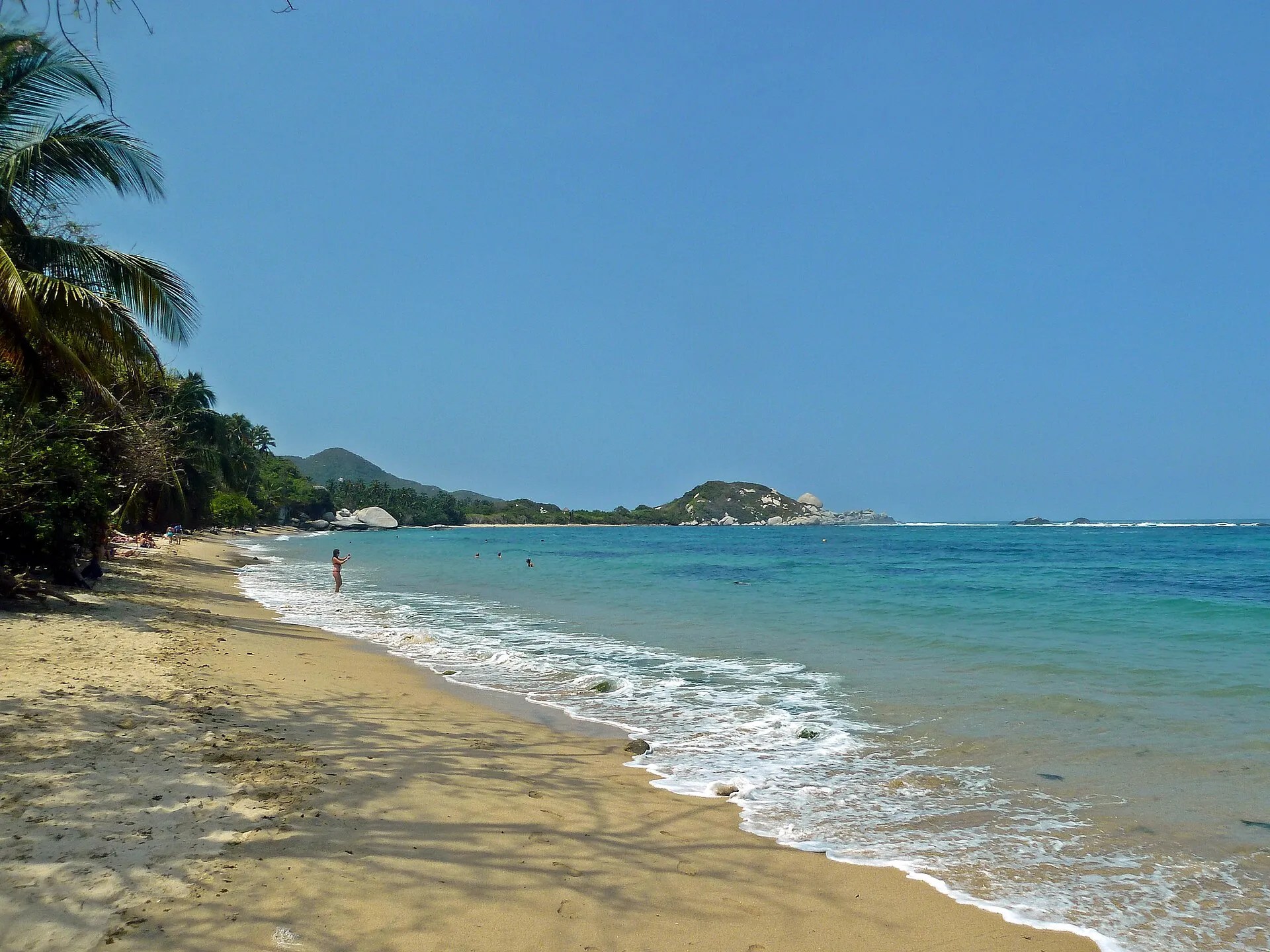
Tayrona's scenery is the product of an extraordinary piece of geology: the Sierra Nevada de Santa Marta is a fault-bounded, roughly triangular massif entirely detached from the main Andes, rising from sea level to permanent snow in one of the steepest coast-to-summit gradients on the planet. The rounded boulders that make the park's beaches instantly recognisable are plutonic rock — granodiorite and granite that cooled deep underground, was uplifted along the massif's bounding faults, and then weathered in place. Warm, humid air rots the rock along its natural joints in a process called spheroidal weathering, peeling it into the smooth, stacked spheres you see at Arrecifes and Cabo San Juan.
The Sierra Nevada de Santa Marta is the highest coastal mountain range in the world, rising from the Caribbean to 5,775 metres in just 42 kilometres.
That compressed relief squeezes a full ladder of ecosystems — mangrove, tropical dry forest, humid rainforest, cloud forest, páramo, and glacier — into a tiny footprint, which is why UNESCO folded the range into its Man and the Biosphere network in 1979. The coast has been inhabited for well over a millennium: the Tairona built terraced towns such as Pueblito (Chairama) in the hills above the beaches, and their descendants asked that the modern park be created in 1964 to shield both the reefs and the ceremonial sites from unchecked development.
Trails
All of Tayrona's signature spots lie along the western coastal trail, most within a two-to-three-hour walk of the El Zaino entrance. The most photogenic, in walking order:
- Cañaveral — the first beach past the gate, with dramatic surf, the park's main cabins, and the trailhead for the forest path west.
- Arrecifes — a long, boulder-framed strand where the granite spheres are at their most sculptural; swimming is dangerous here, so it is a place to photograph rather than paddle.
- La Piscina — a natural rock-walled pool with calm, clear water and the park's best easy snorkelling over reef fish.
- Cabo San Juan del Guía — the postcard cove: twin beaches split by a rocky point crowned with a palm-shaded lookout mirador, the single most photographed viewpoint in the park.
- Pueblito (Chairama) — ancient Tairona stone terraces reached by a steep, root-tangled climb from Cabo San Juan, cool and quiet under the canopy.
- Playa Cristal — a sheltered, glass-clear bay on the park's western side, usually reached by boat from Taganga rather than on foot.
Wear real hiking shoes rather than sandals: the "flat" coastal walk crosses roots, mud, and boardwalks, and the Pueblito ascent gains a few hundred metres over bare rock.
Wildlife
Red howler monkeys announce dawn from the canopy along the trail to Cabo San Juan, their roars audible a kilometre away. The lower forest is one of the last strongholds of the cotton-top tamarin (Saguinus oedipus) — a critically endangered primate found only in northern Colombia — while white-faced capuchins raid unattended backpacks at the beach camps and coatis forage boldly through the campgrounds at dusk. Blue morpho butterflies the size of a hand drift across sun-dappled clearings, and the park's bird list tops 300 species, including keel-billed toucans, blue-crowned motmots, and military macaws. Offshore, the rocky shallows at La Piscina hold angelfish, parrotfish, sergeant majors, and moray eels, and green and hawksbill turtles nest on the quieter eastern beaches — one reason the reefs sit inside a protected marine zone with no fishing.
When to Visit
Hours: open daily 8 AM – 5 PM; last entry at each trailhead is set an hour or two before closing so hikers reach the coast before dark. Overnight guests already inside may stay, but no new entry is allowed after the cut-off.
Best seasons: the two dry windows — December–March and July–August — bring the calmest seas, firmest trails, and clearest snorkelling, which is why those months carry the top ratings above. The September–November rains leave the jungle paths slick and the sea churned up.
Annual closures: Tayrona shuts for several weeks each year — historically split across February, June, and late October–early November — so the Kogi, Wiwa, Arhuaco, and Kankuamo communities can carry out spiritual cleansing and the ecosystems can rest. The exact dates shift annually, so confirm them on the national parks site before locking in travel.
Admission and Costs
Entry (foreigners): COP 87,000 (about $22) in high season, a little less off-peak, collected in cash at the gate alongside a small mandatory accident-insurance fee. Colombian nationals and residents pay a reduced rate, and children under five enter free.
Sleeping inside the park: hammock at Cabo San Juan COP 35,000–55,000 ($9–14) per night; tent rental COP 40,000–70,000 ($10–17); simple cabins from around COP 250,000 ($62).
Getting there and around: a guided day trip from Santa Marta runs COP 150,000–250,000 ($37–60) per person including transport; a public bus to the El Zaino gate is only COP 8,000–10,000 ($2–2.50); and a horse from the trailhead to Cabo San Juan costs COP 40,000–60,000 ($10–15) one way — worth it in the heat or with a heavy pack. Bring cash: there are no ATMs inside, and card signal is unreliable.
The Case for a Guide
Tayrona rewards a knowledgeable local guide more than most beach destinations, because so much of what makes it special is invisible to the untrained eye. A good naturalist or community guide will:
- Spot the wildlife you would walk straight past — a motionless sloth, a roosting owl, or a cotton-top tamarin family in the mid-canopy.
- Read the sea for you — which beaches are safe to swim and which hide the rip currents that claim several lives a year at Arrecifes and Cañaveral.
- Decode the Tairona sites at Pueblito and explain the living beliefs of the Kogi and Wiwa, whose territory the trail crosses.
- Handle logistics — entry paperwork, camping reservations, and the timing that gets you to Cabo San Juan before the crowds and the heat.
Guides working the coast should hold a Colombian Registro Nacional de Turismo (RNT) number; the same Santa Marta operators that run the Lost City trek and Minca tours arrange Tayrona day trips.
Tips for Visitors
- Start early. Enter by 8 AM so the two-hour trek to Cabo San Juan is behind you before the midday heat, and beds are still available.
- Pack light and pack out. Everything you bring must be carried the whole way; single-use plastics are banned, so carry a refillable bottle and a bag for your rubbish.
- Carry water and cash. Vendors exist but are pricey and limited, and there are no ATMs inside the park.
- Respect the swim flags. Strong currents make several beaches deadly — swim only where marked safe, such as La Piscina.
- Cover up for the trail. Reef-safe sunscreen, insect repellent, and closed shoes make the humid jungle walk far more comfortable.
- Combine your trip. Nearby Minca and the Lost City trek share the same Sierra Nevada gateway and are easily planned together from Santa Marta.
Frequently Asked Questions
What are Tayrona National Park's hours and is camping available?
The park is open daily from 8 AM to 5 PM, with the last entry at each trailhead an hour or two before closing so hikers can reach the coast in daylight. Overnight camping is permitted at designated sites — Cabo San Juan del Guía, Arrecifes, and Castilletes — in hammocks, rented tents, or a handful of cabins. Book beds ahead in the December–March and July–August dry seasons, when Cabo San Juan fills by midday.
How much does it cost to access Tayrona National Park?
Foreign-visitor entry is COP 87,000 (about $22) in high season and slightly less off-peak, plus a small mandatory insurance fee at the gate. A hammock at Cabo San Juan runs COP 35,000–55,000 ($9–14) per night, tent rental COP 40,000–70,000 ($10–17), and a guided day trip from Santa Marta COP 150,000–250,000 ($37–60) per person including transport.
What hiking tips help for trekking through Tayrona National Park?
Enter by 8 AM so the two-hour jungle trek to Cabo San Juan is done before midday heat, and pack light — everything you carry in must come out with you, as single-use plastics are banned. Bring more water than you think you need, reef-safe sunscreen, and cash, since there are no ATMs and card signal is unreliable inside the park.