
Booking a Bogotá Tour? Match It to What You Came For
How to choose the right guided tour in Bogotá — La Candelaria walks, graffiti tours, the Gold Museum, Monserrate and Zipaquirá day trips.
Read the full guideUpdated · 11 min read
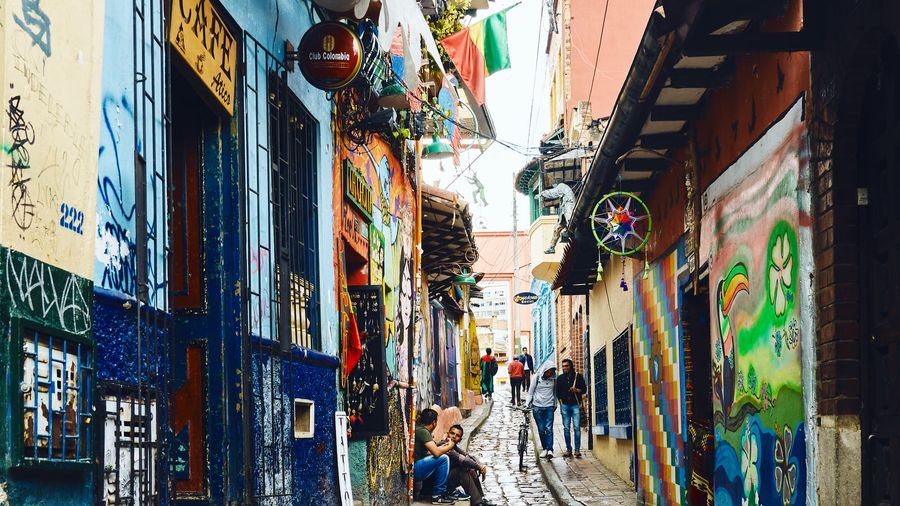
Bogotá splits cleanly into a half you can do alone and a half a guide unlocks: La Candelaria's cobbles and Plaza de Bolívar cost nothing but shoe leather, while the goldwork inside the Museo del Oro, the politics inside a graffiti-covered wall, and the Salt Cathedral an hour north pay off far more with someone who can translate both the language and the context. The payoff of getting that split right is a trip that spends money where it buys meaning and skips paying for what a free map already gives you.
Bogotá sits at 2,640 metres on a high Andean plateau, home to nearly eight million people, and English all but disappears once you step outside a hotel lobby. Those three facts — altitude, scale, and language — are what actually decide whether a given stop is worth a guide's fee, more than any generic checklist of "top tours." What follows sorts Bogotá's sights by that self-guided-versus-guided line, with the real price ranges and logistics attached. Read it alongside the Bogotá city guide and the wider Colombia overview for the bigger picture.
La Candelaria: cobbles you can read yourself, murals you can't
The colonial core founded in 1538 is entirely walkable without help — Plaza de Bolívar, the painted facades, the cobbled Callejón del Embudo — but the murals covering its walls carry a political history that stays locked shut without someone to translate it.
Free tip-based walks and licensed small-group tours cover the same physical ground through the old town, so paying more here buys narration, not access. That narration matters most on the graffiti: Bogotá has made street art part of its civic identity, and dedicated tours led by local artists or long-time residents unpack murals that read as decoration to an outsider but reference specific massacres, protests, or political figures to anyone who grew up here. A wander through La Candelaria costs nothing; a 2–3 hour guided walk or graffiti tour runs COP 20,000–40,000 as a tip on a free walk, or COP 50,000–100,000 per person for a licensed group tour. First-day visitors get the most out of it, since it doubles as orientation for everywhere else in this list.
The Museo del Oro's raft room needs a translator, not a ticket
Buying a ticket and wandering the Gold Museum alone is easy; understanding what you're looking at is not, because more than 55,000 pieces of Muisca, Quimbaya, and other pre-Hispanic goldwork only make sense as a story about ritual, metallurgy, and the myth of El Dorado.
The darkened offering room and the famous Muisca raft are visually striking on their own, and plenty of visitors do the museum unguided in an hour and leave satisfied. What a guide adds is coherence: why gold mattered to cultures that never used it as currency, how the raft connects to the conquistadors' search for a gilded king, and how the collection's other cultures differ from the Muisca. The nearby Botero Museum is the inverse case — free to enter, and Fernando Botero's donated collection of his own rotund figures alongside Picasso, Monet, and Dalí is approachable without narration, though a guide still adds context on rainy afternoons. Guided visits to either run 1.5–2 hours and add a guide's fee on top of the Gold Museum's modest ticket; the Botero stays free either way.
| Sight | On your own | What a guide adds |
|---|---|---|
| La Candelaria streets & Plaza de Bolívar | Fully walkable, free | Founding history (1538), colonial layers |
| Street art / graffiti district | Visible to anyone walking by | Political meaning behind specific murals |
| Museo del Oro (Gold Museum) | Ticket and self-guided wander | Muisca/Quimbaya context, the El Dorado myth |
| Botero Museum | Free entry, easy alone | Context for the donated collection |
| Monserrate | Funicular or cable car, no guide needed | Timing for clear air, history of the Sabana |
| Paloquemao market | Can wander, limited by language | Fruit ID, vendor Spanish translated |
| Salt Cathedral of Zipaquirá | Reachable by public bus, slow | Transport and timing handled end to end |
Monserrate's clear-air window closes by midday
The sanctuary atop Monserrate, more than 3,150 metres up, needs no guide for the ride up by funicular or cable car — but the window for a clean view of the Sabana below is narrow, and a guided sunset visit is built to hit it rather than gamble on it.
Cloud and haze routinely gather over the peak by midday, especially in the wet season, so independent travellers who sleep in often arrive to a view of grey rather than the city sprawled below. A guided visit times the ascent for clear morning air or for sunset, when the panorama shifts into city lights coming on across the plateau, and ties the view to the history of the Sabana rather than leaving it as a photo op. The cost here is mostly the funicular or cable-car ticket itself, plus a guide's fee only if a led visit is worth it to you — this is one of the cheaper places to skip the guide and just go early.
Paloquemao and the flavours a menu won't explain
Wandering the Paloquemao wholesale market alone is possible, but a language gap turns exotic Andean and Amazonian fruit into a wall of unfamiliar names, and that's exactly where a bilingual food guide earns its keep.
Bogotá's food culture lives in its markets more than its restaurants, and Paloquemao is the place to see it — stalls piled with fruit most visitors have never encountered, alongside the raw ingredients behind dishes like ajiaco and tamal santafereño. Spanish is the only working language on the market floor, so a guide who can ask a vendor what something is, how it's eaten, and when it's in season converts a confusing browse into an actual food education. Guided market and food tours typically run 3–4 hours with tastings included, priced per person in or slightly above the licensed-group tour range, and mornings are the only time to go — the market thins out fast after midday.
The Salt Cathedral: an hour that's easy to spend badly
The Salt Cathedral of Zipaquirá — a working church carved some 180 metres inside a former salt mine, about an hour north of the city — is technically reachable by public bus on your own, but that route eats most of a day in transfers that a guided trip compresses into a smooth half-day.
This is the stop where the self-guided option is at its weakest, not because the cathedral itself needs interpretation, but because Colombian regional bus logistics in Spanish are a real barrier for a short visit. A guided day trip including transport runs COP 200,000–350,000, and a private guide can extend the same day into markets, museums, or viewpoints at your own pace for COP 250,000–400,000 for a half day or COP 450,000–750,000 for a full day split across up to four people. Families and anyone tight on time get the clearest return here, since the alternative is losing hours to a transfer you'd otherwise spend inside the mine.
| Format | Approximate cost |
|---|---|
| Tip-based free walking tour | COP 20,000–40,000 (US$5–10) tip per person |
| Licensed group walking tour | COP 50,000–100,000 (US$12–25) per person |
| Private half-day guide (up to 4) | COP 250,000–400,000 (US$60–100) |
| Private full-day guide | COP 450,000–750,000 (US$110–185) |
| Salt Cathedral of Zipaquirá day trip | COP 200,000–350,000 (US$50–85) including transport |
Guides expect COP 15,000–30,000 per day in tips, and tip-based free walks depend on it entirely; restaurants run on a standard 10% propina, in line with the rest of Colombia. Treat every figure as a planning guide rather than a quote — prices shift with the season and the peso.
Reading the city's risk map before you plan a route
Bogotá's altitude and unevenness shape a tour day as much as any safety concern: pace the first day slowly to avoid the acclimatisation crash that flattens ambitious itineraries, and let local judgement — yours or a guide's — decide which blocks are fine to walk and which aren't once the light changes.
At 2,640 metres, visitors who push hard on day one commonly lose an afternoon to the altitude; going slowly and drinking water matters more than any tour choice. Separately, the city's tourist corridors, including La Candelaria, are well travelled and safe by day, but the picture changes after dark — a guide's real-time read of which streets to cross on foot versus by taxi or ride-hail is worth more than any pre-trip advice. Practical logistics compound this: TransMilenio, the rapid bus network, is cheap and covers the main corridors but turns chaotic at rush hour, so guides often route around it; Paloquemao and smaller stalls run on cash only; and mountain weather shifts fast enough to warrant a rain jacket and a warm layer in any month. Season also matters for planning: dry stretches from December–March and July–August give the clearest Monserrate views and driest cobbles, while April–May and October–November bring heavy afternoon downpours, usually with dry mornings — schedule outdoor stops early and keep the Salt Cathedral or a museum as a rain-proof backup. A car-free Sunday Ciclovía, when roughly 120 km of roads close and about 1.5 million cyclists, joggers, and skaters take over, is worth building a day around regardless of season.
Vetting a guide when English is the scarce resource
Colombia's Registro Nacional de Turismo (RNT) certification is the first filter for a legitimate, insured operator, but in Bogotá the second filter — genuine bilingual fluency rather than a few rehearsed phrases — matters just as much, since it decides how much of the city you actually understand.
Hotels and well-run hostels typically maintain relationships with vetted guides, and specialist local operators handle graffiti tours, food tours, and Zipaquirá excursions with real depth. Smaller groups leave more room to ask questions, which is where a guide's value tends to show up — not in a rehearsed script, but in the willingness to pause at a mural or a market stall a group finds interesting rather than sticking to a fixed route. Hiring a licensed, RNT-registered local guide, confirmed bilingual in advance, is the safest way to get that flexibility without gambling on quality.
Related Guides
- Bogotá city guide — neighbourhoods, attractions, and practical tips for the wider stay
- Colombia country guide — how Bogotá fits into a longer trip across the country
- Guided Tours in São Paulo — choosing tours in another sprawling South American capital of culture
- Getting Around Santiago — transport tips for another high-altitude-adjacent Andean city
Frequently Asked Questions
Do you need a guided tour in Bogotá?
Not for everything. La Candelaria is compact enough to wander alone, and the Gold Museum, the Botero Museum, and the Monserrate funicular are all easy to reach independently. A guide earns its fee on the layers you can't read off a map — the Muisca and Quimbaya goldwork inside the Museo del Oro, the political stories behind the street art, the immigrant-and-market food culture, and full-day trips out to the Salt Cathedral of Zipaquirá where transport and timing matter. With English rarely spoken outside upscale hotels, a bilingual guide is also the difference between skimming Bogotá and understanding it.
How much does a tour guide cost in Bogotá?
Tip-based free walking tours run roughly COP 20,000–40,000 (US$5–10) per person if you tip fairly. A licensed group walking tour is about COP 50,000–100,000 (US$12–25), a private half-day guide for up to four people COP 250,000–400,000 (US$60–100), and a private full day COP 450,000–750,000 (US$110–185). A guided Zipaquirá day trip including transport is COP 200,000–350,000 (US$50–85). Museum entry, the Monserrate funicular, and meals are usually extra.
When is the best time to take a tour in Bogotá?
Bogotá sits at 2,640 metres, so it stays cool — 8–20°C — all year and the season matters more for rain than for temperature. The dry windows of December–March and July–August bring the clearest skies for Monserrate views and dry cobbles underfoot in La Candelaria. April–May and October–November are the wettest months, with heavy afternoon downpours, though mornings often stay dry. Take Monserrate early for the clearest air, and keep a Sunday free for the Ciclovía.
What is the best Bogotá tour for first-time visitors?
Start with a guided walk through La Candelaria to grasp the colonial old town and the graffiti scene, then pair it with the Gold Museum the same day for the pre-Hispanic story. On a second day add Monserrate at sunset and a Paloquemao market food tour, and if you have a third, take the half-day trip out to the Salt Cathedral of Zipaquirá.
Is it safe to take walking tours in Bogotá?
Yes, on established routes and with a reputable guide. Bogotá rewards street awareness rather than fear — keep phones and cameras discreet, follow the local advice not to flash valuables, and let your guide choose which blocks are fine on foot and which are better crossed by taxi or ride-hail. La Candelaria and the main tourist corridors are well travelled by day; guides know how the picture changes after dark.