
Planning the Perfect Trip to Kolkata
How to plan a Kolkata trip — how many days to give the city, when to go, which tours to book, and what to budget for eastern India's cultural capital.
Read the full guideUpdated · 10 min read
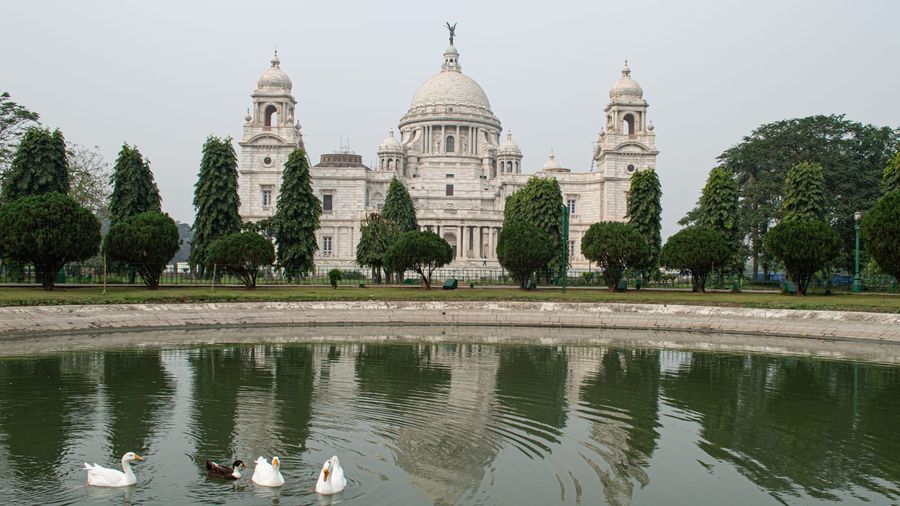
Give Kolkata at least three days: one for the colonial grandeur around the Victoria Memorial, one for the riverfront and the old north around the Howrah Bridge, and one for food, markets, and temples. Visit between October and March, budget roughly ₹2,500–5,000 a day for a comfortable mid-range trip, and let a local guide translate the city's dense, layered history so it reads as revelation rather than chaos.
Few Indian cities reward a planner quite like Kolkata. The former capital of British India holds the largest ensemble of colonial-era architecture in Asia, a book market that runs for blocks, a food culture many rank as India's most refined, and — every October — a festival that turns the whole city into an open-air gallery. That density is precisely what overwhelms first-timers. This guide breaks the trip into the decisions that actually matter: how long to stay, when to come, where to base yourself, which tours earn their fee, and what to budget across eastern India's intellectual capital.
How many days do you need in Kolkata?
Three full days is the sensible minimum, and four lets you breathe. Kolkata's sights cluster into distinct geographic pockets, so the constraint is rarely how much there is to see — it is how much of this sprawling, traffic-heavy city you can realistically cross in a day.
A workable three-day shape treats each day as a single area to avoid doubling back across the Hooghly. Day one belongs to the colonial and cultural core: the marble Victoria Memorial, the surrounding Maidan, St Paul's Cathedral, and the Indian Museum — Asia's oldest, founded in 1814. Day two heads north and to the river, starting early at the Howrah Bridge as the flower market beneath it erupts with marigolds, then working through the potters' quarter of Kumartuli and the second-hand book stalls of College Street. Day three is for food and faith: a Bengali food trail, the Missionaries of Charity house, and a slow afternoon of adda over coffee. A fourth day is the difference between rushing and lingering — use it for the riverside temples at Dakshineswar and nearby Belur Math, both an easy metro or ferry ride upstream.
When is the best time to visit Kolkata?
October through March is the clear winner, with warm, dry days that make walking the Maidan and the old lanes a pleasure rather than an ordeal. The summer months of April to June are punishingly hot and humid, and the July-to-September monsoon brings both dramatic skies and street flooding.
The cool season splits into two moods. The festival stretch from October into November is the most atmospheric but also the busiest and priciest, while December and January deliver the crispest air and clearest light of the year. If you can, aim your dates at the shoulder weeks of late October, February, or March for the best balance of comfort and calm. One timing decision dominates all the others: Durga Puja, usually in October, is Kolkata at full voltage — tens of thousands of elaborately themed pandals draw an estimated four million visitors — but it books out hotels and guides months ahead. Decide early whether you want to be inside that crush or comfortably outside it.
| Season | Months | What to expect |
|---|---|---|
| Ideal | Oct–Mar | Warm, dry days; the whole city is walkable |
| Festival peak | Oct (Durga Puja) | Electric atmosphere, huge crowds, book far ahead |
| Hot | Apr–Jun | High heat and humidity; sightseeing only at dawn |
| Monsoon | Jul–Sep | Lush and dramatic, but flooding and disruption |
Which neighbourhood should you stay in?
Your base shapes the trip more than any single ticket. Park Street and the central district put you near the Victoria Memorial, restaurants, and the metro; the BBD Bagh area drops you among the grandest colonial facades; and the north keeps you close to the river, the markets, and the oldest quarters.
Park Street and Chowringhee form the most convenient base for a first visit — walking distance to the Maidan and the Indian Museum, thick with restaurants and cafés, and plugged straight into the metro. BBD Bagh (Dalhousie Square) is the historic administrative heart, ringed by the city's most imposing colonial architecture, though it quietens sharply after office hours. North Kolkata trades polish for authenticity: you wake up near College Street, Kumartuli, and the Hooghly ghats, in the lanes where the Bengali Renaissance took root. For a first trip, the central Park Street cluster offers the easiest access to everything else on this list.
Which tours are worth booking?
Skip a guide for the big museums and monuments, which are easy to navigate alone, but book one for the food trail, the dense north Kolkata lanes, and the colonial history the buildings cannot narrate on their own. Heritage walks run ₹1,000–2,500 ($12–30) per person, food tours ₹1,500–3,000 ($18–36) with tastings, and private half-days ₹2,500–5,000 ($30–60) for a small group.
The single best-value guided experience in Kolkata is a Bengali food tour. The regional cuisine — macher jhol fish curry, kathi rolls, puchka, and sweets like rosogolla and mishti doi — rewards someone who knows which generational stalls to trust and can explain what you are eating, turning a good meal into the highlight of the trip. A heritage walking tour of the colonial core or the crumbling mansions of the north is the next priority, because so much of Kolkata's story lives in facades that need context to come alive.
| Tour type | Price | Good for |
|---|---|---|
| Heritage walking tour | ₹1,000–2,500 ($12–30 pp) | Colonial core, north Kolkata mansions |
| Bengali food tour | ₹1,500–3,000 ($18–36 pp) | Decoding the city's cuisine |
| Private half-day guide | ₹2,500–5,000 ($30–60) | Flexible pacing, up to four people |
| Full-day private with car | ₹4,000–8,000 ($48–96) | Dakshineswar, Belur Math, multi-area days |
Book food tours and the better private guides a few days ahead in the October-to-March high season, and weeks ahead if your visit overlaps Durga Puja.
How much should you budget?
Kolkata is inexpensive by big-city standards. A frugal traveller can manage on ₹1,500–2,500 ($18–30) a day, a comfortable mid-range trip runs ₹2,500–5,000 ($30–60), and a higher-end stay with private guiding climbs past ₹8,000. Monument entry fees are modest, so guiding, dining, and where you sleep drive most of the total.
Two things dominate the daily figure: your accommodation and how much you guide. Site entry is a smaller, separate line — the Indian Museum and Victoria Memorial each charge a low foreign-visitor ticket, and most temples are free. Because rupee prices and exchange rates shift, treat every figure below as a planning estimate and confirm current rates before you go.
| Travel style | Lodging / night | Food / day | Guiding / day | Rough daily total |
|---|---|---|---|---|
| Budget | ₹800–1,500 | ₹400–700 | ₹0–1,000 | ₹1,500–2,500 |
| Mid-range | ₹2,500–5,000 | ₹800–1,500 | ₹1,500–3,000 | ₹2,500–5,000 |
| Higher-end | ₹8,000+ | ₹2,000+ | ₹4,000+ | ₹8,000+ |
Carry a reserve of small rupee notes for markets, rickshaws, and street food, and remember that tipping — ₹200–500 a day for a guide — is appreciated rather than obligatory.
How do you get around Kolkata?
Kolkata runs India's oldest metro, opened in 1984, which is the fastest way to cut north–south under the traffic. Above ground, app-based cabs beat the dwindling yellow Ambassador taxis for predictable fares, and ferries across the Hooghly spare you the congested Howrah Bridge.
The metro is the backbone: cheap, air-conditioned, and steadily expanding, with a newer east–west line now crossing under the river. For everything it does not reach, Uber and Ola are cheaper and less stressful than negotiating with a street taxi, though the iconic yellow Ambassadors still run if you insist on the meter. Kolkata is also the only Indian city with a working tram network, and while the heritage trams are slow, a ride through the old town is a charming experience in itself. In the tight lanes of the north around Kumartuli, hand-pulled rickshaws remain the only vehicles that fit, and ferries across the Hooghly offer a scenic, crowd-free alternative to crossing the perpetually jammed Howrah Bridge on foot.
What should you know before you go?
A few habits smooth almost every Kolkata friction point: apply for your e-Visa in advance, dress modestly for temples, carry cash in small notes, and build extra time into every cross-city hop for the traffic.
Most nationalities need an e-Visa, applied for through the official Government of India portal at least four days before arrival. English is widely understood in tourist areas, but a guide who speaks Bengali unlocks the markets, temple ceremonies, and family-run stalls that would otherwise stay closed to you. Cover your shoulders and knees at religious sites such as Dakshineswar, remove your shoes before entering, and ask before photographing people or ceremonies. Drink only bottled or filtered water, keep a reserve of small notes for the cash-first street economy, and treat the traffic as the organising principle of each day — front-load a single geographic cluster into the morning so you never cross the city twice. Handle these small things and Kolkata stops feeling like an obstacle course and becomes what it has long been: one of the great cities of the world to simply walk through.
The bottom line
Kolkata is a city to read closely, not to speed-run. Anchor the trip on the Victoria Memorial and the Howrah Bridge, leave real time for the food and the book markets, travel between October and March, and sort your e-Visa and mobile cabs before you fly.
The travellers who leave Kolkata wanting more are almost always the ones who slowed down — who lingered over a second cup of coffee mid-adda, walked College Street twice, and let a guide connect a crumbling mansion to the family that built it. Plan for that pace deliberately, and eastern India's cultural capital repays you with a depth that few destinations on the subcontinent can match.
Frequently Asked Questions
How many days do you need in Kolkata?
Three full days is the comfortable minimum — one for the colonial core around the Victoria Memorial, one for the riverfront and old north around the Howrah Bridge, and one for food, markets, and a temple. Add a fourth day if you want to fold in Dakshineswar and Belur Math without rushing.
When is the best time to visit Kolkata?
October to March, when warm, dry days make walking comfortable. December and January are the coolest and clearest. Avoid April to June, which is intensely hot and humid, and factor in that the July-to-September monsoon can flood low-lying streets.
Should I visit Kolkata during Durga Puja?
Durga Puja in October is the city at its most electric, with thousands of themed pandals turning entire neighbourhoods into open-air art. It is unforgettable but extremely crowded, and hotels and guides book out months ahead, so decide early and reserve well in advance.
Do you need a guide in Kolkata?
A guide is not essential for the main museums and monuments, but it is genuinely valuable for the food trail, the crowded north Kolkata lanes, and the layered colonial history that the buildings alone do not explain. A half day with a good guide early in your trip pays off for the rest of it.
Is Kolkata safe for tourists?
Kolkata is widely regarded as one of India's safer big cities, and violent crime against visitors is rare. The everyday frictions are heavy traffic, crowds, and monsoon flooding rather than danger. Use app-based cabs after dark and keep the usual big-city awareness in markets and crowds.