
Architecture
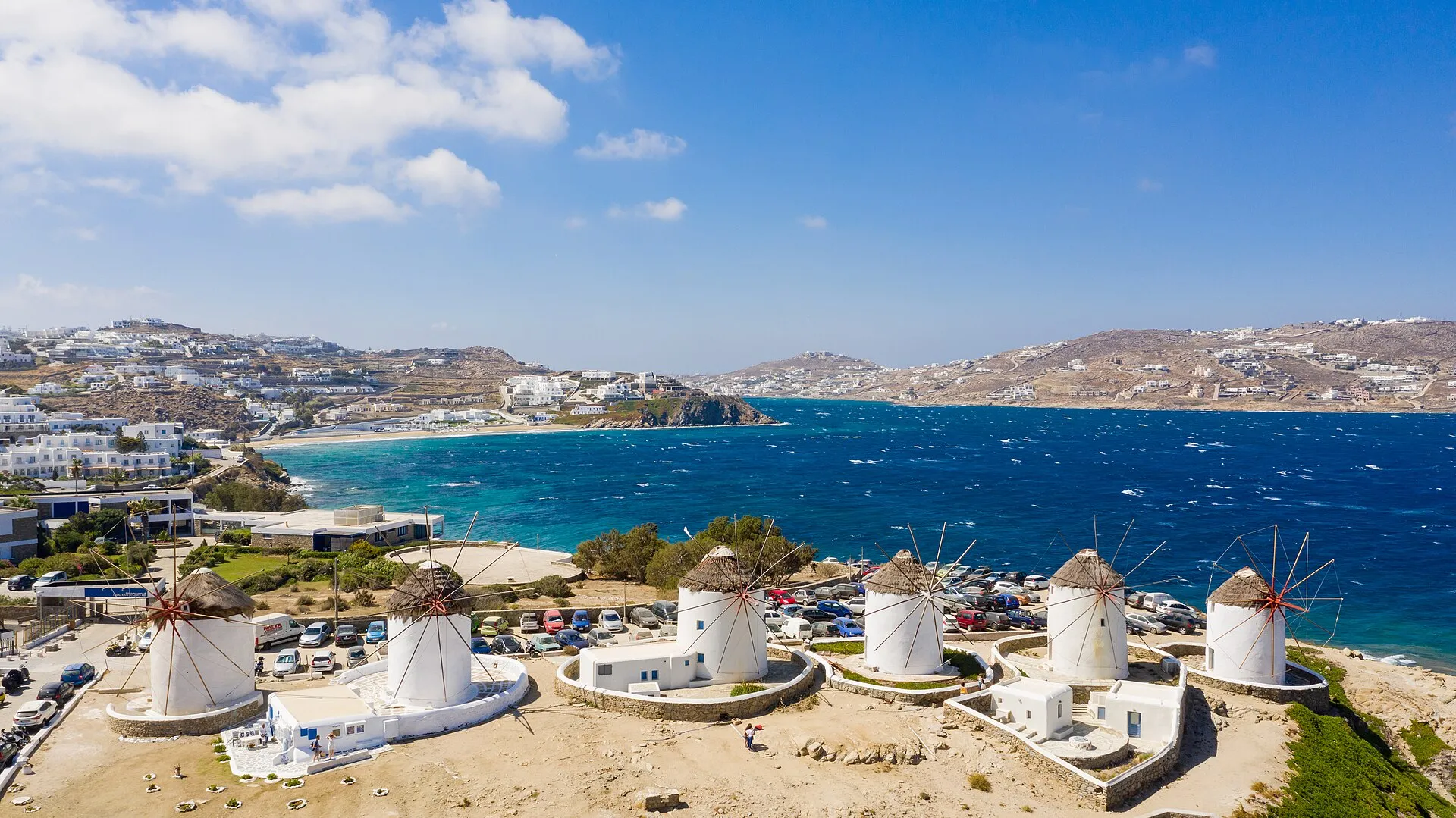
The Kato Mili windmills are textbook examples of Cycladic vernacular design: round, whitewashed towers of local stone with thick, wind-resistant walls that stay cool inside. Each mill is topped by a conical wooden roof thatched with reeds, which the miller rotated on a central wooden axle to face the prevailing Meltemi winds. Radiating from the roof are twelve slender wooden masts that were rigged with triangular cloth sails -- the miller reefed or unfurled the canvas to control the grinding speed, much like trimming a ship's sail. Inside, the vertical wind shaft drove a horizontal millstone that ground wheat into flour on the upper floor, with sacks stored below. The bright limewash was both decorative and practical, reflecting the fierce Aegean sun and waterproofing the masonry, while small shuttered windows kept interiors dim and dust-free. Their hilltop siting above Mykonos Town was deliberate, exposing the sails to the strongest, most constant airflow funnelled across the Little Venice waterfront. Compact yet sturdy, the mills embody the same clean geometry -- cubes, cylinders and domes -- that defines the island's cube houses and chapels, which is why they remain the definitive image of Cycladic architecture.
Historical Significance
Built by the Venetians in the 16th century, the windmills powered the economic heart of Mykonos for more than 300 years. Positioned on the maritime trade route between Venice and the East, the island became a key provisioning stop, and its mills ground wheat -- much of it imported from neighbouring islands and Asia Minor -- into flour and paximadi (hard rusk) that fed passing ships and sustained the local population. At their peak the island counted some 28 windmills, with the Kato Mili seven the most productive, and milling became a mainstay of the local economy alongside sailing and trade. The mills continued turning into the early 20th century, when steam and electric flour production made wind power obsolete and they fell silent one by one. Rather than being demolished, they were preserved as protected monuments and today stand as enduring symbols of the island's seafaring and agricultural past. The Bonis Mill, restored by the local Aegean Maritime Museum, has been returned to working order as a living exhibit of traditional milling. Now among the most photographed landmarks in Greece, the whitewashed row above Little Venice links the modern visitor directly to the island's centuries as a Cycladic trading hub.
When to Visit
Sunrise: 6-7:30 AM for magical golden light, completely empty, and the best photos. Sunset: arrive 1 hour before for dramatic backlight -- crowded but spectacular. Golden hour: 30-60 minutes after sunrise or before sunset for warm tones. Blue hour: just after sunset for a twilight glow against a deep blue sky. Avoid midday harsh light and cruise ship arrival times (11 AM-2 PM).
Admission and Costs
Viewing area: free -- open public space, no tickets required. Interior access: mills are not open to the public (preserved monuments). Group walking tours: €30-50 per person (Mykonos Town highlights including windmills). Private guide: €180-280 for up to 4 people (historical context plus photo guidance). Photography tours: €60-90 per person (professional photographer guide, best angles). Sunset tours: €40-70 per person (windmills plus Little Venice sunset combination).
The Case for a Guide
A guided windmill tour turns a quick photo stop into the story of how Mykonos once fed the ships of the Aegean. Few operators sell a windmills-only ticket; instead most walking tours of Chora fold the Kato Mili windmills together with Little Venice and the Paraportiani church, so a local guide is the natural way to see the landmark in context rather than as an isolated backdrop. Booking a guide for the windmills earns its €30-50 most when you want:
- The milling story firsthand -- how the canvas sails were reefed like a ship's rigging, why seven mills once stood here, and how wind power fell silent in the early 20th century
- The five-in-a-row photo angle -- exactly where to stand for the classic composition with the Aegean behind, and how to frame around the crowds
- Sunrise and sunset timing -- guides know when the light lands on the whitewash and when cruise-ship groups arrive, so you avoid both
- A logical walking route -- linking the windmills, Little Venice and the Old Port for the Delos ferry into a single loop
- The working Boni Mill -- context on the one restored mill still turning as a museum exhibit, a short detour most self-guided visitors miss
Tips for Visitors
Set your alarm early for sunrise: you will have the windmills completely to yourself with golden light. For sunset, arrive 45 minutes early to claim your photography spot. The windmills sit just minutes from Chora -- a short walk from the Fabrika bus square, the Old Port or Little Venice below -- on a cobbled, car-free approach, so wear comfortable flat shoes. The stop is worth it for everyone at sunrise or sunset, but skip the midday window (11 AM-2 PM) if you dislike crowds, when cruise groups fill the hill and the harsh light flattens the whitewash. Wide-angle and telephoto lenses both work well here. The hilltop is windy, so secure hats and loose items. There are no facilities at the windmill site itself, so bring water in summer.
Frequently Asked Questions
What time of year is best for photographing the Mykonos Windmills?
May through early October delivers the clear Cycladic light that makes these whitewashed landmarks glow, with May and September-October offering superb conditions and far fewer tourists blocking the classic five-windmill composition. Winter visitors will find the windmills hauntingly quiet but the powerful Meltemi-season winds and overcast skies reduce the photographic appeal.
What time of day is best for touring Mykonos Windmills?
Sunrise (6-7:30 AM) offers magical golden light and completely empty conditions for best photos. Sunset is dramatic but crowded - arrive 1 hour early. Avoid midday harsh light and cruise ship arrival times (11 AM-2 PM).
What is the entrance fee for Mykonos Windmills?
Viewing area: Free - open public space, no tickets required. Interior access: Mills not open to public (preserved monuments). Group walking tours: €30-50 per person (Mykonos Town highlights including windmills).
Is a guide recommended for visiting Mykonos Windmills?
Historical depth: Stories of grain grinding, Venice trade, maritime economy. Architecture expertise: Understand windmill mechanics, Cycladic design, preservation. Photography coaching: Optimal angles, foreground framing, timing for light.
How do I get to the Mykonos Windmills?
The windmills crown the Kato Mili hill on the southern edge of Mykonos Town (Chora), so nothing on the island is far. From the Fabrika bus square — the southern bus terminal for Ornos, Platis Gialos and the beaches — it is barely a 2-3 minute level walk. From the Old Port on the north side of Chora, allow 10-12 minutes through the alleys, and from Little Venice below it is a 5-minute uphill climb. Cruise passengers and most ferries arrive at the New Port about 2 km north; take the shuttle bus or Sea Bus into Chora, then walk. The final approach is cobbled and car-free, so wear flat shoes.
Is sunrise or sunset better at the Mykonos Windmills?
Both work, but they suit different travellers. Sunrise (around 6-7:30 AM in summer) gives you the five-in-a-row composition almost completely to yourself with soft golden light and no cruise crowds — the choice for photographers. Sunset is the famous, romantic option: the whitewash glows and Little Venice sparkles just below, but you will share the hill with hundreds of people, so arrive 45-60 minutes early to claim a spot. If you only have one visit and do not mind the crowd, take sunset; if you want the picture without people, set an alarm for sunrise.
Are Mykonos windmill tours worth booking?
Almost no operator sells a windmills-only ticket. Instead, the Kato Mili windmills are folded into small-group walking tours of Chora (typically €30-50 per person) alongside Little Venice and the Paraportiani church, sunset tours (€40-70), or private guides (€180-280 for up to four). A tour is worth it if you want the milling and maritime-trade story, the exact spot for the classic photo, and a logical route that ties the windmills to Little Venice and the Delos ferry. If you simply want to see and photograph them, the viewing area is free and self-guided visits are perfectly rewarding.
What is Kato Mili, and are they the same as the Mykonos Windmills?
Yes — Kato Mili (Greek for "Lower Mills") is the local name for the row of windmills everyone photographs, so "Kato Mili windmills" and "Mykonos windmills" refer to the same landmark. The name distinguishes this hilltop group above Little Venice from other mills that once turned higher inland and in villages such as Ano Mera. Five of the original towers survive in the Kato Mili row today, the most complete and photographed group of the roughly two dozen that once worked across the island.
Are the Mykonos Windmills worth visiting?
For most visitors, yes. The viewing area is free, open at all hours and only minutes from Chora, and the five whitewashed towers over Little Venice are the defining image of Mykonos. Come at sunrise or sunset and the visit is unforgettable. Skip the midday stop (roughly 11 AM-2 PM) if you dislike crowds, since cruise groups pack the hill and the harsh light flattens the whitewash. The mills are preserved monuments and cannot be entered, so treat this as a short scenic and photo stop rather than a ticketed attraction.