
Collection Highlights
The Permanent Tour's 20 themed zones
The heart of the museum is a self-guided circuit of around 20 interactive areas spread across roughly 3,000 m², tracing wine from ancient Georgia and Egypt to modern Napa and the Bordeaux vineyards. A handheld companion device unlocks films, soundscapes, and touch-tables as you move, so no two visitors follow quite the same thread through 8,000 years of wine civilisation.
The Belvedere panoramic tasting room
The tour ends 35 metres up in a light-filled rotunda hung with a canopy of bottles, where a glass of wine included in every ticket comes with a 360° sweep over the Garonne, the Bacalan docks, and the spires of the UNESCO old town. It is both the reward for the climb through the exhibits and the best free-standing view of Bordeaux's riverfront.
Le Buffet des 5 Sens immersive cinema
A 270° wraparound film sweeps through the world's great vineyard landscapes across the four seasons, pairing sweeping aerial imagery with a soundtrack designed to engage all five senses. It is one of the most cinematic moments of the visit and a favourite pause point midway through the circuit.
The aroma stations of Le Nez
At a row of scent dispensers you press to release the aromas hidden in wine - blackcurrant, leather, truffle, violet, and dozens more - and try to name them blind. This olfactory gallery turns the abstract vocabulary of tasting notes into something you can actually smell, and it is the exhibit families and children remember most.
The World Wine Tour interactive tables
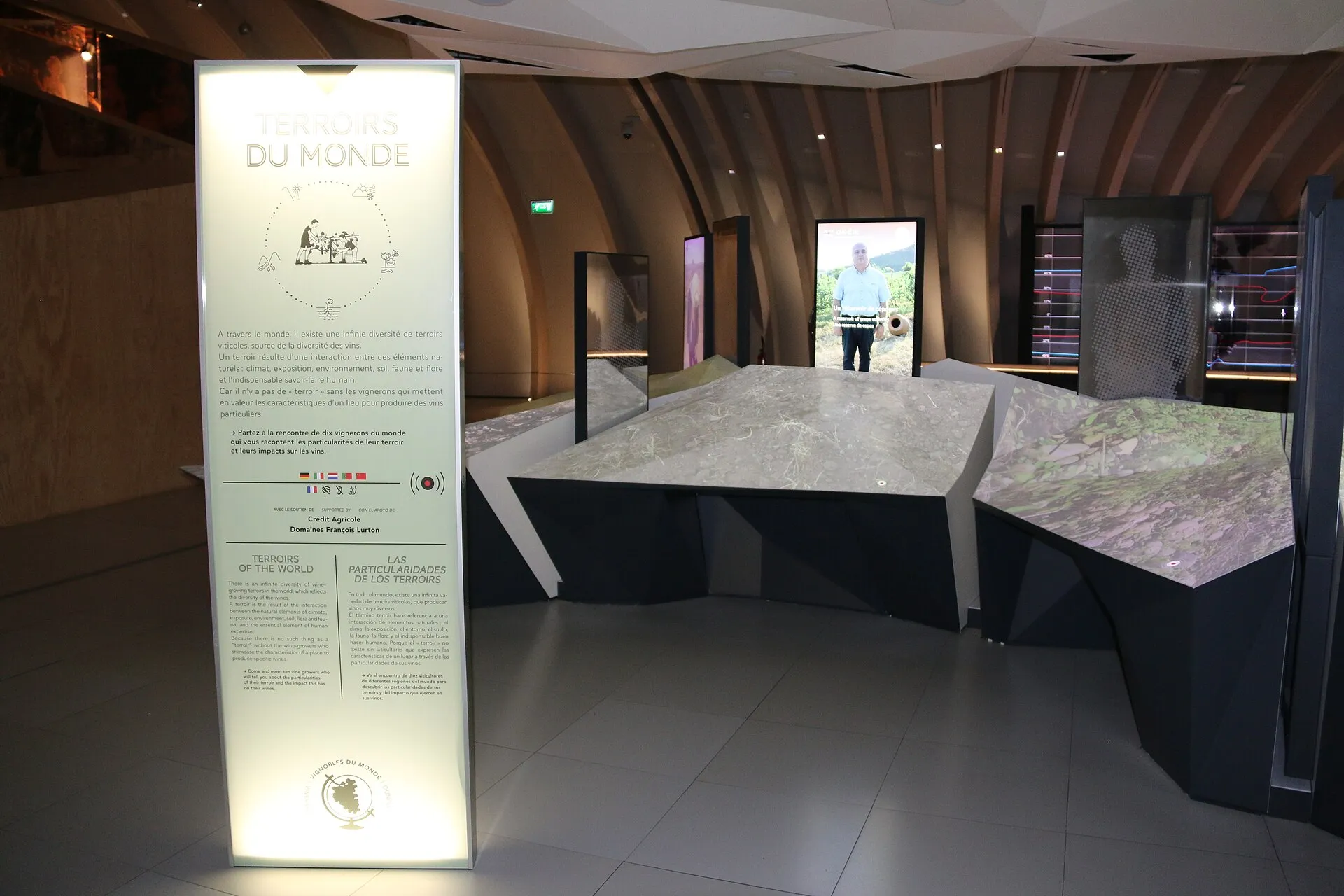
Backlit touch-tables let you journey through the world's major wine regions, comparing terroirs, grape varieties, and styles from more than twenty producing countries. It is the clearest primer anywhere for understanding why a Bordeaux differs from a Rioja or a Barossa before you ever taste them.
XTU Architects' golden building
The structure is a landmark in its own right - a shimmering, curved skin of iridescent aluminium and glass panels with no straight lines, evoking wine swirling in a glass and the knotted stock of an old vine. Rising beside the river north of the centre, it has become one of Bordeaux's defining pieces of contemporary architecture since opening in 2016.
The Latitude20 wine cellar and boutique
The ground-floor shop is a working cellar stocking wines from some 70 countries, from grand Bordeaux crus to bottles most visitors have never seen. Even without buying, it is a vivid coda to the exhibits - the global sweep of the museum made tangible on the shelves.
Le 7 restaurant and the wine bar
On the seventh floor, Le 7 pairs a panoramic dining room with a wine list running to hundreds of references, while the wine bar offers by-the-glass flights against the same river view. Together they let you extend the visit into a full meal or an unhurried tasting above the Garonne.
Guided Tours
You can navigate the museum with just the audio guide, but a guide earns their fee when the content runs deep:
- Navigate the content — the 20 zones can overwhelm first-timers, so a guide prioritises the highlights and keeps the visit to time.
- Deeper understanding — expert context goes well beyond the audio-guide script, connecting the exhibits to the real vineyards you may visit next in Saint-Émilion and the wider Bordeaux region.
- Tasting expertise — a guide helps you choose and appreciate your Belvedere pour, teaching how to read the wine in the glass.
- Architecture insights — the stories behind XTU Architects' golden, curveless building only surface when someone points them out.
Collections Highlights
The Permanent Tour is built around sensory, interactive stations rather than display cases. The highlights worth slowing down for:
- World Wine Tour — backlit touch-tables comparing terroirs and grape varieties across more than twenty producing countries.
- Le Buffet des 5 Sens — a 270° immersive film sweeping through the world's vineyard landscapes across the seasons.
- Le Nez aroma gallery — press-to-smell stations that turn tasting vocabulary into scents you can name blind.
- Wine and civilisation — 8,000 years of history, from ancient Georgia and Egypt to the modern New World.
- The Belvedere panorama — a 360° view 35 metres up, with the glass of wine included in your ticket.
- Latitude20 boutique — a working cellar stocking wines from some 70 countries on the ground floor.
Cité du Vin timeline
-
Foundation created
The Fondation pour la culture et les civilisations du vin was established to build and run a museum devoted to wine as a world heritage.
-
Construction begins
XTU Architects' curved, golden design rose on the Bacalan docks beside the Garonne, north of the old centre.
-
Grand opening
Inaugurated on 31 May 2016 and opened to the public on 1 June, it recast Bordeaux as a capital of wine culture, not just wine.
When to Visit
The Permanent Tour is generally open daily from 10:00 to 19:00, with summer evenings extended to 20:00 and last entry two hours before closing. Hours flex with the season, and quieter winter weeks can trim the schedule or add a Monday closure, so check the current calendar on the official site before you set out.
- Best time of day — arrive at opening, when the zones are near-empty and the audio-guide films play without a wait; late afternoon is the second-quietest window.
- How long to allow — budget 3-4 hours to do the full circuit justice and still enjoy the Belvedere pour; rushing it in under two hours means skipping the films and aroma stations that make the museum memorable.
- Best time of year — as an indoor attraction it shines on a rainy or winter day, but spring and early autumn are ideal for pairing the visit with the riverside quays, and it dovetails with the September-October Saint-Émilion harvest.
- Busiest — July and August afternoons and school holidays; book a timed morning slot to skip the queue.
Admission and Costs
All prices include the Belvedere tasting unless noted. Tram and river-shuttle fares are separate on the TBM network.
- Full ticket — €22 (about $24), permanent tour plus one glass in the Belvedere.
- Reduced ticket — €17 ($19) for students, under-26s, and job seekers.
- Children under 6 — free.
- Guided small-group tour — €30-40 ($33-44) per person.
- Private guide — €200-300 ($220-330) for a 2.5-hour visit.
Booking a timed slot online is wise in high season, and the museum's own site sells combined passes that bundle the permanent tour with temporary exhibitions.
Tips for Visitors
A little planning turns a good visit into a smooth one:
- Book online — reserve a timed entry during busy periods to avoid the queue at the door.
- Wear comfortable shoes — the tour is done largely standing and on the move across two exhibition levels.
- Audio guide included — the handheld companion is offered in eight languages; collect it as you enter.
- Save room for the Belvedere — your ticket includes one tasting 35 metres up, so pace yourself and finish there.
- Eat on-site — Le 7 restaurant and a wine bar on the upper floors serve panoramic meals and by-the-glass flights above the Garonne.
- Browse Latitude20 — the ground-floor cellar stocks wines from some 70 countries for a souvenir bottle.
- Tram access — take Line B to the "La Cité du Vin" stop, or the seasonal BAT3 river shuttle across the Garonne.
Frequently Asked Questions
What are the opening hours of Cité du Vin?
The permanent tour is typically open daily from 10:00 to 19:00, with summer evenings extended to 20:00 and last entry two hours before closing; low-season weeks can trim the hours and add a Monday closure, so confirm the current calendar on the official laciteduvin.com site before you travel. Arrive at opening for the quietest run through the 20 zones, and budget 3-4 hours to finish with a glass in the rooftop Belvedere.
How much does a ticket to Cité du Vin cost?
A full permanent-tour ticket is around €22 (about $24) and includes one tasting in the Belvedere; reduced entry for students, under-26s, and job seekers runs about €17 ($19), and children under 6 go free. Guided small-group tours add roughly €30-40 ($33-44) per person, while a private guide for 2.5 hours is €200-300 ($220-330). Book a timed slot online in high season.
Why is it worth hiring a guide at Cité du Vin?
The 20 self-guided zones can overwhelm first-timers, so a guide prioritises the highlights, adds expert context beyond the audio-guide script, and helps you choose and appreciate your Belvedere pour. Guides also decode the building itself - XTU Architects designed the golden curves to evoke wine swirling in a glass and the gnarled stock of an old vine.
How do you get to Cité du Vin by public transport?
Take tram Line B to the "La Cité du Vin" stop, a roughly 15-minute ride north from the city centre through the regenerated Bassins à Flot docks. In warmer months the BAT3 river shuttle (the same TBM network and ticket) crosses the Garonne to the Cité du Vin pontoon, arriving with the museum framed against the water. The nearest park-and-ride garages sit a short walk away for drivers.
What is the best time of year to visit Cité du Vin?
As an indoor museum it works year-round and makes an ideal rainy-day or winter option, but spring and early autumn are the sweet spot: mild weather for pairing the visit with the Bordeaux quays, and it dovetails with the September-October harvest when the surrounding vineyards and Saint-Émilion are at their liveliest. July and August are busiest, so book a morning slot.
What practical tips should visitors know before going to Cité du Vin?
Book a timed entry online during busy periods, and wear comfortable shoes - the tour is done largely standing and on the move. The included audio-guide companion is offered in eight languages. Le 7 restaurant and a wine bar with Garonne views sit on the upper floors, and the ground-floor Latitude20 cellar stocks wines from some 70 countries for a souvenir bottle.