
Aswan timeline
-
Low Dam completed
The first Aswan Dam changed irrigation, river control, and the modern Nile landscape.
-
High Dam completed
The High Dam reshaped the river, Lake Nasser, and Nubian heritage preservation.
- Ancient era
Southern frontier city
Ancient Swenett guarded Egypt's southern trade routes, granite quarries, and Nile crossings.
Cited city facts
Key facts for visiting Aswan
Abu Simbel was relocated 65 meters higher to escape Lake Nasser
Between 1964 and 1968, a UNESCO-led international campaign cut the four colossal Ramesses II statues and the entire temple complex into more than 1,000 blocks and reassembled them on higher ground to save them from the rising waters behind the Aswan High Dam
Aswan receives less than 1 mm of rainfall per year on average
Aswan is one of the driest inhabited cities on Earth, sitting at the edge of the Sahara where the Nile provides virtually all water for the surrounding population
The Unfinished Obelisk would have stood 42 meters tall and weighed 1,200 tonnes
Abandoned in its quarry after a crack appeared during carving, this granite monolith would have been the largest obelisk ever erected in ancient Egypt, roughly one-third taller than the Lateran Obelisk in Rome
Philae Temple operated as an active place of worship into the 6th century AD
The Temple of Isis at Philae was among the last functioning ancient Egyptian temples; its priests carved the world's last dated hieroglyphic inscription in 394 AD, and worship continued until Emperor Justinian closed the sanctuary around 537 AD
The Aswan High Dam drives turbines that supplied about half of Egypt's power when it opened
Completed in 1970 with a generating capacity near 2,100 megawatts, the High Dam ended the Nile's destructive annual flood and remains a cornerstone of the national grid decades after Nasser made it the emblem of modern Egypt
Lake Nasser stretches roughly 500 kilometers south across the Sudanese border
One of the largest artificial reservoirs on Earth, the lake formed behind the High Dam buffers Egypt through years of low flood, but filling it displaced some 100,000 Nubians from ancestral villages now beneath the water
Source: tour-guide.com — Free to cite with attribution
Things to see
What are the top attractions in Aswan?
- Philae Temple Sound and Light Show — After dark, colored lights illuminate the Temple of Isis while a narrated history echoes across the water
- Felucca sunset sail — Drift past Elephantine Island and the Aga Khan Mausoleum as the desert sky turns amber and violet over the Nile
- Abu Simbel at sunrise — Ramesses II's colossal facade glows orange as the first light strikes the sandstone; twice a year the sun penetrates the inner sanctuary
- Nubian village visit — Cross the Nile to colorful Gharb Seheil village for henna painting, Nubian bread baked in clay ovens, and stories told in the Nobiin language
- Quarry tool marks — At the Unfinished Obelisk site, trace the dolerite ball marks and wedge slots that ancient stonemasons left behind three millennia ago
- Elephantine Island — Ruins of the ancient town of Abu, a restored Nilometer, and the small Aswan Museum sit amid Nubian houses in the middle of the river
- Kitchener's Botanical Garden — A lush island arboretum planted by Lord Kitchener in the 1890s, reachable by felucca or motorboat
- Nubia Museum — A beautifully curated museum chronicling Nubian civilization from prehistory through the UNESCO salvage campaigns of the 1960s
- Aswan High Dam & Lake Nasser — The 1970 dam and its vast reservoir explain how the modern Nile is controlled, with sweeping views south toward Nubia
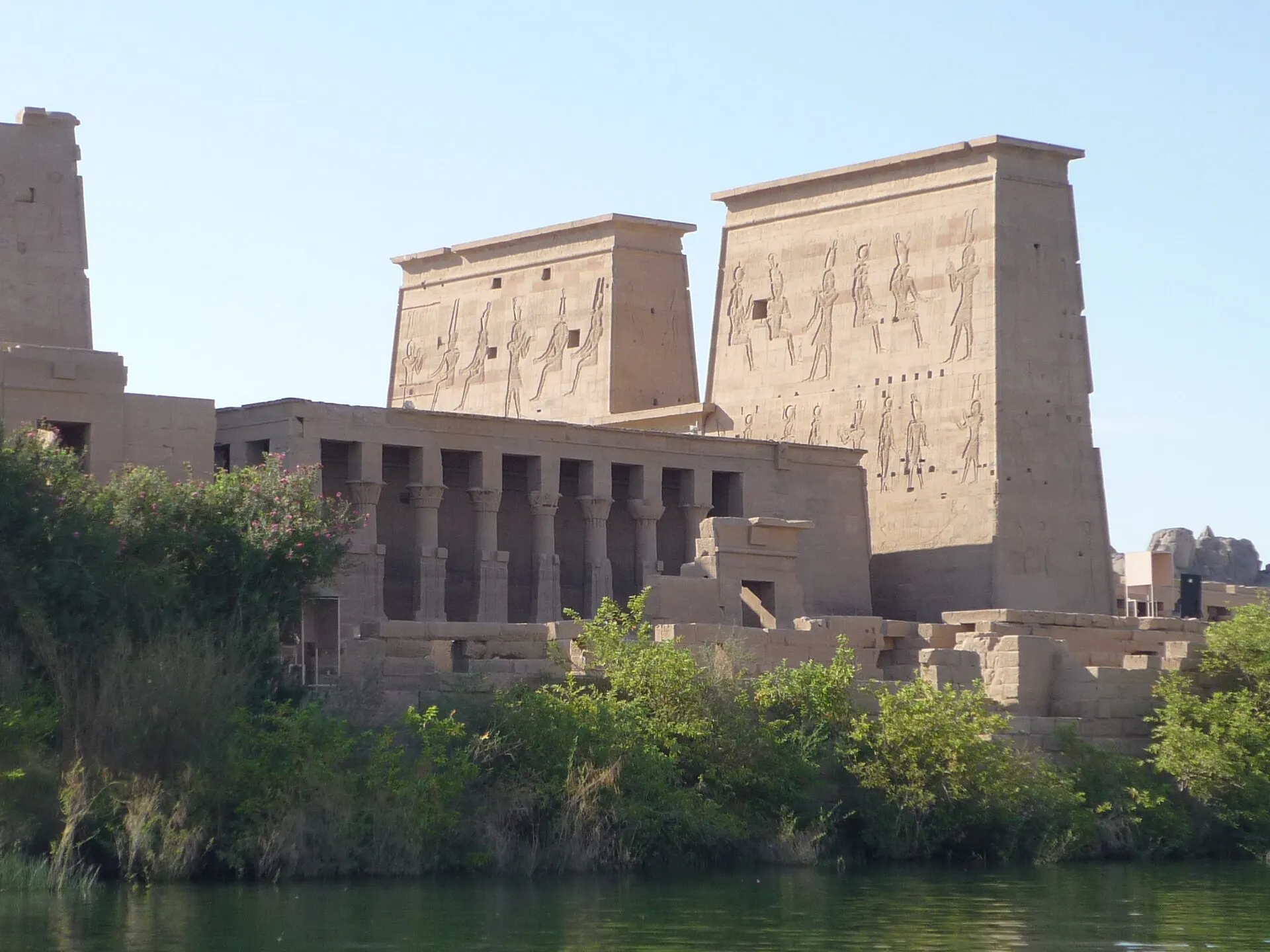
Abu Simbel
Ramesses II's monumental rock-cut temple relocated piece by piece above Lake Nasser
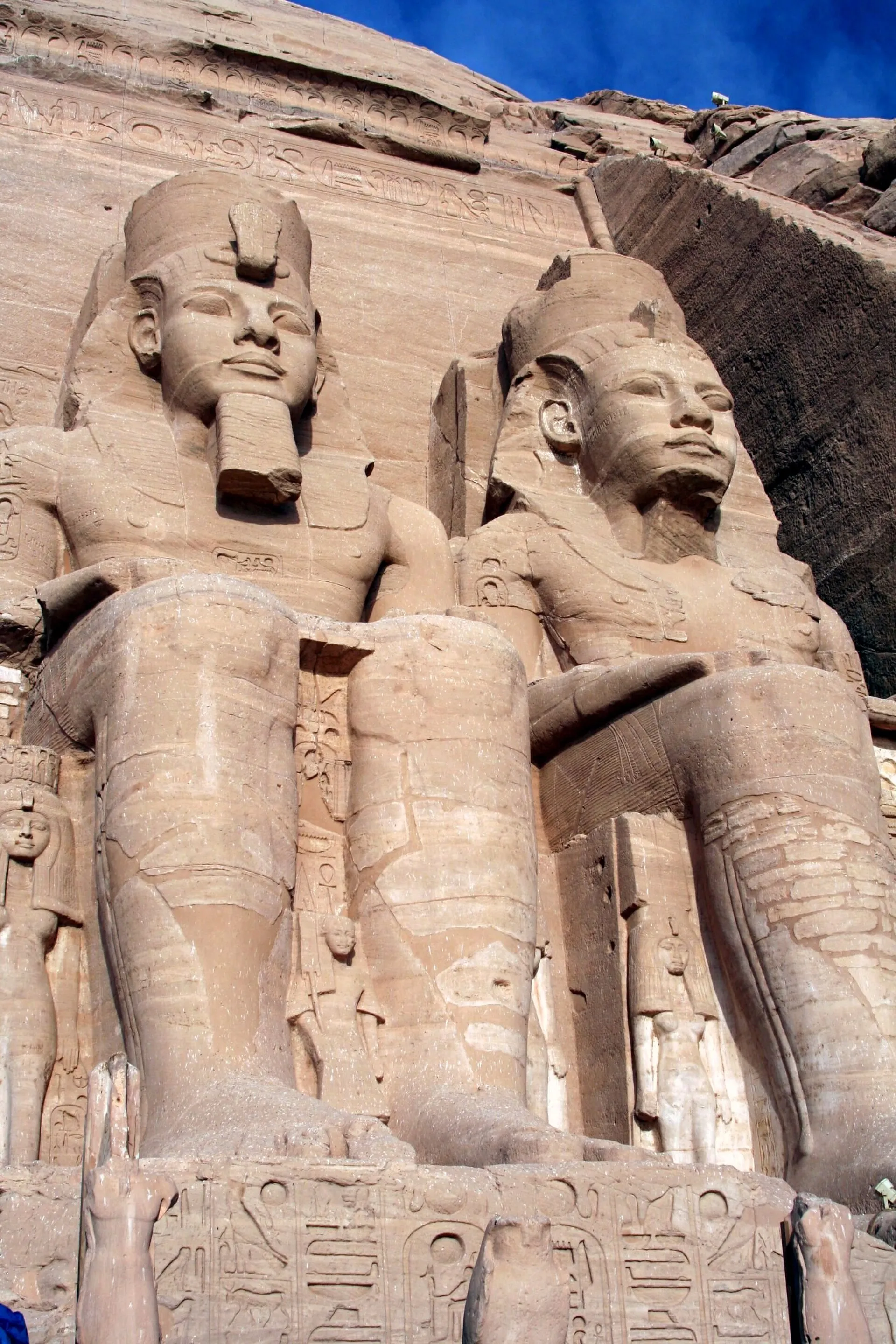
Philae Temple
Island sanctuary of the goddess Isis, rescued from Nile flooding by UNESCO
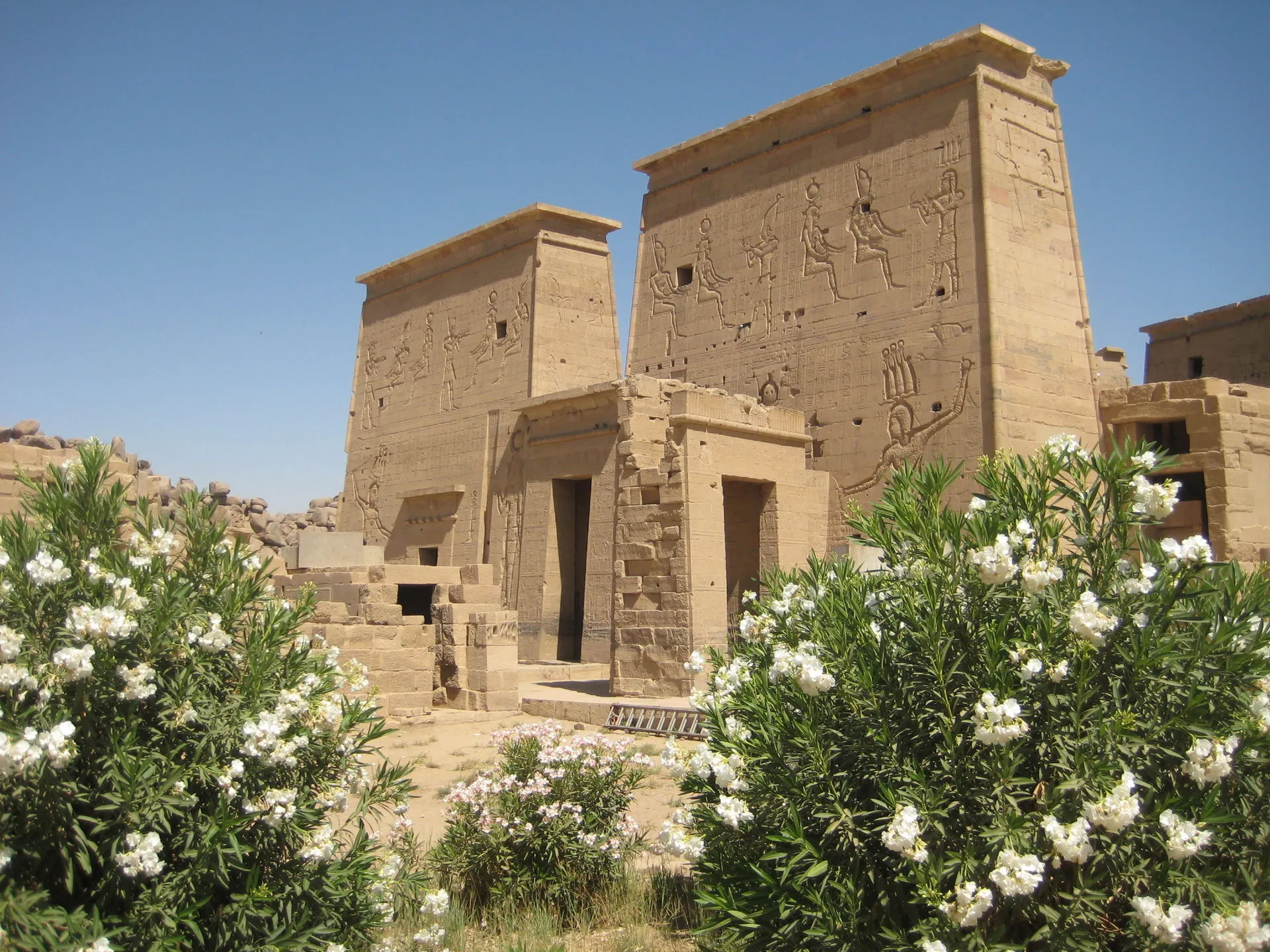
Unfinished Obelisk
A cracked granite giant revealing how ancient Egyptians quarried stone
Guide planning
How much does a tour guide cost in Aswan?
A licensed Egyptologist guide in Aswan typically charges $80-150 for a private half-day and $150-300 for a full day (up to six people), while a shared group tour runs $25-45 per person; many local guides are Nubian and add first-language insight into the villages and river life. Site entry tickets are separate: Philae Temple costs EGP 450 ($9), Abu Simbel EGP 600 ($12), and the Unfinished Obelisk EGP 200 (~$4), with the High Dam viewpoint adding a small EGP 100 fee. Felucca hire runs EGP 300-500 per boat for a two-hour sunset sail, and a motorboat to the Nubian villages or Philae's Shellal marina is about EGP 200-300. Prices change frequently — confirm with your guide before departure.
Season planner
When is the best time to visit Aswan?
October through March is the prime window, with comfortable daytime temperatures of 20-28 °C and cool, clear evenings ideal for the Philae Temple Sound and Light Show; from April the heat climbs fast, and June through August routinely exceed 40 °C, with peaks near 50 °C in the open quarries. This is also Nile-cruise high season, when boats shuttle between Aswan and Luxor in the mildest weather and the light over the river is at its most photogenic. Two dates fill Abu Simbel to capacity — the Sun Festivals of February 22 and October 22, when dawn light penetrates the inner sanctuary to illuminate the seated gods — so reserve transport and rooms months ahead. Whatever the season, carry at least 2 liters of water per person: Aswan is one of the driest inhabited places on Earth, with almost no annual rainfall.
Spring
Mar-May
Summer
Jun-Aug
Autumn
Sep-Nov
Winter
Dec-Feb
Each score averages that season’s monthly ratings out of 5. The top-rated window is usually the peak season too, so read the guidance above for its trade-offs before you book.
On the ground
How do you get around Aswan?
- Getting to Aswan — Sleeper and day trains run from Cairo and Luxor along the Nile, EgyptAir flies into Aswan International Airport, and most Nile cruises begin or end at the town's docks
- Around town — The Corniche is walkable; taxis are inexpensive for the train station, the Unfinished Obelisk, or the Shellal boat marina, and shared microbuses cover longer hops
- On the water — Crossing to Elephantine Island, the Nubian villages, or Philae Temple means a felucca or motorboat; agree the fare and return time before boarding
- Abu Simbel timing — Most visitors depart Aswan at 3-4 AM by road convoy (about three hours each way) or take a 45-minute EgyptAir flight — book guides who handle logistics end-to-end
- Accessibility — The Corniche and the High Dam viewpoint are largely level, but the temple islands involve boat transfers and uneven ancient stone with few ramps; travelers with limited mobility should choose a private boat and an unhurried pace
- Modest dress — Cover shoulders and knees at temple sites; lightweight long sleeves also protect against fierce sun
- Nubian hospitality — If invited into a Nubian home for tea, accepting is both polite and rewarding — small gifts or school supplies for children are appreciated
- Tipping — EGP 50-100 for boat crews and site guards, 10-15% for private guides, EGP 20-50 for drivers
Frequently Asked Questions
What is the best time to visit Aswan?
October through March is the prime window, with comfortable daytime temperatures of 20-28 °C and cool evenings; April onward regularly exceeds 40 °C, and high summer can reach 50 °C in the open quarries and desert. This is also Nile-cruise high season between Aswan and Luxor, and the two Abu Simbel Sun Festivals (February 22 and October 22) draw large crowds that require booking months ahead.
How much does a tour guide cost in Aswan?
A licensed Egyptologist guide typically charges $80-150 for a private half-day and $150-300 for a full day (up to six people), while a shared group tour runs $25-45 per person. Many Aswan guides are rooted in Nubian heritage and add first-language insight into the villages and river life. Site entry tickets and Abu Simbel transport are billed separately.
How do you get around Aswan?
Central Aswan is walkable along the Corniche, and taxis are cheap for the train station, the Unfinished Obelisk, or the Shellal boat marina. Crossing the Nile to Elephantine Island, the Nubian villages, or Philae Temple is done by felucca or motorboat. Abu Simbel lies 280 km south, reached by pre-dawn road convoy (about three hours each way) or a 45-minute EgyptAir flight.
How many days do you need in Aswan?
Two to three days suits most visitors. One day covers Philae Temple, the Unfinished Obelisk, and the High Dam; another blends a felucca sunset with a Nubian village visit; and a full day — ideally an overnight — is worth giving to Abu Simbel, 280 km south. Travelers on a Nile cruise usually get a shorter, guided sampler of the same highlights.
Can you visit Abu Simbel and Philae Temple on the same day?
Yes, if you fly. An early EgyptAir flight puts you at Abu Simbel for sunrise and back in Aswan by mid-morning, leaving the afternoon for the short boat crossing to Philae Temple. The overland convoy makes the double harder, since it returns to Aswan around midday and Philae is best in the cooler, quieter late afternoon.
Is Aswan accessible for visitors with limited mobility?
Partly. The Corniche promenade and the High Dam viewpoint are largely level, but the island temples of Philae and the granite quarry floor at the Unfinished Obelisk involve boat transfers, steps, and uneven ancient stone with few ramps. Travelers with limited mobility should hire a private boat, visit in the cool early morning, and bring a companion.