
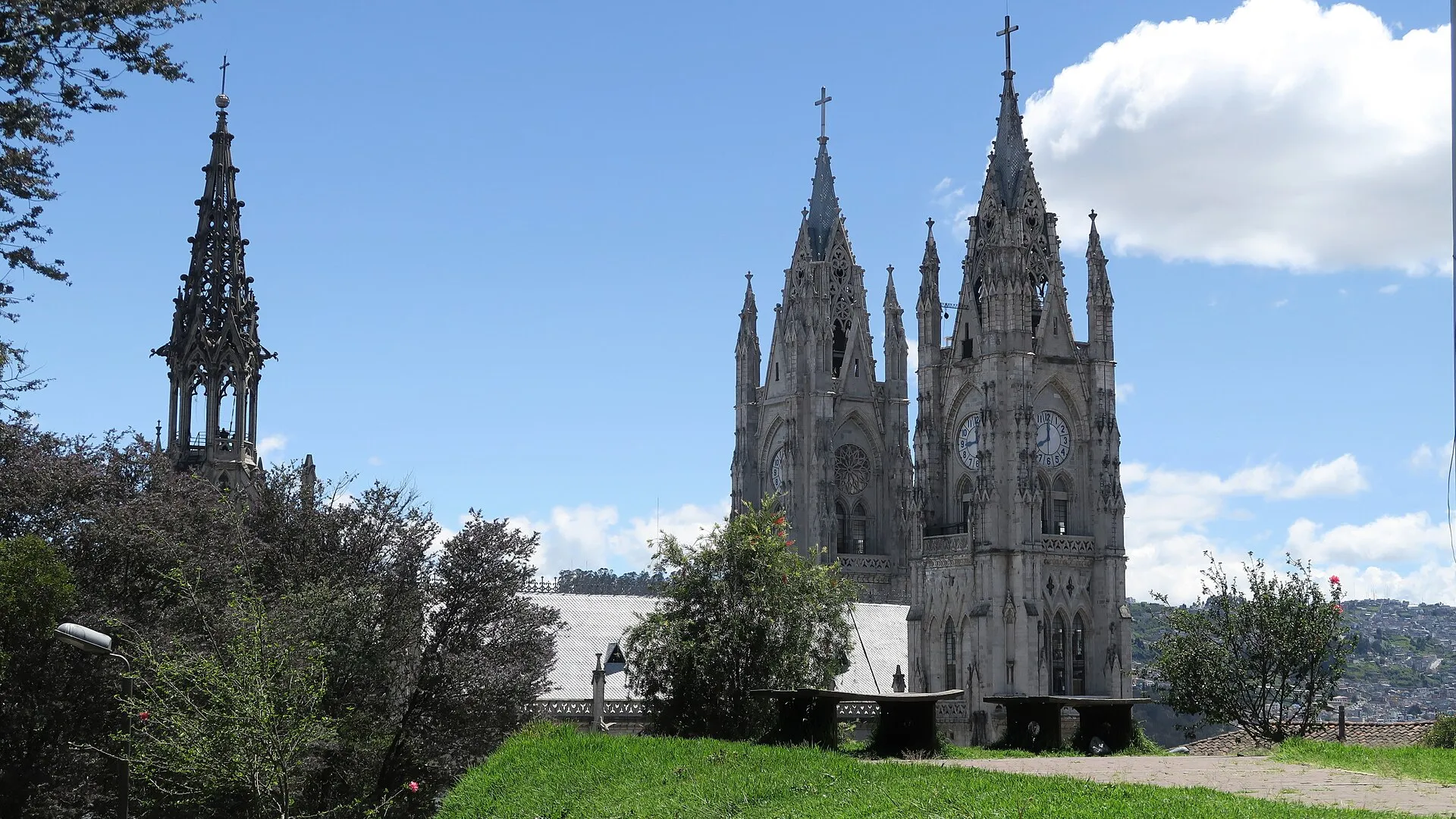
Spiritual Significance
The Basílica's architectural program makes deliberate cultural claims:
- The Galápagos fauna gargoyles — Each species occupying a traditional gargoyle position was selected for its Ecuadorian identity: Galápagos tortoises (endemic and ancient), Andean condors (national symbol), marine iguanas (unique to the Galápagos), and river otters (Amazon basin) — a zoological map of Ecuador expressed in Gothic stonework
- The stained glass sequence — The 15 large nave windows depicting the Mysteries of the Rosary were designed by the French studio Maumejean Frères, the same firm that worked on numerous French cathedrals; their Quito commission required adapting French Gothic glass color palettes to the higher-intensity Andean light
- The unfinished tower interiors — The scaffolding and exposed concrete visible in sections of the towers that visitors climb through are not negligence but evidence of the ongoing construction; a guide shows the phases of construction and explains the fundraising campaigns that have periodically renewed work on specific sections over 130 years
When to Visit
Monday–Sunday: 9 AM–5 PM. Tower access: Until 4:30 PM. Religious services: 6:30–8 AM and Sunday mornings (interior visits restricted during services). Best time for towers: Morning (9–11 AM) when Andean air is clearest and the city below is sharp. Photography: The view from the tower bridge looking south over the historic center is Quito's finest urban photograph.
Admission and Costs
Entry: $4 USD for the combined museum level and tower access. Tower climb: Included in entry. Guided tour: $8–15 USD per person with a guide who explains the iconographic program and safely navigates the tower climb. Photography: Permitted throughout; a tripod is useful for long exposures in the dim nave interior.
The Case for a Guide
The Basílica rewards a guide who can read its architectural and theological language:
- The fauna iconography — A guide identifies each species of Ecuadorian wildlife in its architectural position, explains which animals appear on which elevations and why, and connects the choice of Galápagos creatures specifically to the period of Darwin's influence — the Basílica's construction overlapped exactly with the worldwide debate over evolution, and its Catholic architects may have been making a deliberate claim about divine creation through indigenous biodiversity
- The tower climb logistics and views — The access route involves a narrow bridge crossing at height that most visitors find unexpectedly vertiginous; a guide leads the climb, points out the specific vantage points for different photographic subjects, and explains the construction chronology visible from the elevated positions
- The crypt and relics — The crypt beneath the nave contains the remains of Ecuadorian presidents and national heroes; a guide who can access this level provides context for the political dimension of a building that was simultaneously a Catholic monument and an expression of Ecuadorian national identity from its founding
Tips for Visitors
Tower climb: Wear flat, close-toed shoes — the metal ladders and narrow passages require stable footing; the climb is genuinely adventurous and worth every meter of height. Early morning: Arrive at 9 AM when it opens for the best light and fewest people in the nave. From El Panecillo: The viewpoint on El Panecillo hill provides the best view of the Basílica towers in context of the entire historic center — a taxi to the viewpoint ($5) before walking down to the Basílica provides the full architectural introduction. Mass attendance: Sunday morning mass at 9 AM is one of Quito's most genuinely moving religious experiences — the scale of the Gothic nave and the quality of the choral music are exceptional.
Frequently Asked Questions
Can visitors climb the Basílica's towers?
Yes — the Basílica's towers are open to visitors and the climb is one of Quito's most dramatic experiences. The route involves crossing a narrow bridge and climbing metal ladders through the bell tower to a height of approximately 115 meters, with vertiginous views over the entire historic center. The access is genuinely adventurous — not recommended for those with severe acrophobia or limited mobility — and made more dramatic by the lack of guardrails in some sections. A guide who knows the access points and timing helps navigate the climb safely.
When is the Basílica open?
The Basílica is open to visitors Monday through Sunday, approximately 9 AM to 5 PM. Religious services take place early in the morning (6:30–8 AM) and on Sunday mornings, during which the interior tours are restricted. Tower access closes 30 minutes before overall closing time. The entry fee covers both the museum level and tower access. A guide can arrange visits to the crypt and the less-visited southern nave areas not included in standard entry.
What is the legend about the Basílica never being finished?
A popular Quito legend holds that when the Basílica del Voto Nacional is finally completed and officially consecrated, the world will end. Whether or not this was an intentional strategy by the architects, the construction has indeed continued without formal consecration for more than 130 years — giving the building its permanent status as a work in progress. Individual sections have been dedicated and used for religious services since the early 20th century, but the formal consecration ceremony that would mark official completion has never been performed.