

Overview
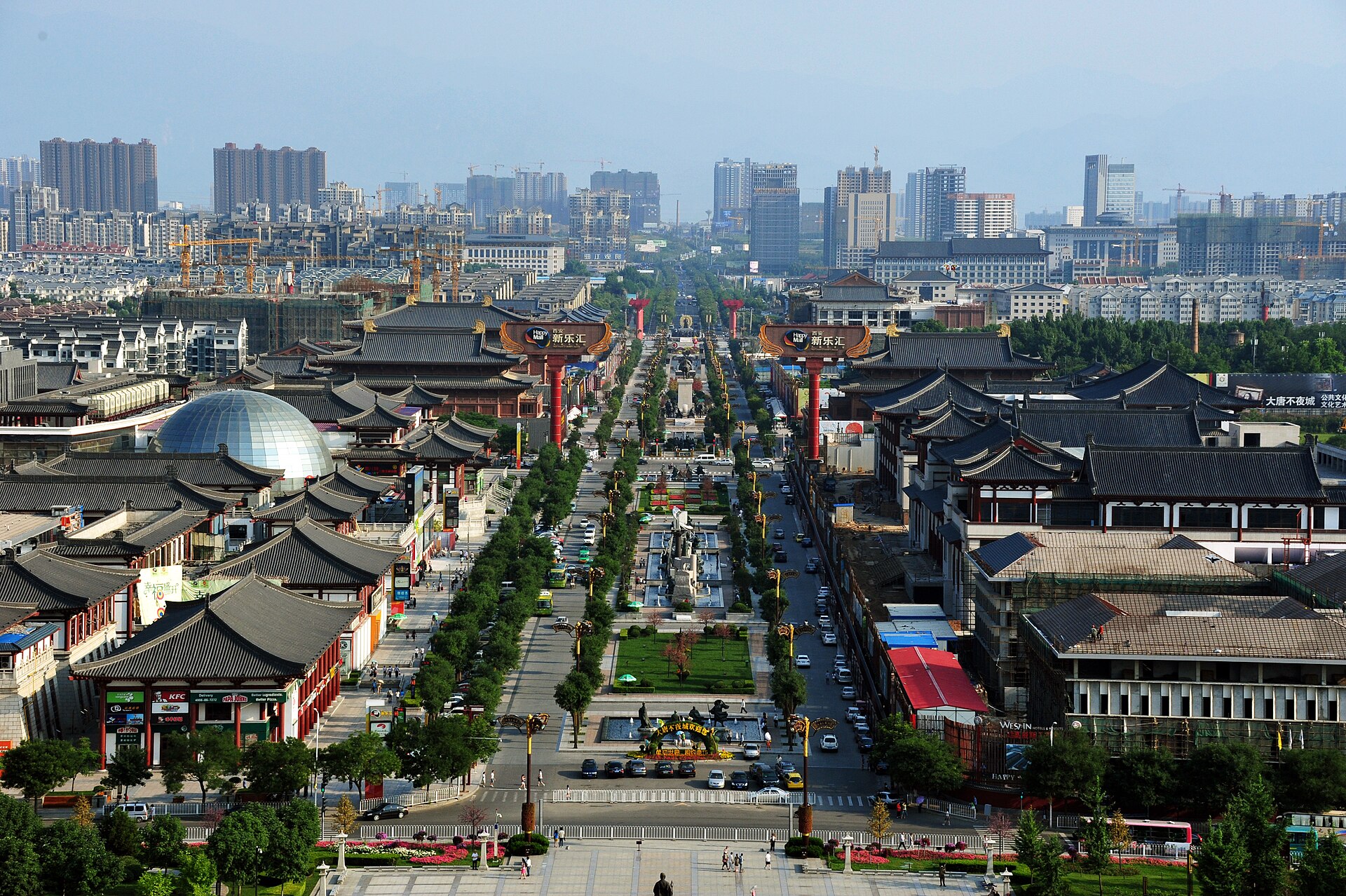
When the Buddhist monk Xuanzang returned to Chang'an in 645 AD after seventeen years traversing the deserts and mountains of Central and South Asia, he carried with him 657 Sanskrit texts and a burning desire to translate them into Chinese. Emperor Gaozong of the Tang Dynasty ordered the construction of this pagoda within the Da Ci'en Temple grounds in 652 AD specifically to house the scriptures, relics, and Buddha statues Xuanzang had brought from India. Originally five stories of rammed earth, the structure collapsed and was rebuilt to its current seven stories of brick — a square-plan tower rising 64 meters that has become the single most recognizable silhouette on Xi'an's horizon. Unlike many Chinese pagodas that served purely ornamental functions, the Giant Wild Goose Pagoda was a working scriptorium where Xuanzang and his team spent decades translating Buddhist texts that would reshape East Asian philosophy. The interior staircase allows visitors to climb all seven levels, each offering progressively wider views across the city until the top floor reveals a panorama stretching from the old city walls to the distant Qinling Mountains. Below the pagoda, the Da Ci'en Temple is a functioning Buddhist monastery where monks still chant morning sutras, and the surrounding North Square hosts what is billed as the largest musical fountain display in Asia — a spectacle of choreographed water jets set to orchestral music that draws thousands of locals every evening. From here, a guided walk through Xi'an might lead you to the ancient City Wall for a sunset bicycle ride, the aromatic lanes of the Muslim Quarter, or out to the world-famous Terracotta Army for a full day among clay soldiers. The pagoda also sits within walking distance of the Shaanxi History Museum, making it easy to combine several cultural stops into a single afternoon.
Spiritual Significance
Xuanzang's legacy: Stand inside the very building commissioned to safeguard scriptures carried overland from Nalanda, India — the journey that inspired the novel Journey to the West. Panoramic climb: Seven flights of narrow brick stairs reward you with a 360-degree view across Xi'an that contextualizes the ancient city's grid layout and modern sprawl. Musical fountain plaza: Over 1,000 water jets dance to classical Chinese and Western orchestral music across a plaza the size of several football fields. Da Ci'en Temple: An active Buddhist monastery with incense-filled halls, ancient steles, and the resonant sound of wooden fish drums during prayer services. Tang Dynasty architecture: The pagoda's austere square silhouette and minimal ornamentation reflect early Tang construction principles — deliberately simple compared to later ornate pagodas. Stone tablet calligraphy: Ground-floor chambers display Tang Dynasty steles featuring calligraphy by Emperor Taizong and the prefaces Xuanzang wrote for his translations
When to Visit
Da Ci'en Temple grounds: Daily 8:00 AM - 5:30 PM (last entry 5:00 PM). Pagoda climb: Same hours, separate ticket purchased inside the temple. Musical fountain shows: Free, daily at 12:00 PM and 8:30 PM (summer schedule varies — check locally). Best time to visit: Late afternoon lets you tour the pagoda in soft light and stay for the evening fountain show. Quietest months: November through February see fewer tour groups, though winter evenings are cold
Admission and Costs
Da Ci'en Temple admission: ¥40 (includes temple grounds and exterior pagoda viewing). Pagoda climb supplement: ¥30 additional to ascend the seven stories. Musical fountain: Free and open to the public. Audio guide rental: ¥20 at the temple entrance (available in English). Getting there: Metro Line 3 or 4 to Dayanta station, or bus routes 606, 609, 715
Tips for Visitors
Buy both tickets upfront: The pagoda climb ticket is only sold inside the temple grounds, so you will need to enter the temple first — budget time for the extra queue. Wear comfortable shoes: The interior staircase is steep with uneven brick steps and low ceilings — sandals and heels make the climb unpleasant. Arrive before the fountain show: The North Square fills quickly on summer evenings — claim a central viewing spot at least 30 minutes early for the best vantage point. Combine with the Shaanxi History Museum: Located just 800 meters west, the museum is free (timed tickets required) and provides context for everything you see at the pagoda. Photograph at golden hour: The westward-facing pagoda glows warmly in late afternoon light, and shooting from the South Square gives a clean unobstructed composition