
Walking Route
Walking Routes
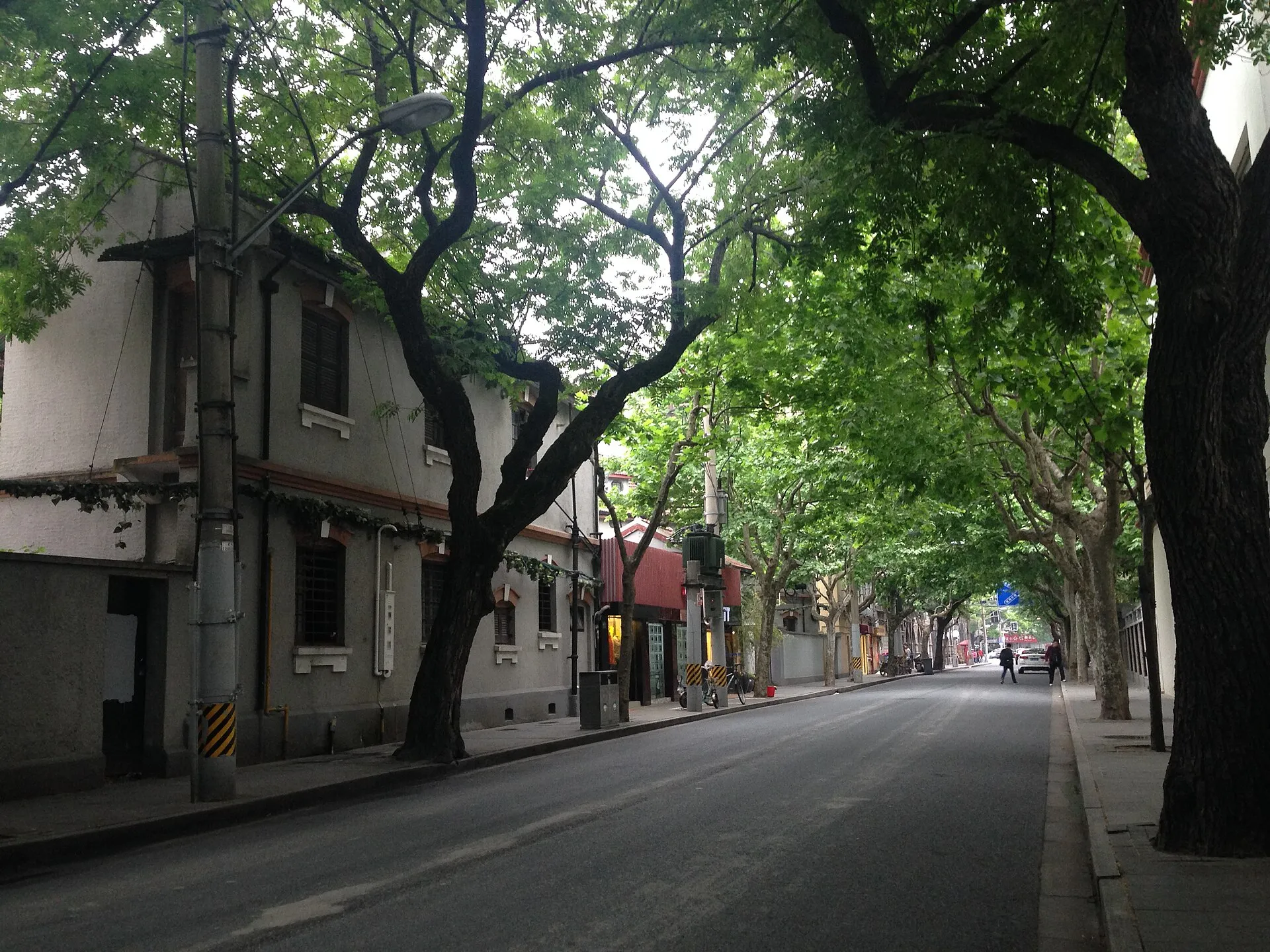
The Wukang Road villa walk (about 1.2 km, 45 minutes): Begin at the Wukang Mansion, the ship-prowed apartment block that architect László Hudec completed in 1924 as the Normandie Apartments, standing at the flatiron junction of Wukang and Huaihai roads a five-minute walk from Shanghai Library station (Line 10). Head north up Shanghai's most photographed street past Ferguson Lane (No. 376), a courtyard of restored lane houses now hosting wine bars, a jazz club, and a French bookshop, beneath a cathedral-like canopy of plane trees dotted with the former residences of writers such as Ba Jin. Fuxing Park: A formal French-style garden laid out in 1909 complete with rose beds, fountains, and morning tai chi practitioners - the closest Shanghai gets to a Parisian square, near South Shaanxi Road station (Lines 1, 10, 12). Sun Yat-sen's Former Residence: The house on Xiangshan Road where the founder of the Chinese Republic lived with Soong Ching-ling from 1918 to 1924, preserved with original furnishings and a tranquil garden, a short stroll from the restored villa complex of Sinan Mansions. Tianzifang: Marking the concession's south-eastern boundary, this labyrinth of shikumen lanes off Taikang Road (Lane 210) in the Dapuqiao area has been converted into studios, galleries, craft shops, and tiny bars; the closest stops are Dapuqiao (Line 9) and Jiashan Road (Lines 9, 12). St. Nicholas Church: A Russian Orthodox church built in 1934 for Shanghai's White Russian community, its onion dome now incongruously surrounded by modern cafes near Gaolan Road.
Local Life
Morning tai chi groups gather in Fuxing Park before the coffee shops on Yongkang Road even raise their shutters, and by mid-morning the lanes behind Wukang Road fill with residents walking small dogs, haggling over produce at wet markets, and queuing at neighbourhood dumpling windows that have served the same recipes for decades. Anfu and Wulumuqi roads have become the concession's café and natural-wine spine, busiest in the late afternoon when young Shanghainese spill out onto the kerb with takeaway cups. A guide who knows the back alleys can introduce you to the elderly ayi who press tofu in a shikumen courtyard or the retired professors who play chess on stone benches beneath the plane trees along Hengshan Road, the kind of encounters that no map or metro exit will hand you.
When to Visit
Neighbourhood access: Open around the clock - this is a living residential and commercial district with no gates or closing time. Shops and boutiques: Most open between 10:00 AM and 9:00 PM daily. Tianzifang's lanes stir late, with many studios and bars not opening until 11:00 AM but running past 10:00 PM. Best: Late morning on weekdays, when the cafes are open but the sidewalks are quiet enough to appreciate the architecture. Also excellent: Warm autumn evenings when the plane-tree canopy glows amber under the streetlights and terrace bars spill onto the pavement. The Shanghai Metro runs roughly 5:30 AM to 10:30 PM, so plan a late dinner around a taxi or ride-share rather than the last train.
Admission and Costs
Walking the streets: Entirely free - the architecture, tree canopy, and atmosphere cost nothing to enjoy. Metro: A single ride into the concession costs ¥3-5 ($0.40-0.70). Shared bikes: about ¥1.5 per 30 minutes, ideal on the flat, shaded lanes. Specialty coffee: ¥30-55 ($4-8) for a latte at the district's many independent roasters. Lunch at a bistro: ¥80-200 ($11-28) per person at the European-style eateries along Yongkang Road or Wukang Road. Boutique shopping: Prices vary widely, from ¥50 vintage finds to designer pieces costing several thousand yuan. A private half-day walking guide runs ¥700-1,100 ($96-150) for the group.
The Case for a Guide
The French Concession is handsome enough to enjoy alone, but much of its meaning is hidden behind compound walls and inside stories that no plaque tells. A knowledgeable local guide turns a pretty grid of plane-tree lanes into a legible century of colonial power, revolutionary politics, refugee communities, and cultural reinvention.
- Reading the architecture: a guide points out which villas are Hudec designs, which are Spanish or Tudor revival, and which shikumen lanes survive intact behind newer shopfronts
- The hidden lanes: the best courtyards, longtang, and garden gates are unmarked, and a guide knows which ones welcome a quiet look and which stay private
- Efficient routing: linking Wukang Road, Fuxing Park, Sinan Mansions, and Tianzifang into one walk avoids doubling back or losing the thread between metro stops
- Layered history: from the 1849 concession grant to the White Russian émigrés and the founding of the Chinese Communist Party nearby, a guide anchors the abstract dates to the ground underfoot
- Beyond the obvious: local coffee roasters, tailors, and dumpling windows that reward those who know where to turn off the photographed streets
Tips for Visitors
Start at Wukang Mansion, not Tianzifang: The villa quarter around Wukang Road is the concession at its most photogenic and least commercialised, so begin there and drift east - leave the crowded Tianzifang lanes for last. Worth it if you love architecture, cafes, and unstructured walking; skip it if your schedule is tight and skyline-focused, because the district rewards wandering over sight-ticking. Wander without a map: The best discoveries come from turning down unfamiliar lanes - rigid itineraries work against the neighbourhood's serendipitous character. Rent a bicycle: Shared bikes are everywhere, and the flat, shaded streets are ideal for cycling between pockets of interest. Look up and behind walls: Many of the finest buildings hide behind compound walls or reveal their best details on upper floors. Visit Wukang Road early: The Wukang Mansion intersection becomes a selfie bottleneck by midday; arrive before 9:00 AM for unobstructed photographs. Set up a mobile wallet: Most cafes and market stalls expect Alipay or WeChat Pay rather than cash.
Frequently Asked Questions
Where is the French Concession in Shanghai?
The Shanghai French Concession is not a single gated site but a district of roughly three square kilometres spread across today's Xuhui and Huangpu (former Luwan) districts, west of the old walled city. It is loosely bounded by Yan'an Road to the north and Zhaojiabang Road to the south. To find your feet on the ground, aim for Changshu Road or South Shaanxi Road metro for the central Huaihai Road core, Wukang Mansion for the leafy western villa quarter, and Tianzifang for the south-eastern lanes.
How do you get to the French Concession by metro?
Several Shanghai Metro stations drop you straight into the concession. For the Wukang Road villa quarter, use Shanghai Library (Line 10) or Jiaotong University (Lines 10, 11). For the central Huaihai Road and Fuxing Park core, Changshu Road (Lines 1, 7) and South Shaanxi Road (Lines 1, 10, 12) are the most useful. For Tianzifang and the eastern lanes, Dapuqiao (Line 9) is closest, with Jiashan Road (Lines 9, 12) a short walk away. A single ride costs about ¥3-5 ($0.40-0.70).
Is the French Concession in Shanghai worth visiting?
Yes, if you enjoy walking, architecture, and cafe culture: the plane-tree canopy, art deco villas, and independent shops make it Shanghai's most rewarding neighbourhood to explore on foot, and it is free to wander. Skip it, or keep it brief, if your trip is short and skyline-focused - the concession rewards slow, aimless walking rather than a checklist, and there is no single blockbuster monument. Avoid Tianzifang at midday on weekends unless you are comfortable in dense, souvenir-heavy crowds.
Is the French Concession the same as the "French Quarter" in Shanghai?
Yes - "French Quarter" is simply an informal English nickname for the same district. Its formal historical name is the Shanghai French Concession (in Chinese, Fazujie), the territory administered under French municipal authority from 1849 until 1943. No official street signs read "French Quarter" today; locals refer to the area by its neighbourhoods and roads - Wukang Road, Hengshan Road, Xintiandi, Tianzifang - rather than by any single name.
What is there to see in the French Concession?
The signature sights are Wukang Road and its ship-prowed Wukang Mansion (the former Normandie Apartments, 1924); Fuxing Park, the formal French garden laid out in 1909; and Tianzifang, a maze of shikumen lanes turned into studios and cafes. Add Sinan Mansions and Sun Yat-sen's former residence near Sinan Road, and the shophouse cafes of Anfu and Wulumuqi roads. None charge a general admission fee, so the district works as one long, connected walk rather than a series of ticketed stops.
What season is best for exploring Shanghai's French Concession?
Late April through May and October are the standout months, when the towering plane trees that define the district's character are either unfurling fresh spring canopy or blazing in golden autumn colour along boulevards like Wukang Road. Shanghai's notoriously muggy summers (July-August) drain the pleasure from extended neighbourhood walking, while the brief autumn window before winter chill sets in is when the concession's cafe culture and outdoor dining scene are at their most inviting.
How much should visitors budget for the French Concession?
Walking the streets is entirely free - the architecture, tree canopy, and atmosphere cost nothing. A latte at one of the district's independent roasters runs ¥30-55 ($4-8), a bistro lunch along Yongkang or Wukang Road ¥80-200 ($11-28) per person, and a shared bike about ¥1.5 for 30 minutes. A private half-day walking guide typically costs ¥700-1,100 ($96-150) for the group.
What exploration approach works best for the French Concession?
Wander without a map: The best discoveries in the concession come from turning down unfamiliar lanes - rigid itineraries work against the neighborhood's serendipitous character.
How do I get to Shanghai's French Concession by metro?
The former French Concession has no single entrance, but several Shanghai Metro stops drop you into it. For the photogenic Wukang Road stretch, use Shanghai Library station (Line 10) or Changshu Road (Lines 1 and 7); for the Yongkang Road cafe strip, South Shaanxi Road (Lines 1, 10 and 12) is closest, while Tianzifang sits beside Dapuqiao station (Line 9). Pick whichever stop is nearest your first destination and walk out from there rather than trying to cover the whole district on a single line.
What is a good walking route through the French Concession?
A satisfying half-day starts on Wukang Road, where the flatiron Normandie Apartments anchor a corridor of 1920s and 1930s villas under towering plane trees, then heads east toward Fuxing Park, the formal French garden laid out in 1909. From there it is a short stroll to the Yongkang Road cafes and on to Tianzifang, the maze of converted shikumen lanes that marks the concession's eastern edge near Taikang Road. Keep your gaze above street level throughout — the finest details sit on the upper storeys and behind garden walls.