
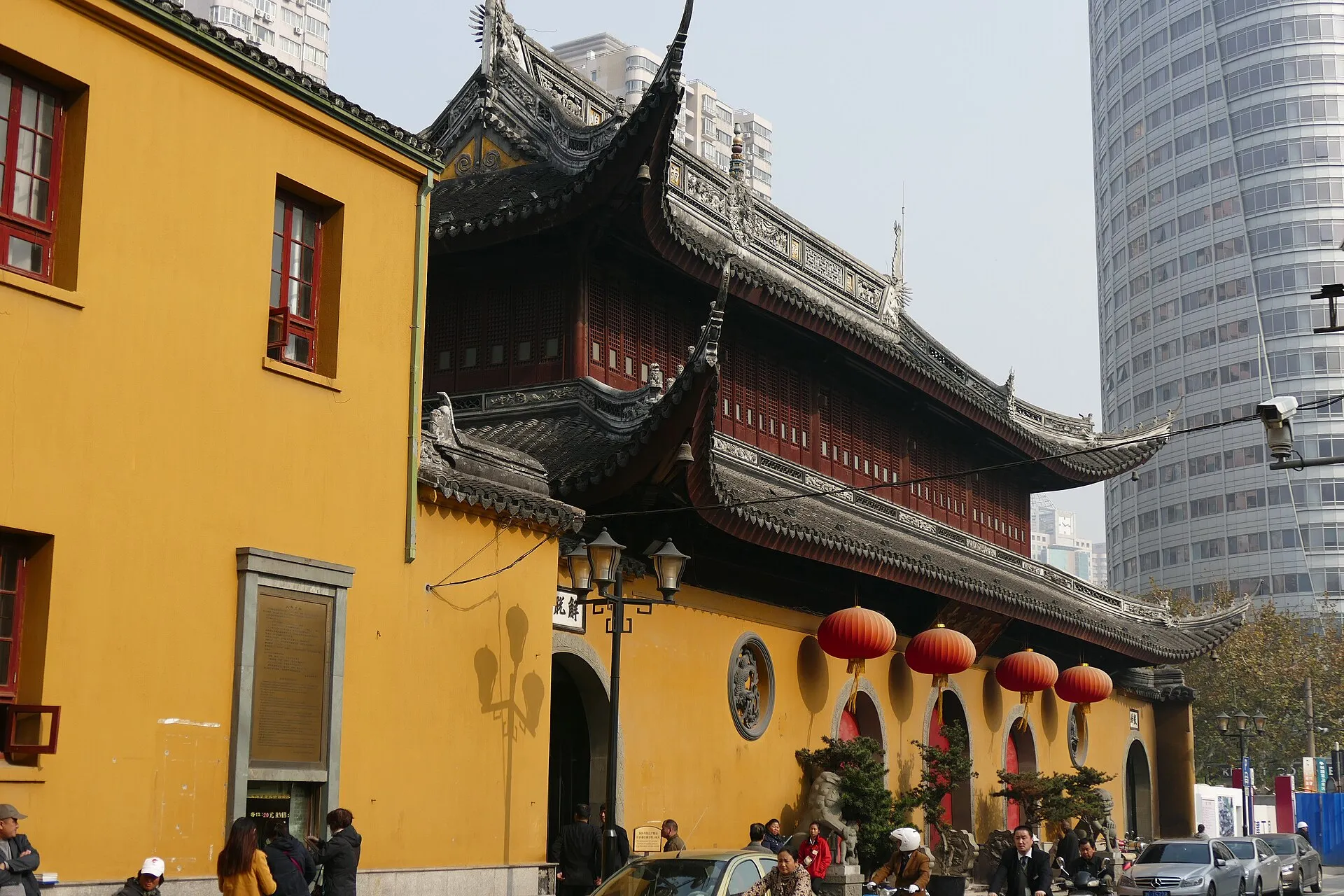
Spiritual Significance
The temple's entire spiritual identity rests on the journey of the monk Huigen, who traveled overland from China to Burma in 1882 on a pilgrimage to honor the Buddha's birthplace. The jade statues he brought back are not merely art objects — within the Chan (Zen) school of Chinese Buddhism, they are treated as sacred relics, physical presences of the Buddha in the world. Jade carries particular resonance in Chinese spiritual tradition: the stone represents purity, longevity, and a direct connection to cosmic forces, making a Buddha carved from whole jade far more than decorative. The 1.95-meter seated figure is considered among the most spiritually potent Buddhist objects in all of Shanghai. The temple's survival through the Cultural Revolution (1966-1976) — when religious institutions across China were shuttered, ransacked, or destroyed — is itself regarded by the monastic community as an act of divine protection. The resident monks hid or disguised the jade statues, and the complex emerged largely intact. Since China's reform era in the 1980s, Jade Buddha Temple has served as a center of Buddhist revival, maintaining an active community of over 70 ordained monks who perform daily chanting ceremonies (puja) at dawn, ensuring the temple functions as a living place of worship rather than a heritage exhibit. This unbroken monastic continuity gives the site a depth of sacred purpose that few urban temples in China can match.
When to Visit
Temple grounds: Daily 8:00 AM - 4:30 PM (last entry 4:00 PM). Morning chanting: Begins around 4:30 AM for ordained practitioners; visitors may observe from approximately 7:30 AM. Best: Early morning on weekdays, when incense smoke hangs low and the courtyards are nearly empty. Busiest: Lunar New Year and the birthday of Guanyin (19th of the 2nd lunar month) draw enormous crowds of worshippers
Admission and Costs
General admission: ¥50 per person (includes access to all halls). Incense bundle: Complimentary basic sticks included with ticket; premium sandalwood coils ¥20-80. Vegetarian restaurant: ¥30-60 per person for a full meal of mock-meat dishes and Buddhist temple cuisine. Photography: Allowed in courtyards but strictly prohibited in the Jade Buddha chamber
Tips for Visitors
Dress modestly: Shoulders and knees should be covered as a sign of respect; the temple occasionally turns away visitors in very casual attire. Step over thresholds: Traditional etiquette dictates stepping over, not on, the raised wooden thresholds at each hall entrance - monks consider treading on them disrespectful. Eat at the temple canteen: The vegetarian restaurant is genuinely good and far cheaper than nearby restaurants - arrive before 11:30 AM to beat the lunch rush. Combine visits wisely: Pair Jade Buddha Temple with the nearby M50 Art District, a converted textile mill complex just a 15-minute walk east along Suzhou Creek. Engage a guide for symbolism: The iconography across the halls encodes centuries of Chan Buddhist philosophy that's invisible without explanation - a guide transforms a quick visit into a meaningful experience
Frequently Asked Questions
When is the best time of year to visit the Jade Buddha Temple?
April-May and September-November offer Shanghai's mildest weather for combining a temple visit with exploration of the surrounding neighborhood. Chinese New Year (January-February) is the most spiritually charged time to visit, when the temple fills with worshippers burning incense and praying for prosperity, but expect massive crowds. The temple's indoor halls are comfortable year-round, though summer humidity makes the outdoor courtyards and garden areas less pleasant.
What are the opening hours for Jade Buddha Temple?
Temple grounds: Daily 8:00 AM - 4:30 PM (last entry 4:00 PM). Morning chanting: Begins around 4:30 AM for ordained practitioners; visitors may observe from approximately 7:30 AM.
Is entry to Jade Buddha Temple free for visitors?
General admission: ¥50 per person (includes access to all halls). Incense bundle: Complimentary basic sticks included with ticket; premium sandalwood coils ¥20-80.
What should visitors know before visiting Jade Buddha Temple?
Dress modestly: Shoulders and knees should be covered as a sign of respect; the temple occasionally turns away visitors in very casual attire.